Beyond the Phone: Google Unveils Wear OS 7 with “Wear Widgets” and Wrist-Bound AI Agents
 Do Son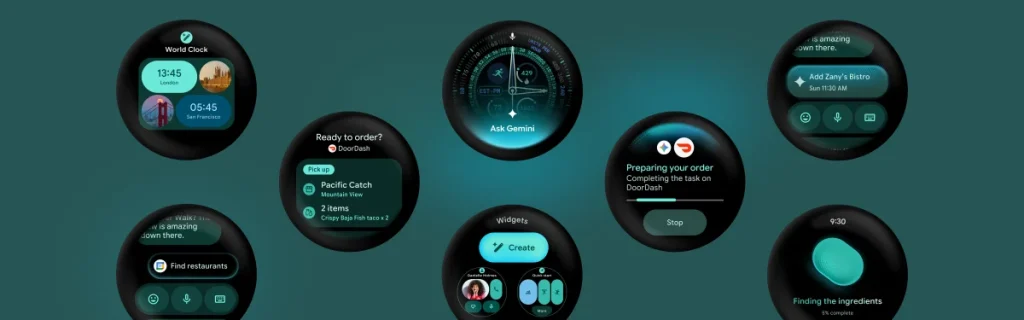
Amidst the vibrant proceedings of the contemporary Google I/O 2026 developer symposium, the technology pioneer has orchestrated a monumental milestone within its wearable vertical alongside its sprawling foundation models and cloud architectures. Google has officially unveiled Wear OS 7, its next-generation smartwatch operating system, which seamlessly absorbs the design language of Android 17 while executing a comprehensive re-architecture of the glanceable interface—introducing dynamic Wear Widgets to supersede legacy text blocks, complemented by the introduction of real-time Live Updates.
The paramount strategic significance of Wear OS 7 resides in its capacity to construct an unassailable infrastructural substrate for the upcoming global deployment of autonomous Gemini Intelligence agentic frameworks.
The most readily discernible metamorphosis introduced by Wear OS 7 centers on the visual paradigms through which users assimilate telemetry:
- The Evolution from Tiles to Wear Widgets: For successive hardware generations, the horizontal, swipe-activated “Tiles” matrix constituted the central pillar of the Wear OS user experience. This legacy framework is now thoroughly supplanted by Wear Widgets—a highly evolved suite empowering developers to render deeply dynamic and hyper-customized interface modules that mirror the high-fidelity aesthetics of smartphone widgets. Fascinatingly, custom layouts compiled by users via the generative tool “Create My Widget” will seamlessly synchronize with the wearable canvas.
- The Induction of Live Updates: This highly lauded capability, historically confined to the locked viewports of Android smartphones, makes its native debut on Wear OS 7. Consequently, volatile real-time metrics—including logistics delivery trajectories, synchronous sporting charts, and ride-hailing states—are rendered continuously legible upon the wrist.
- Unified Multimedia and Kinetic Orchestration: Wear OS 7 integrates a standardized, system-level athletic tracking overlay that unifies peripheral media controls, achieving cross-compatibility across fragmented third-party fitness applications. Furthermore, operators can now enforce conditional visibility parameters to dictate which applications trigger media interface pop-ups, augmented by a remote output switcher that mediates seamless audio routing across heterogeneous Bluetooth transducers straight from the wrist.
Crucially, these aesthetic refinements merely mask the operating system’s underlying ambition: the realization of localized AI Agents.
To align the wearable architecture with Google’s overarching blueprint of transforming Gemini into a fully automated proxy, Wear OS 7 exposes an array of foundational APIs, empowering the developer constituency to tightly tether peripheral software architectures to the core Gemini Intelligence framework.
- The AppFunctions API: This component functions as the primary architectural nexus, authorizing developers to expose micro-functional subroutines within their applications to the centralized Google Assistant engine.
- Wrist-Bound Autonomous Automation: Leveraging this deep programmatic integration, an operator can completely forgo traditional manual application interaction. By simply uttering a high-level command to the wearable interface—such as, “Procure the identical latte I consumed yesterday via DoorDash”—Gemini harnesses these exposed API entry points to silently orchestrate the underlying transaction and checkout pipeline in the background.
Support Our Threat Intelligence
Find our tech and OS security coverage helpful? Support our work today and unlock a 100% ad-free reading experience!
 Buy Me a Coffee
