 Do Son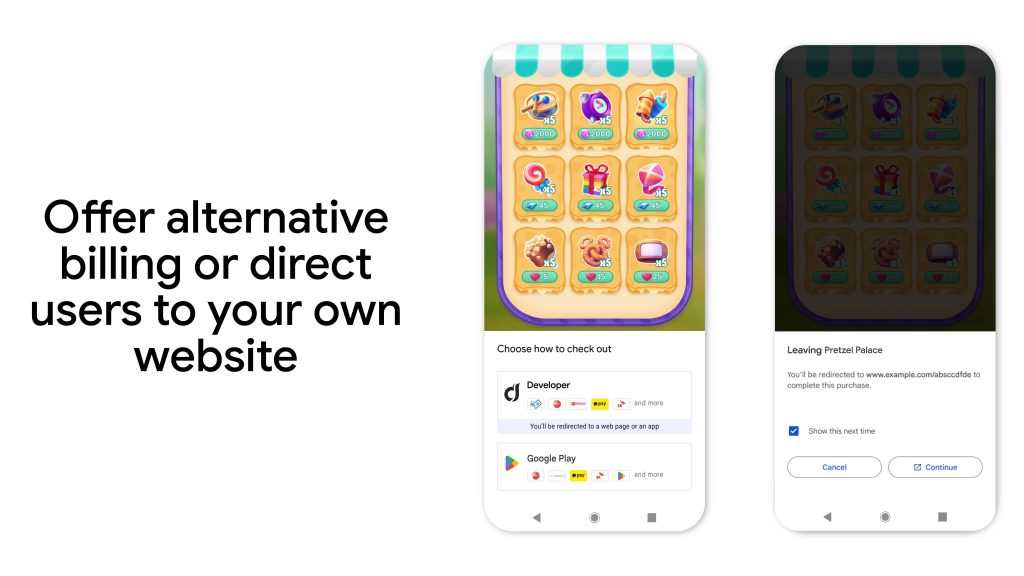
Following the antitrust settlement between Google and EPIC, Google will launch a revamped billing structure. This launch occurs on June 30, 2026, across the United States, the United Kingdom, and the European Economic Area. This recalibration empowers eligible developers to integrate their proprietary payment architectures. Developers may also seamlessly direct patrons to external websites to procure services. Consequently, Google will decouple its inherent platform service fees from the primary Google Play billing charges.
This initiative represents a refined iteration of the Android policy overhaul initially unveiled in March. Previously, Google and EPIC forged a settlement agreement to resolve their protracted dispute over application distribution and financial transactions. However, the American jurisdiction of this pact awaits formal ratification from the judicial system before achieving full implementation.
Favorable Modifications for Developers
Under the novel payment choice paradigm, creators vending digital content or services may present alternative payment options. They can display these choices directly alongside the traditional Google Play billing mechanism. Consequently, consumers can consciously elect to proceed via Google’s infrastructure or utilize the developer’s substitute payment gateway. Furthermore, developers can guide patrons toward their personal domains to finalize purchases. Creators might employ Google’s standardized payment selection interface. Alternatively, they can architect a bespoke checkout environment that adheres to Google’s user interface guidelines.
Nevertheless, adopting an alternative payment route does not entirely absolve the creator from Google’s platform levies. The corporation will continually exact a service fee regardless of the ultimate transaction conduit. This toll applies universally to transactions originating from applications distributed via Google Play. Google asserts that this specific fee comprehensively underwrites the intrinsic value and vast infrastructure provided by the Android ecosystem.
Implementation of a Ten Percent Platform Levy
The platform service fee stands at ten percent for annual revenues not exceeding one million dollars. This specific rate similarly applies to auto-renewing subscriptions. Google will exact an additional five percent toll if a creator utilizes Play billing within these regions. Conversely, developers processing payments via alternative mechanisms entirely circumvent this supplementary five percent charge.
This paradigm shift signifies the abolition of Google’s historically rigid thirty percent platform commission. Yet, developers might not witness a drastic reduction in fees across every solitary transaction. For instance, legacy user in-app purchases processed through Google Play might still incur a cumulative thirty percent deduction. Ultimately, the exact burden depends heavily upon the creator’s scale and the specific transaction archetype. For example, a standard developer managing existing installations and non-subscription transactions faces a twenty-five percent platform fee. When combined with the five percent billing charge, the total remains thirty percent.
For example, diminutive creators earning below one million dollars annually bear a combined fifteen percent rate. This encompasses the ten percent service fee alongside the five percent billing toll. Massive enterprise developers do not enjoy these preferential policies. However, if an enterprise developer successfully constructs an autonomous payment architecture, they might significantly slash their transactional overhead. Overall, the contemporary Google Play economic ecosystem remains extraordinarily labyrinthine. Consequently, developers must meticulously select their strategies based upon their unique operational circumstances.
Impending Incentive Programs Arriving in September
Furthermore, Google intends to unveil reduced rates through specific application experience and game enhancement programs. The company officially detailed these updates as Play expanded billing options for the community. Applications and games fulfilling Google’s stringent criteria will unlock substantial financial benefits. Specifically, novel installation transactions will secure a fifteen percent service fee discount. Meanwhile, legacy installation transactions will enjoy a twenty percent service fee reduction. Crucially, the software must strictly adhere to Google’s demanding benchmarks for performance, reliability, and compatibility. These advantageous rates will debut on September 30 across America, Britain, Europe, and Australia.
Finally, Google will propagate analogous rate policy modifications to disparate global markets before September 30, 2027. However, the corporation has refrained from explicitly confirming if these secondary markets will receive identical fiscal treatment. In all likelihood, Google will meticulously tailor divergent fee structures for other regions. This strategic flexibility will ensure absolute compliance with diverse, localized regulatory mandates.
Support Our Threat Intelligence
Find our tech and OS security coverage helpful? Support our work today and unlock a 100% ad-free reading experience!
 Buy Me a Coffee
