Google’s “Web Guide” Reimagines Search: Gemini AI Organizes Results, But Publishers Cry “Content Theft”
 Do Son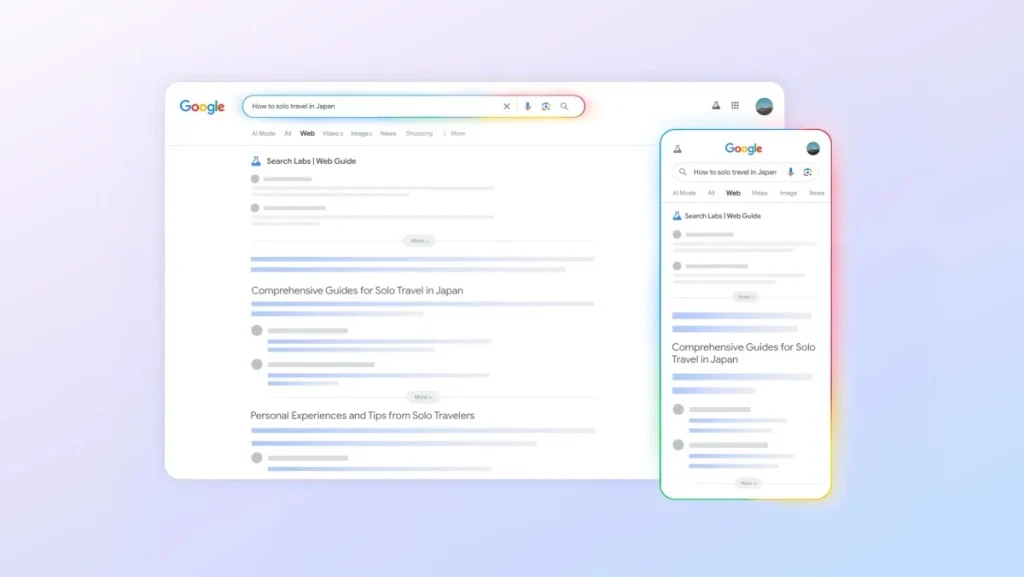
Google has unveiled a new search feature called “Web Guide” within Search Labs, marking a further deep integration of AI into the search experience. Leveraging the Gemini model, the tool analyzes query content, organizes results into thematic clusters, and helps users locate relevant information with greater speed and precision.
Although Google asserts that this enhancement aims to boost search efficiency, it is likely to reignite debates over content curation, ranking transparency, and control over search visibility.
In an official blog demonstration, Google used the query “how to solo travel in Japan” to showcase the new feature. Web Guide grouped results into thematic sections such as “Comprehensive Solo Travel Guide to Japan,” “Personal Experiences and Travel Tips,” and “Safety and Destination Recommendations.” Each section is introduced by a succinct summary generated by Gemini AI, with a “See More” option that invites users to explore related content from various websites.
Compared to the previously released AI Mode, which is already available to users in the United States, Web Guide offers more structured and logically organized content, while consciously avoiding mere replication of third-party website text. This cautious refinement has led some media outlets and content creators to adopt a reserved stance—particularly given past missteps, such as the infamous AI-generated recommendation suggesting “glue as pizza sauce,” which remains etched in public memory.
The rollout of Web Guide signals a continuation of Google’s ambition to reimagine the search experience through AI. However, this trajectory has raised red flags within the media industry. The News/Media Alliance, for instance, previously lodged complaints against AI Mode, accusing it of “content theft.” A recent Pew Research Center report further underscores the concern: when AI summaries appear in search results, the click-through rate to actual websites drops to just 8%, compared to 15% when no summaries are present. Alarmingly, as many as 26% of users end their search immediately after reading the AI-generated content, leading to a significant decline in web traffic for news and content publishers.
Currently, Web Guide is available exclusively to U.S.-based users enrolled in Search Labs and can be accessed via the “Web” tab in the search interface. Google is expected to expand the feature to additional search contexts in the future, potentially reshaping user behavior and altering the landscape of information discovery.
Related Posts:
- Google Faces EU Antitrust Complaint Over AI Overviews: Publishers Allege Traffic & Revenue Loss
- Google’s AI Overview: A Threat to Publishers, Cloudflare Steps In
- Google’s Ultimatum: Publishers Must Share Data for AI Overviews or Lose Traffic
- X CEO Linda Yaccarino Resigns After Two Years: Future Direction Under Elon Musk in Question
- Apple’s “Apple Ring” Rumors Reignite: Mark Gurman Hints at Subtle Wearable Health & Control Device
Support Our Threat Intelligence
Find our tech and OS security coverage helpful? Support our work today and unlock a 100% ad-free reading experience!
 Buy Me a Coffee
