 Do Son
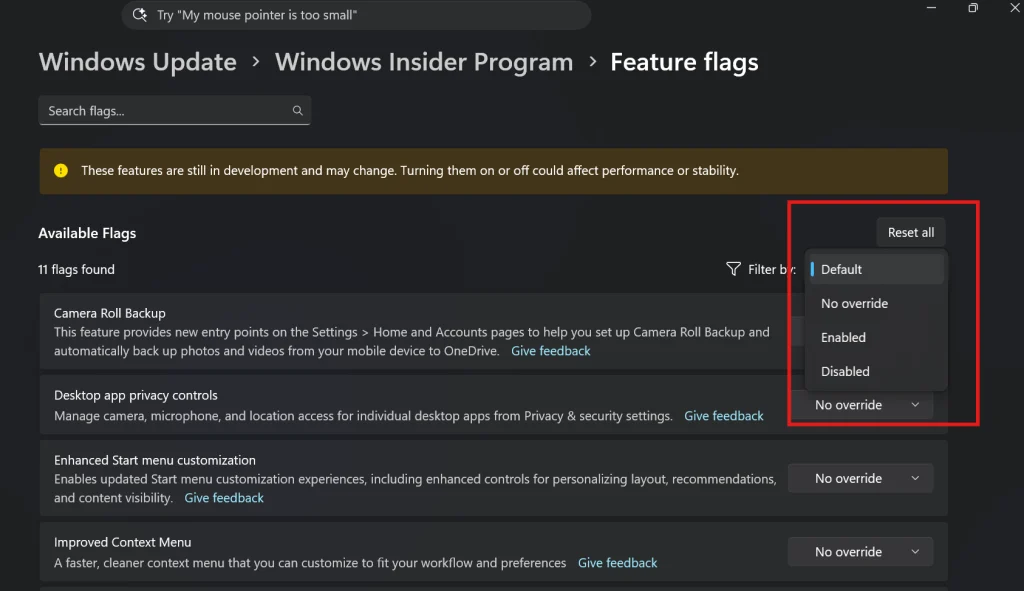
Microsoft recently unveiled an experimental toggle designed to unleash Intel Advanced Performance Extensions (APX) on Windows 11. Specifically, the feature surfaced within preview builds in the internal development branch. The configuration toggle promises substantial processing performance gains. However, activating this capability currently requires a complete system reboot.
Expanding General-Purpose Registers with Intel APX
Intel APX introduces a fundamental architectural enhancement to the established x86-64 instruction set. Specifically, the technology doubles the number of general-purpose registers from 16 to 32. Registers provide rapid storage directly within the processor core. Consequently, having additional registers allows compilers to retain active variables inside the CPU. This architectural expansion dramatically reduces frequent memory read and write operations.
Furthermore, APX introduces several crucial instruction set optimizations for developers. The extension supports a three-operand syntax featuring independent destination registers. In addition, conditional load and store instructions streamline execution branching. The new No-Flags mechanism suppresses unnecessary status flag modifications. Meanwhile, paired PUSH2 and POP2 instructions optimize stack manipulation. Together, these enhancements generate cleaner machine code and reduce processor overhead.
Empirical Simulation Benchmarks Show Measurable Efficiency
In simulated testing environments, Intel observed impressive efficiency gains across compute workloads. For example, during SPEC CPU 2017 Integer benchmarks, APX-compiled binaries exhibited superior performance over baseline code. Specifically, workloads registered ten percent fewer load instructions. Furthermore, memory stores declined by twenty percent while total instruction counts dropped by ten percent.
Hardware, Operating System, and Compiler Prerequisites
Nevertheless, harnessing these improvements requires coordinated alignment across the entire computing stack. In the latest Windows Insider preview announcement for Build 29965, Microsoft detailed the necessary operating system prerequisites. First, physical processor silicon must natively incorporate APX microcode instructions. Second, the Windows 11 kernel must manage expanded register states through XSAVE architectures during thread context switches.
Finally, software applications must be recompiled to utilize the expanded instruction set. Fortunately, developers can adopt APX simply by recompiling their code without rewriting core logic. Meanwhile, modern compiler toolchains have already begun preparing for upcoming silicon. For instance, GCC 16 officially introduced target support for upcoming Intel Nova Lake processors featuring APX_F extensions.
Support Our Threat Intelligence
Find our tech and OS security coverage helpful? Support our work today and unlock a 100% ad-free reading experience!
 Buy Me a Coffee
