 Do Son
Presently, most credential managers evaluate password integrity. Specifically, they cross-reference user data with known breach databases. When the system detects compromised credentials, it urges immediate modification. However, many individuals neglect these warnings due to procrastination. Consequently, vulnerable credentials persist indefinitely across various platforms.
Seamless AI-Driven Remediation in iOS 27
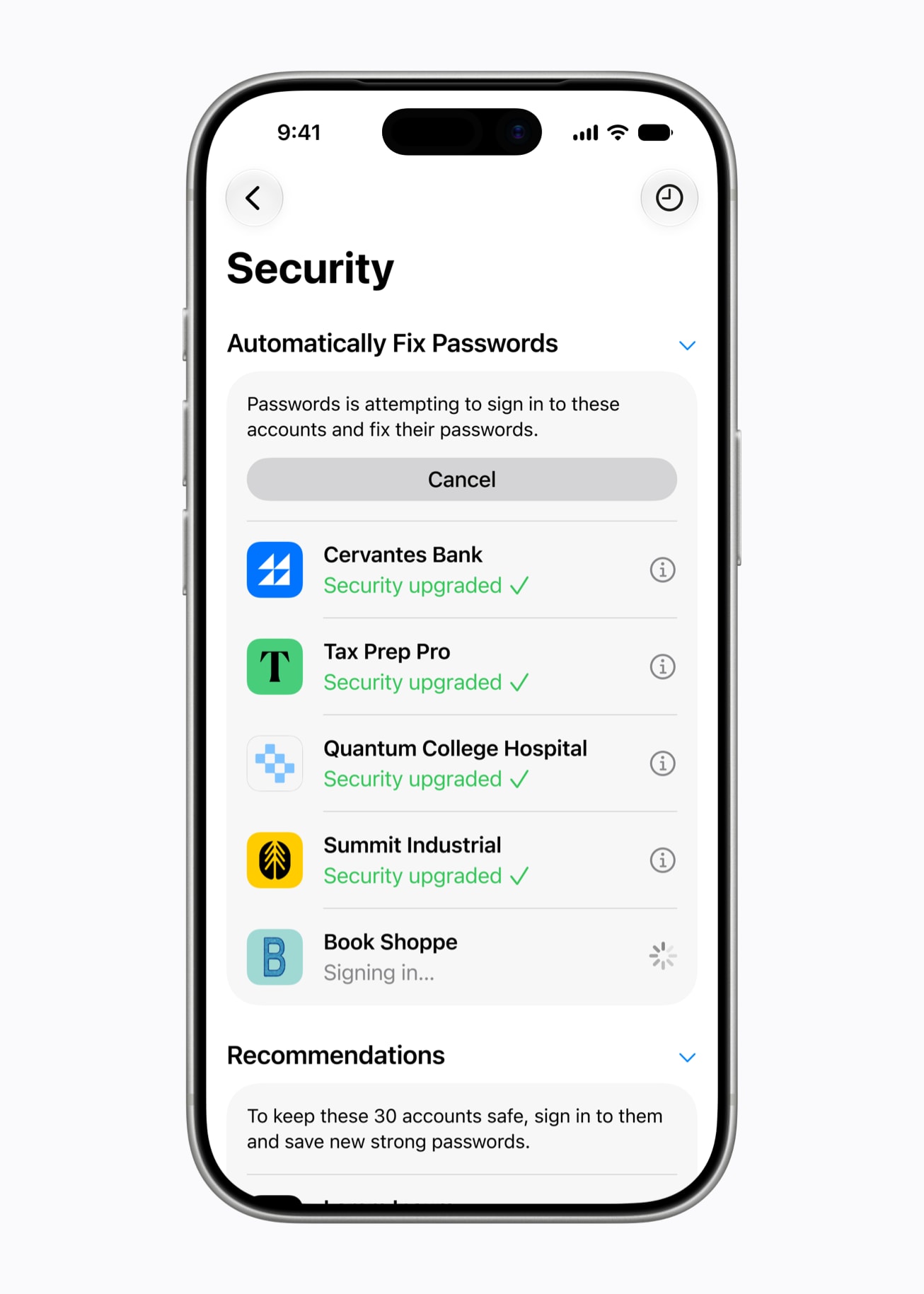
To resolve this systemic inertia, Apple introduced an automated feature within iOS 27. Specifically, Apple Intelligence can now execute password modifications autonomously. The system utilizes Safari to navigate to the target web portal. Subsequently, it authenticates using existing credentials and locates the reset management console. The mechanism completes the entire transformation without requiring user intervention.
Background Execution and Real-Time Telemetry
Apple defines this architecture as an intelligent system powered by Safari and Apple Intelligence. To initiate the sequence, users simply audit their compromised credentials. Therefore, they only need to engage a single “Fix” button. Following this, the automated framework orchestrates the rectification quietly in the background. Furthermore, iOS displays the active progress via Live Activities inside the Notification Center.
Elevating Account Security via Cryptographic Randomness
Ultimately, this automation liberates users from the burden of manual credential maintenance. It successfully neutralizes the security risks of human complacency. During the modification process, the AI synthesizes an intricate, highly random string. Subsequently, the platform archives this new key directly inside the Passwords repository. Users must rely on biometric autofill henceforth, as the generated keys defy human memory.
Neutralizing Credential Stuffing Vectors
This methodology provides absolute defense against contemporary credential stuffing attacks. Because each digital platform receives a completely distinct cryptographic key, systemic risk collapses. Thus, an isolated third-party database breach cannot compromise independent accounts. This fluid paradigm effectively solves the perennial perils of password reuse.
Support Our Threat Intelligence
Find our tech and OS security coverage helpful? Support our work today and unlock a 100% ad-free reading experience!
 Buy Me a Coffee
