 Do Son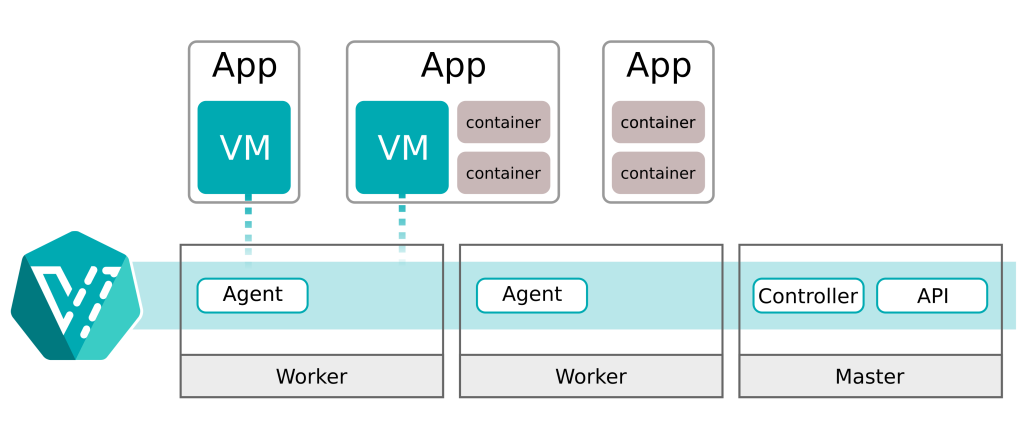
Kubevirt Architecture
Security analysts have uncovered a severe security defect within cloud virtualization infrastructure. Specifically, the newly identified KubeVirt privilege escalation flaw permits authenticated users to break out of single namespaces. This high-severity vulnerability tracks as CVE-2026-7374 and carries a near-maximum CVSS score of 9.9. Because KubeVirt manages virtual machines inside container platforms, this defect threatens entire server fleets. Consequently, operators must adjust cluster access controls immediately to mitigate the risk.
Route critical CVEs to one Slack channel, everything else to another.
Try Team free for 14 daysMechanics of the Socket Hijacking Attack
Exploiting Symlink Validation
To begin with, the security weakness resides within a core utility handler. The advisory states that “A flaw was found in KubeVirt’s virt-handler component.” Furthermore, an insider with edit privileges can exploit improper link verification when connecting to console sockets. To launch the attack, the user replaces the legitimate console socket with a symbolic link. This malicious link points directly to the underlying host’s container runtime socket.
Escalating Host Privileges
Subsequently, the threat actor manipulates the connection path to bypass isolation barriers. By leveraging this trick, “an attacker can hijack virt-handler’s privileged connection.” This hijacking grants the intruder unrestricted access to any Unix socket on the physical node. In addition, accessing these sockets creates an immediate cluster takeover risk for the enterprise. As a result, a low-privileged namespace owner can gain complete administrative dominance over the whole infrastructure.
Recommended Cluster Hardening Mitigations
Enforcing RBAC Protections
Fortunately, the development community has outlined direct mitigation workflows to neutralize this threat. To secure environments, administrators should modify their Role-Based Access Control policies immediately. For example, the security document instructs teams to “Update cluster RBAC to not allow exec into virt-launcher pods.” Therefore, stripping away these permissions prevents attackers from interacting with the vulnerable socket path.
Continuous Infrastructure Monitoring
Meanwhile, security teams should implement persistent auditing across all cluster deployment zones. This ongoing surveillance helps detect anomalous creation requests involving unauthorized symbolic links. Ultimately, patching the KubeVirt privilege escalation flaw remains the most effective defense against container escapes. Organizations must prioritize these defensive adjustments to ensure comprehensive platform resilience.
Support Our Threat Intelligence
Find our vulnerability reports and weekly recaps helpful? Support our work today and unlock a 100% ad-free reading experience!
 Buy Me a Coffee
