 Do Son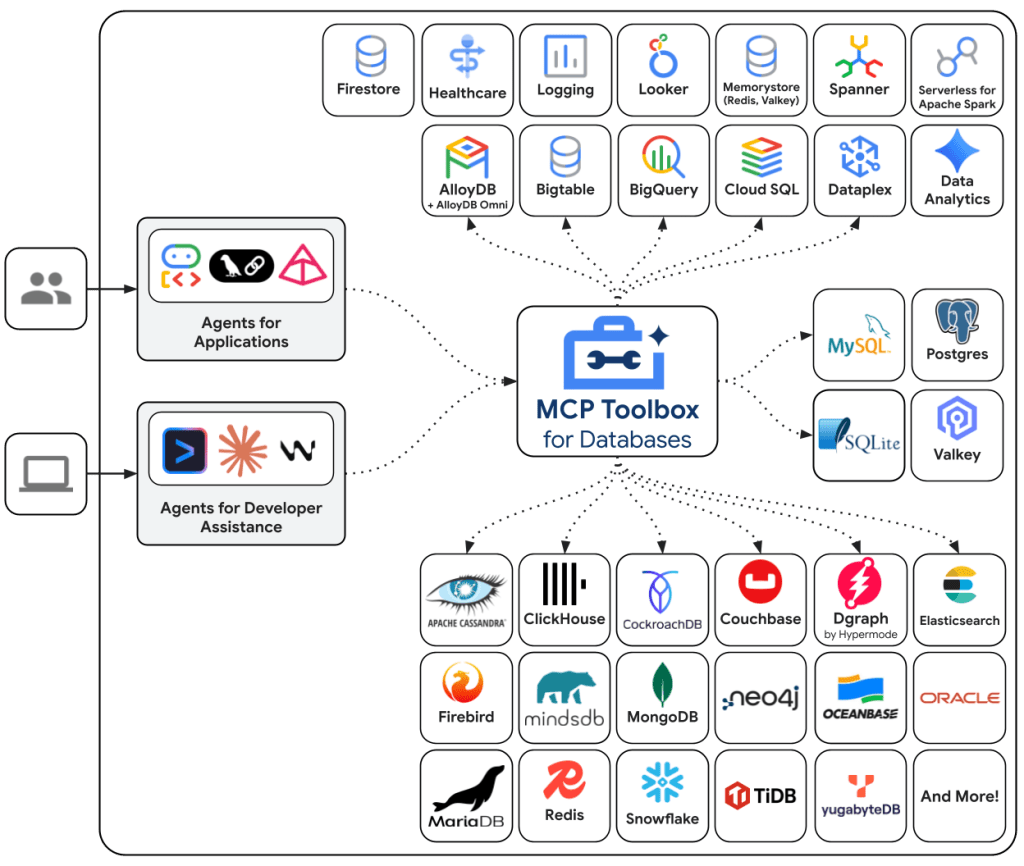
Security researchers recently uncovered a critical MCP Toolbox vulnerability affecting open-source enterprise database connectors. The underlying software connects artificial intelligence agents and applications directly to corporate data storage. However, this new flaw allows malicious websites to bypass security controls entirely. Consequently, enterprise administrators must remediate their setups to protect sensitive infrastructure.
Hardcoded Headers Overriding CORS Policies
The security flaw tracks as CVE-2026-9739 and carries a high CVSS base score of 9.4. Specifically, the flaw stems from a development oversight within the tool’s Server-Sent Events handler. Developers initially implemented strict origin flags to align with protocol security guidelines. Unfortunately, a hardcoded access control wildcard header remained inside the initialization source code. This permissive header completely overrides the global cross-origin resource sharing policy. Therefore, the system unexpectedly permits unauthorized external connections to the local server.
Severe Threats of Session Hijacking
This specific security gap exposes enterprise networks to severe risks like session hijacking. Because of the flaw, malicious sites can execute arbitrary tools on behalf of real users. Attackers can subsequently use the hijacked toolbox as an open proxy. As a result, unauthorized users might silently exfiltrate data from linked databases. This dangerous MCP Toolbox vulnerability endangers popular database systems like Postgres and BigQuery. Furthermore, it primarily impacts deployments utilizing the older v2024-11-05 protocol specification.
Recommended Mitigation Steps
Fortunately, fixing this exposure is relatively straightforward for development teams. Network administrators must remove the hardcoded header from the internal server file. Removing this line allows the global middleware to manage origin permissions safely. Then, the platform will correctly respect your administrator flags.
Support Our Threat Intelligence
Find our vulnerability reports and weekly recaps helpful? Support our work today and unlock a 100% ad-free reading experience!
 Buy Me a Coffee
