Meta Launches ‘Vibes’: A New AI-Generated Short-Video Platform to Rival TikTok
 Do Son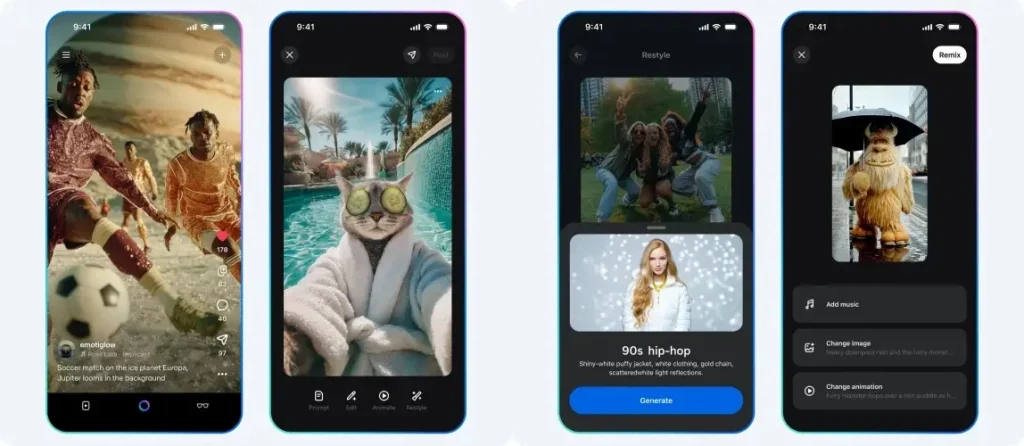
As generative artificial intelligence steadily becomes a mainstream force in content creation, Meta has announced the launch of a new short-video platform called Vibes, a service built entirely around AI-generated media. Debuting first in North America, Australia, New Zealand, the United Kingdom, and select European markets, the platform signals Meta’s ambition not only to strengthen its hold on social networking but also to carve out a new stage for AI innovation.
Unlike existing short-form video platforms that blend human and AI contributions, Meta has positioned Vibes as a “pure AI” creative ecosystem. Users need only provide a text prompt, and the system instantly produces a video ready to be shared on the platform for others to watch, remix, or reuse.
One of its most distinctive features is “Mix”, which allows users to take an existing AI-generated video and rework it with personal touches, producing an array of fresh variations. By design, Meta argues it is better to keep Facebook and Instagram from being overwhelmed by synthetic content and instead give AI its own dedicated stage. Vibes is thus framed as both an experiment to gauge public acceptance of AI-driven entertainment and as a potential extension of social interaction. For younger audiences eager for fast, flexible content creation, it may well represent the next digital wave.
Meta’s AI capabilities already span voice interaction, image generation, and integration with its smart glasses, offering always-on AI assistant features. With Vibes, however, the company is attempting to shift AI from a supporting role to center stage, creating an entertainment and creative experience built entirely around machine intelligence.
This, however, raises important questions: when every piece of content is generated by AI, how should authenticity, originality, and copyright boundaries be defined? By separating Vibes from its flagship platforms, Meta appears intent on insulating Facebook and Instagram from the controversies that mass AI content might provoke.
Viewed more broadly, Vibes seems to foreshadow the arrival of a “pure AI entertainment” era. If the platform can scale quickly, build a rich library of content, and draw in younger users, it could mark Meta’s breakthrough in short-form video. Yet if audiences continue to prize the “human touch” and genuine interaction, Vibes might remain a short-lived experiment.
Whatever its fate, the launch of Vibes underscores Meta’s determination to drive forward in AI development and suggests a future in which social platforms will no longer be defined solely by human-to-human exchange, but increasingly by the dialogue between humans and AI — and perhaps even AI with AI.
Related Posts:
- Apple Forms New “Answers” Team to Build a ChatGPT Rival, Reshaping AI Search
- TikTok’s Last Dance: Inside the U.S. Ban
- TikTok Ban Postponed: App Back on US App Stores and Play Store
- TikTok Hit by Zero-Day Attack: High-Profile Accounts Compromised
Support Our Threat Intelligence
Find our tech and OS security coverage helpful? Support our work today and unlock a 100% ad-free reading experience!
 Buy Me a Coffee
