 Do Son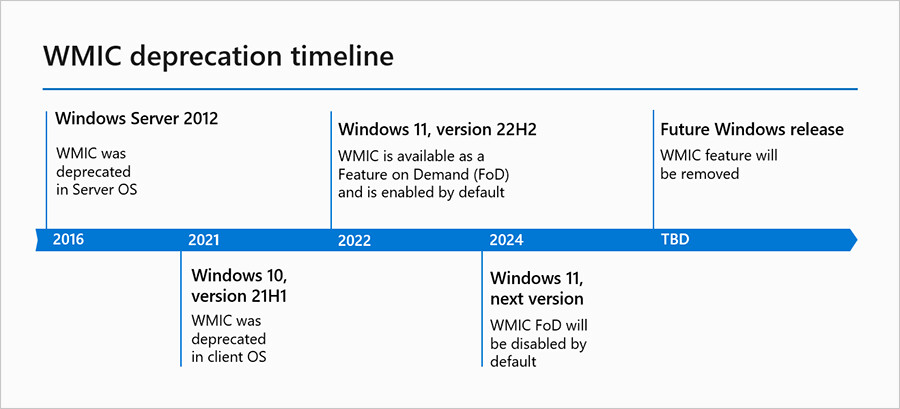
Microsoft previously signaled its firm intention to gradually deprecate the Windows Management Instrumentation Command-line (WMIC) utility. According to the latest official support documentation, new Windows 11 installations executing the August update will no longer include the WMIC component by default. However, existing installations will retain the utility for now.
Understanding WMIC and Its Removal
Users who genuinely require this specific functionality can still restore WMIC manually. The operating system will continue offering the component purely as an optional feature. Crucially, it simply will no longer install automatically during a standard setup. This significant configuration change applies directly to Windows 11 versions 24H2 and 25H2, alongside the forthcoming 26H2 release.
What exactly is WMIC?
WMIC stands for the Windows Management Instrumentation Command-line. Fundamentally, Windows Management Instrumentation (WMI) functions as a comprehensive management specification tool provided by Microsoft, primarily targeting enterprise environments. Although Microsoft designed this tool largely for corporate IT administration, the system historically installed it by default across all Windows editions. Nevertheless, the average everyday consumer rarely, if ever, utilizes WMI or WMIC directly.
Security Concerns Drive Deprecation
The primary catalyst driving the definitive removal of WMIC relates directly to persistent security vulnerabilities. Malicious software routinely exploits WMIC to interrogate device hardware information surreptitiously. Attackers also use it to compile exhaustive inventories of installed software. In severe cases, malware utilizes the tool to actively uninstall or disable critical security software. Microsoft ultimately recognized that malicious hackers have persistently abused WMIC for an extended period. Consequently, the company decided to eradicate the WMIC tool directly from default consumer operating system installations.
The Future of WMI Components
It is crucially important to clarify the exact scope of this deprecation. Microsoft is specifically retiring the command-line iteration, known as WMIC. The foundational WMI management specification framework itself will unequivocally remain integrated within the operating system. Regarding professional systems administrators and power users, Microsoft strongly recommends migrating to superior, modern alternatives. Professionals should utilize robust tools like PowerShell and the .NET framework to effectively replace legacy WMIC workflows. However, if a user absolutely requires legacy WMIC functionality, they retain the option to install it manually via the Windows Optional Features menu.
Support Our Threat Intelligence
Find our tech and OS security coverage helpful? Support our work today and unlock a 100% ad-free reading experience!
 Buy Me a Coffee
