 Do Son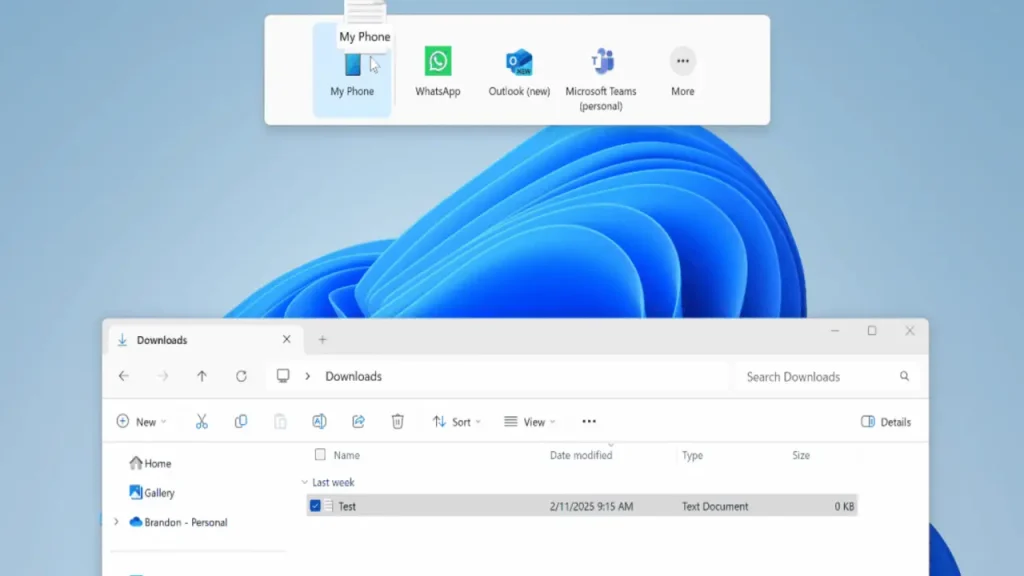
Microsoft has officially removed the experimental Drag Tray feature from the latest Windows 11 beta release. The company initially introduced this tool in February 2025. However, after over a year of testing, user complaints significantly outweighed positive feedback. Consequently, Microsoft decided to eliminate it from the beta channel. Naturally, this feature will not appear in the final, stable version of Windows 11.
Triggering the Sharing Mechanism
The native sharing functionality within Windows 11 was already quite problematic. Specifically, many sharing mechanisms require application-specific adaptations before they function correctly. Similarly, the drag-and-drop sharing feature only supported a limited number of applications. For instance, it worked efficiently with WhatsApp, Outlook, and Microsoft Teams. Therefore, the vast majority of applications simply never appeared within the sharing drop zone.
The core mechanic of this drag-and-drop feature seemed straightforward on paper. When a user dragged a file to the top of the screen, a sharing dialog box would automatically appear. Next, the user could continue dragging to select the desired target application. Subsequently, the operating system would automatically open that specific application. Then, the user had to manually select the intended recipient. Ultimately, this convoluted process proved much more cumbersome than simply opening the application manually to share a file.
Disrupting Standard User Workflows
The primary reason for massive user backlash was its severe interference with normal operations. Currently, the Windows File Explorer fully supports a dynamic multi-tab interface. When users open multiple tabs, they often click and drag files between them. However, this simple action caused significant frustration when the File Explorer window was maximized. Users fully expected their dragged files to land safely in another open tab.
Instead, their cursor frequently triggered the intrusive sharing tray at the top of the screen. Consequently, this aggressive overlay directly interrupted standard file management tasks. Sometimes, users even had to minimize the File Explorer window to successfully bypass the overlay and complete their transfer. Finally, after receiving persistent negative feedback, Microsoft decided to scrap the feature entirely. In the future, the company will continue exploring alternative methods for sharing local files. Nevertheless, the intrusive drag-and-drop sharing tray will absolutely not reach the final Windows 11 release.
Support Our Threat Intelligence
Find our tech and OS security coverage helpful? Support our work today and unlock a 100% ad-free reading experience!
 Buy Me a Coffee
