OpenAI Rolls Out Group Chat Globally: Collaborate with up to 20 People in ChatGPT
 Do Son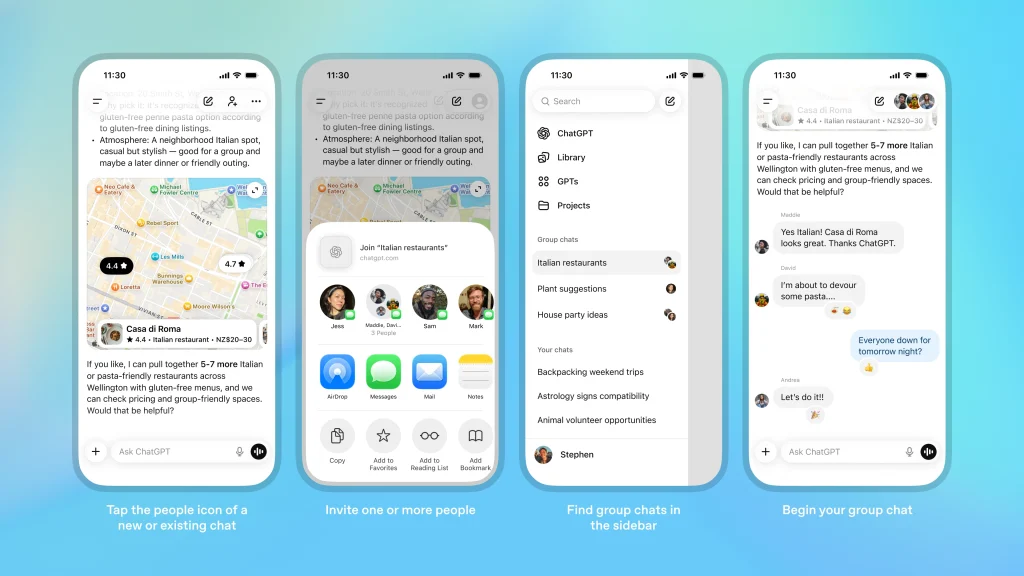
OpenAI began limited testing of ChatGPT’s group chat feature last week, and after a short trial period, the function has now been rolled out globally to all users. Both free and paid users can access group chats, marking a notable step in ChatGPT’s evolution toward more social, collaborative interactions.
The group chat feature allows users to create shared conversation spaces and invite friends, family members, or colleagues to join. These group conversations are entirely separate and isolated from private chats, ensuring that a user’s personal ChatGPT memory is never shared with anyone in the group.
According to OpenAI, group chats are especially useful for planning weekend trips with friends, designing a backyard garden, collaborating on creative projects, choosing restaurants that suit everyone’s tastes, or settling debates. They can also support academic or work-related projects, such as consolidating shared articles, notes, or research questions.
The feature is simple to use: ChatGPT users can click the avatar in the upper-right corner of a new or existing chat window to create a group. The creator can share an invite link with others, and anyone with the link may in turn invite additional participants, with a maximum capacity of twenty people. Group chats are placed in a clearly marked section of the sidebar, distinct from personal conversations.
OpenAI notes that ChatGPT has been trained with new conversational behaviors suited for group dynamics. It can follow the natural flow of discussion and decide when to speak or remain silent based on context. Users may also prompt ChatGPT directly with @mentions, and the assistant can react to messages using emojis.
Group chat is available to all ChatGPT users—including those on the Free, Go, Plus, and Pro plans—and OpenAI will continue refining the experience as adoption grows.
Finally, because group chats are primarily intended for real-life acquaintances, anyone with the invite link can extend invitations to others. As a result, this feature could be misused in public groups, so users are advised not to share sensitive information in such settings.
Related Posts:
- 600 Million Daily Cyberattacks: Microsoft’s Alarming Report
- PyPI Poisoned: 116 Malicious Packages Target Windows and Linux
- Zero-Click Calendar Invite: Critical macOS Vulnerability Chain Uncovered
- ChatGPT Exposed: OpenAI’s Sharing Feature Leaks Private Conversations to Google Search
Support Our Threat Intelligence
Find our tech and OS security coverage helpful? Support our work today and unlock a 100% ad-free reading experience!
 Buy Me a Coffee
