
 Do Son
Google clarifies that recent claims of a "major Gmail security breach" affecting 2.5 billion users are entirely false and based on misinformation.

A new Linux kernel flaw (CVE-2025-38617) in the af_packet subsystem can cause a kernel panic. A PoC has been released, and admins are urged to update patched kernels.

A critical flaw (CVE-2025-57808) in ESPHome allows an attacker on the local network to bypass authentication entirely, gaining control of smart home devices.

A new report reveals TinkyWinkey, a stealthy Windows keylogger that uses low-level APIs and DLL injection to steal credentials and sensitive data from victims.

Anthropic is launching a web-based version of Claude Code. The new tool allows developers to work on code from any browser, streamlining workflows with cloud-based AI.
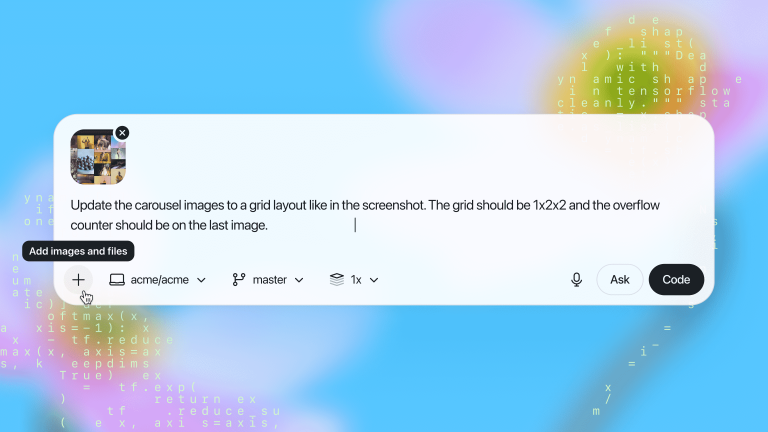
OpenAI's Codex gets a major update with a new VS Code extension and local-to-cloud handoff. The update allows for seamless, synced coding tasks from anywhere.

A new report reveals a Lazarus Group subgroup is using a tiered arsenal of custom RATs—PondRAT, ThemeForestRAT, and RemotePE—to target the financial and crypto sectors.

Qualcomm's latest bulletin patches two critical modem flaws (CVE-2025-21483 & CVE-2025-27034) with CVSS 9.8 scores, enabling remote code execution via rogue cellular base stations.

A new report reveals a dangerous misconfiguration: exposed appsettings.json files can contain Azure AD credentials, giving attackers full access to a company's cloud kingdom.

HashiCorp has issued a security advisory for a high-severity DoS flaw (CVE-2025-6203) in Vault. A malicious JSON payload could make a server unresponsive.

A new report reveals North Korea's APT-37 is using malicious LNK files in a campaign, "Operation HanKook Phantom," to spy on South Korean government and research.

A new report reveals a phishing campaign using fake ads and login pages to steal credentials from employees in the hospitality and vacation rental industry.

A new report from Huntress reveals a hybrid ClickFix attack that abuses the Windows search protocol and malicious LNK files to deliver MetaStealer malware.

A new RAT, disguised as an AI assistant, is using social engineering to infiltrate a role-playing community. The malware provides attackers with full remote control over infected PCs.

A new report reveals a critical flaw in Harness Gitness that allows authenticated attackers to write arbitrary files to the server, risking a full system compromise.

An Iranian-aligned group abused a compromised Omani Foreign Ministry mailbox to send spear-phishing emails to diplomats and international organizations in a global campaign.

A new report reveals a network of Ukrainian and offshore hosting providers are fueling large-scale brute-force and password-spraying campaigns to enable global ransomware attacks.

A critical flaw in a Seiko Solutions networking device allows unauthenticated remote attackers to execute commands with root privileges. The issue has a CVSS score of 9.8.

MediaTek's September security bulletin warns of high-severity flaws in its modem that can be exploited by rogue cellular base stations for remote privilege escalation or DoS.

Apple is testing an AI chatbot named "Asa" to train retail employees on product features. This move could hint at a broader consumer AI strategy.

IBM and AMD are partnering to create "Quantum-Centric Supercomputing," a new architecture that merges high-performance computing with quantum systems.

Rumors suggest the iPhone 17 series will eliminate the physical SIM card in more regions. This bold move could change mobile connectivity as we know it.