
 Do Son
Mozilla is piloting an AI-powered search engine in Firefox, partnering with Perplexity AI. This experimental integration could challenge Google's search dominance.

Microsoft's latest Work Trend Index warns of the "infinite workday," where work increasingly spills into personal time, driven by hybrid models and AI integration.
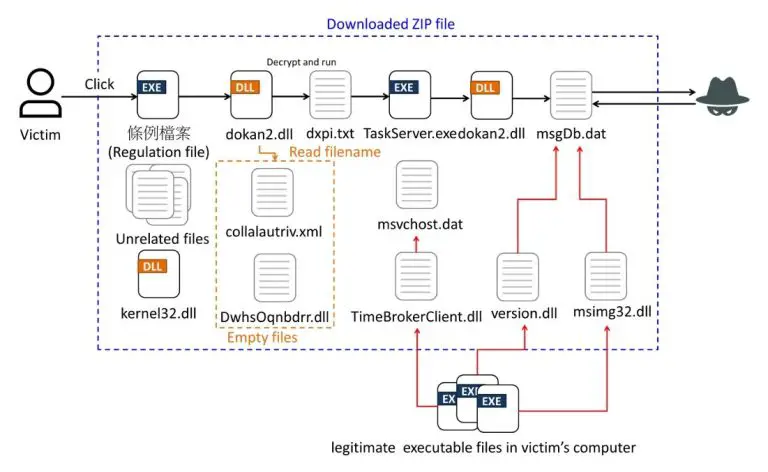
A sophisticated malware campaign is targeting Taiwan, impersonating the National Taxation Bureau to distribute Winos 4.0, HoldingHands RAT, and Gh0stCringe.

Two high-severity Ubiquiti flaws allow privilege escalation via XSS in UCRM and authenticated SQL injection in UISP. Update immediately!

Qualys uncovered two critical Linux flaws (CVE-2025-6018, CVE-2025-6019) allowing local root privilege escalation via PAM and UDisks. Patching is urgent for major distros.

KimJongRAT is back with new PE and PowerShell variants, using LNK files and CDNs to steal browser, email, and over 30 crypto wallet details from victims.

Understand the importance of threat intelligence for businesses. Stay ahead of cyber threats and reduce breach costs effectively.

CISA has added CVE-2023-0386, a critical Linux kernel OverlayFS flaw, to its KEV Catalog, confirming active exploitation allowing local users to gain root privileges.

Cloud Software Group issues urgent patches for two critical NetScaler flaws allowing access bypass and memory overread. Update immediately.

Veeam released a critical update for Backup & Replication, patching three flaws, including a CVSS 9.9 RCE (CVE-2025-23121) allowing authenticated users to execute code.

Google Chrome 137.0.7151.119/.120 is rolling out with crucial security fixes, addressing two high-severity flaws: an integer overflow in V8 and a use-after-free in Profiler.

WAGO Device Manager security updates address two vulnerabilities allowing unauthenticated remote access to sensitive system files.

Kimsuky APT is using HWP documents and stealthy AnyDesk backdoors in a new phishing campaign to infiltrate systems under the guise of academic collaboration.

Trend Micro integrates NVIDIA's Agentic AI Safety into its Secure AI Factory, offering end-to-end security for AI systems from development to runtime, protecting against data leakage and model poisoning.

OpenAI signed a $200M contract with the U.S. DoD to develop advanced AI prototypes for military healthcare, procurement, and cybersecurity needs.

Microsoft disabled Windows Hello facial recognition in dark environments on Windows 10/11 due to a security flaw that could allow local spoofing attacks.

ASUS warns of a high-severity flaw in Armoury Crate that allows authentication bypass and privilege escalation. Update immediately!

Team46 (TaxOff) is exploiting a Google Chrome sandbox escape zero-day (CVE-2025-2783) to deploy the multi-layered Trinper malware via phishing campaigns

Teleport disclosed a critical remote authentication bypass flaw (CVE-2025-49825) affecting self-hosted instances. Upgrade Proxies and agents immediately!

A critical flaw (CVE-2025-49596, CVSS 9.4) in MCP Inspector allows unauthenticated remote code execution, threatening AI application development environments.

SUSE disclosed flaws in sslh (CVE-2025-46807, CVE-2025-46806) allowing remote DoS attacks via file descriptor exhaustion and unsafe memory access.

BeyondTrust warns of a high-severity unauthenticated RCE flaw in Remote Support and PRA, exploitable via the built-in chat feature. Patch immediately