
 Do Son
Google’s November 2025 Android Security Bulletin has addressed multiple vulnerabilities across the platform, including a critical remote...
Latest news

Microsoft recently announced the signing of a five-year agreement with Australian infrastructure operator IREN, valued at up...

OpenAI has recently announced the signing of a multi-year cloud computing agreement with Amazon, valued at up...

Currently, each monthly cumulative update released by Microsoft carries a rather lengthy name, designed to help both...

For many developers and enthusiasts, the art of stripping Windows down to its bare essentials has long...

According to Microsoft’s latest Microsoft Entra ID verification notice, beginning in February 2026, identity authentication for any...

For many years, Apple refrained from offering a web version of the Apple App Store—though that statement...

In the recently released Microsoft Edge v142.0, Microsoft has introduced cross-platform passkey synchronization, a feature that allows...

Apple has officially released iOS 26.1, introducing two noteworthy new features. First, users can now disable the...

Gemma is an open-source artificial intelligence model developed by Google, available to all developers through Google AI...

CVE-2023-6095, CVE-2023-6096 & CVE-2023-6116 could potentially allow unauthorized remote code execution and compromise device security.

During their investigation, ThreatFabric identified a new actor in the Brokewell mobile malware arena—dubbed "Baron Samedit."
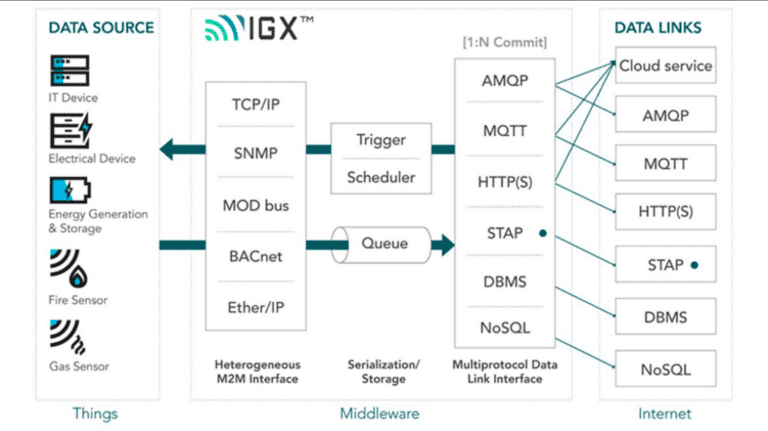
CVE-2024-4163 allows attackers to escalate their privileges and potentially take complete control of the affected devices

thousands of live API keys, authentication tokens, and sensitive data are readily accessible on Postman's Public API Network

MuddyWater, an Iranian state-backed hacking group, is exploiting the legitimate remote monitoring and management (RMM) solution

Threat research team has recently uncovered sophisticated .NET managed code injection methods employed by the notorious AgentTesla malware

Rhino Security Labs has not only disclosed the CVE-2024-2389 vulnerability but has also provided a proof of concept (PoC)

Zscaler ThreatLabz released its 2024 Phishing Report, revealing a disturbing evolution in phishing tactics fueled by generative AI technologies
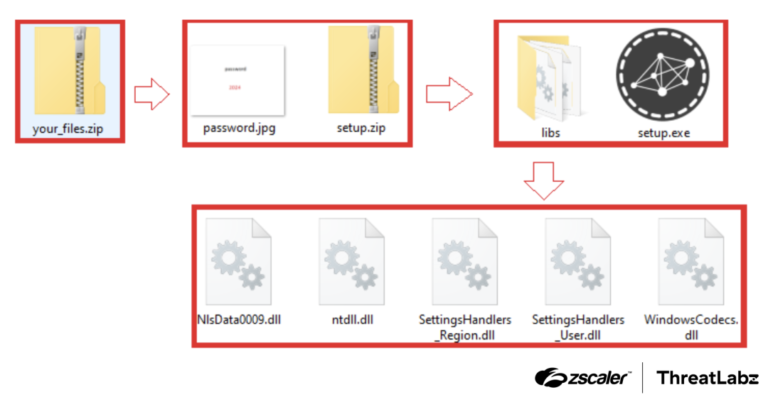
Security experts have revealed a widespread campaign where hackers are hijacking legitimate web hosting platforms to distribute dangerous malware

The situation escalated when a security researcher known as W01fh4cker released a proof-of-concept (PoC) exploit code for CVE-2023-20198

A public-private partnership in the Netherlands has revealed critical information about a dangerous ransomware group dubbed Cactus

CVE-2024-29021, CVE-2024-28185, CVE-2024-28189 affecting Judge0 versions 1.13.0 and earlier have the potential to lead to complete system compromises

The revelation that a state-backed hacking group has been exploiting two zero-day vulnerabilities (CVE-2024-20353, CVE-2024-20359)

The report highlights a coordinated campaign waged by the notorious SideCopy and Transparent Tribe (APT36) groups

CVE-2024-4024: an attacker with stolen Bitbucket credentials could potentially take over a GitLab account linked to another user's Bitbucket account

A new report from Cyble Research & Intelligence Labs (CRIL) has shed light on the origins of DragonForce, a dangerous ransomware strain

Cisco has identified two vulnerabilities that were abused in the ArcaneDoor campaign (CVE-2024-20353 and CVE-2024-20359).

CVE-2024-4058 (Critical): Type confusion vulnerability in ANGLE that could lead to arbitrary code execution

The vulnerability, labeled CVE-2023-27368 (CVSS 8.4), could allow hackers to completely bypass the router's login system

popular Chinese keyboard apps transmit your keystrokes in ways that leave them shockingly vulnerable to interception

These vulnerabilities, CVE-2024-21508 and CVE-2024-21509, could have far-reaching consequences for organizations across industries.

A sophisticated hacking group suspected to be the infamous CoralRaider is ramping up its attacks, using multiple well-known infostealers