
 Do Son
Researchers at SEQRITE Labs have uncovered a targeted spear-phishing campaign aimed at organizations in Russia’s automobile and...
Latest news

A new joint analysis by Mandiant Threat Defense and Google Threat Intelligence Group (GTIG) has exposed a...

A new analysis from Socket has exposed a large-scale spamware operation abusing Google’s Chrome Web Store and...

FortiGuard Labs has uncovered a sophisticated cross-regional campaign that has gradually expanded from China to Taiwan, Japan,...

A new report from NTT Security Japan has spotlighted an evolved malware family known as OtterCandy, attributed...

Moxa, a leading manufacturer of industrial networking and security appliances, has released an urgent security advisory addressing...

Researchers Ivan Fratric and Natalie Silvanovich from Google Project Zero have disclosed a critical 0-click vulnerability (CVE-2025-54957,...

Google Threat Intelligence Group (GTIG) has uncovered a new campaign by the North Korean threat actor UNC5342,...

Google recently announced through its official Privacy Sandbox website that the ambitious initiative—launched in 2019 to replace...

NVIDIA recently announced a milestone of profound symbolic significance, as CEO Jensen Huang personally unveiled the first...

AnyDesk, a widely used remote desktop software, recently announced a significant breach within its production environment
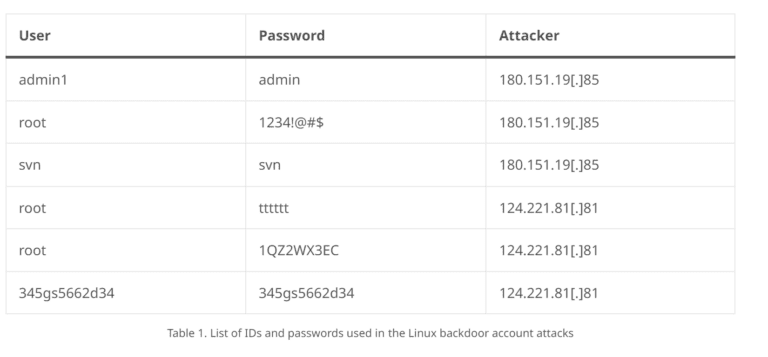
backdoor accounts - a tactic not limited to any single operating system but prevalent across both Windows and Linux environments

CVE-2024-23832 in the decentralized social networking platform Mastodon could be exploited to impersonate and take over any remote account

As investigators delve deeper into the labyrinthine world of the UAC-0027 hacking group, they have uncovered 486 IP addresses

Wordfence has sounded the alarm, reporting over 1,400 blocked attacks targeting CVE-2023-6700 in the past 24 hours alone

The final phase of the ApateWeb campaign, Layer 3, is where victims encounter the malicious payload. This payload can manifest as scareware

Dubbed CVE-2024-1072, this flaw was a gaping hole rated 8.2 out of 10 on the severity scale. This high rating underscored the potential havoc

This realm has now become the breeding ground for a more sinister threat: the macOS.Bkdr.Activator malware

Just as a vigilant sentinel stands guard, SIEM systems watch over the digital landscapes of businesses. SIEM...

Every year, more and more people become familiar with affiliate marketing. With its help, online sales can...

There is no publicly available PoC exploit for CVE-2024-21833. Evidence from underground forums indicates active exploitation of this flaw

In our increasingly interconnected world, effective communication knows no bounds. The internet has made it possible for...

Discovered by vigilant researchers at Trend Micro, the second vulnerability remedied in this update was the RCE POP chain flaw

Elastic Security Labs uncovered a sophisticated cyber intrusion, dubbed REF0657, targeting a financial services organization in South Asia

CVE-2024-21626, a critical flaw in runc, allowed for a potential container escape, enabling unauthorized access to the host filesystem

As the tax season rolls in, so does the threat of cybercrime, and leading the charge in 2024 is the infamous TA576 threat actor

Apple has recently confronted a formidable challenge: a zero-day vulnerability within their groundbreaking product, the Apple Vision Pro

Orchestrated by the notorious APT28 group, this campaign was a masterclass in cyber deception and manipulation.

Recently, a significant vulnerability in ModSecurity versions 3.0.0 to 3.0.11, identified as CVE-2024-1019, has surfaced.

where cyber threats continually evolve, the rise of scripted ransomware marks a new era of digital extortion

In the ever-evolving landscape of the digital world, cybersecurity has become a paramount concern for organizations of...

If CVE-2024-21887 is used in conjunction with CVE-2023-46805, exploitation does not require authentication and enables a threat actor