
 Do Son
Storage device manufacturer SanDisk has recently announced a 10% price increase across all consumer products and channel...
Latest news

Qualcomm has announced an expanded collaboration with Google Cloud, centered on bringing Google Cloud’s AI Agent for...

The pREST project has issued a security advisory for CVE-2025-58450, a systemic SQL injection flaw that threatens...

Socket has detected a large-scale supply chain attack in progress targeting the npm ecosystem. The account of...

Adobe has broken from its regular patch schedule to release an emergency fix for CVE-2025-54236, a vulnerability...

FortiGuard Labs has uncovered a sophisticated phishing campaign that deploys a new Remote Access Trojan (RAT) dubbed...

Threat analysts at Silent Push have identified dozens of previously unreported domains tied to Salt Typhoon, a...

Spring has disclosed a critical vulnerability in Spring Cloud Gateway Server WebFlux that allows attackers to modify...

Security researcher Mickey Jin (@patch1t) has uncovered a critical vulnerability in Apple’s file copy APIs that could...

CYFIRMA has released an in-depth analysis of Salat Stealer (also known as WEB_RAT), a sophisticated Go-based malware...

Horizon3.ai has made public a PoC exploit for CVE-2022-39952 that allows an attacker to create a reverse shell.

Apache Tomcat was vulnerable to Apache Commons FileUpload flaw CVE-2023-24998 as there was no limit to the number of request parts processed

An attacker could exploit the CVE-2022-27677 vulnerability to execute arbitrary code with higher privileges on the system.

Tracked as CVE-2023-23947 (CVSS score of 9.1), the bug exists due to improper authorization, was introduced in Argo CD version v2.3.0-rc1

CVE-2022-39952 could allow unauthenticated threat actors to execute unauthorized code or commands via specifically crafted HTTP requests
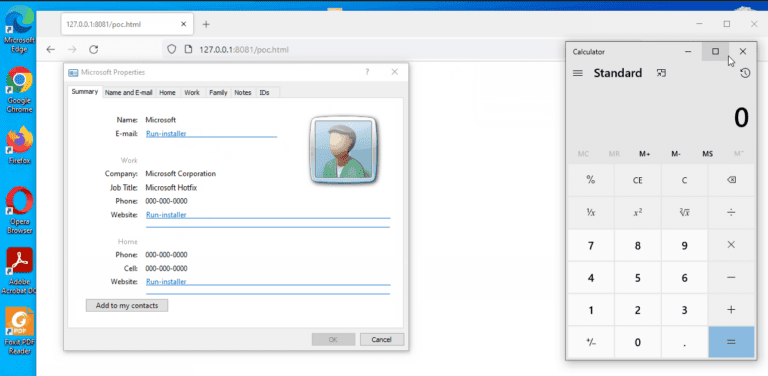
A technical analysis of the CVE-2022-44666 bug was published and a PoC exploit has now been created on the Github page.
CVE-2023-0662 is a remote unauthenticated Denial of Service vulnerability and affects the default/production configuration.

an authenticated attacker could exploit the CVE-2023-20009 vulnerability to execute arbitrary commands as root.

Tracked as CVE-2023-20032 with a CVSS score of 9.8, the critical bug exists because of improper bounds checking

This post introduces an effective solution to avoid the “cloned hard disk shows wrong size” issue. It also provides several effective troubleshooting methods

RCE Security has been credited with discovering and reporting the bug on January 13 that's been assigned the identifier CVE-2023-0291

An attacker could exploit CVE-2023-25725 to bypass HAProxy's headers processing, thus, could smuggle HTTP requests to the backend server
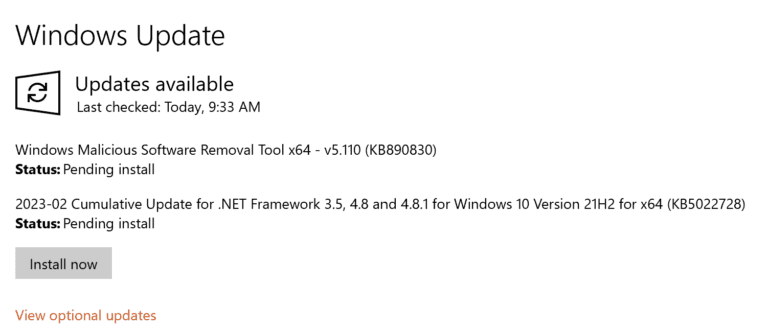
By executing a specially-crafted program, an authenticated attacker could exploit CVE-2023-21823 to gain SYSTEM privileges.

Excellent tips and tricks that you can effectively use during your journey as a programming student to...

Language translation has become a high-demand service as a result of globalization and legal and regulatory requirements,...

CVE-2023-23529, the issue has been described by the tech giant as a type confusion issue in the WebKit browser engine
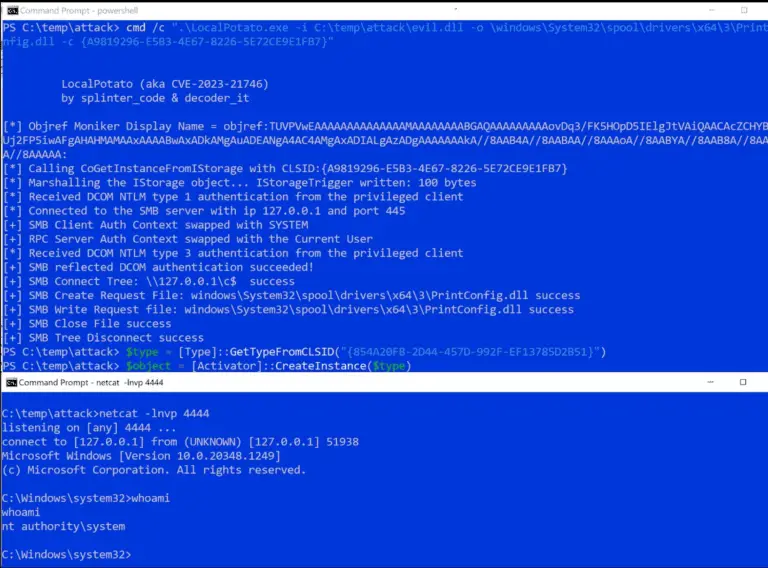
Two security researchers Andrea Pierini & Antonio Cocomazzi announced the release of PoC exploits code targeting the CVE-2023-21746 flaw

Namecheap has its mail system hacked. Some users found that they received a phishing email from hello@namecheap.com.

CVE-2023-20076 (CVSS score of 7.2) exists because of incomplete sanitization of parameters passed in for activation of an application

There are so many applications out there that help out in daily life to such a degree...

The Internet has changed us completely. The way we live, communicate, work, and even go to sleep...

Tracked as CVE-2023-25194, Apache Kafka could allow a remote authenticated attacker to execute arbitrary code on the system