Raspberry Pi Unveils $4 Radio Module 2: Bringing Wi-Fi 4 & Bluetooth 5.2 to Custom Boards
 Do Son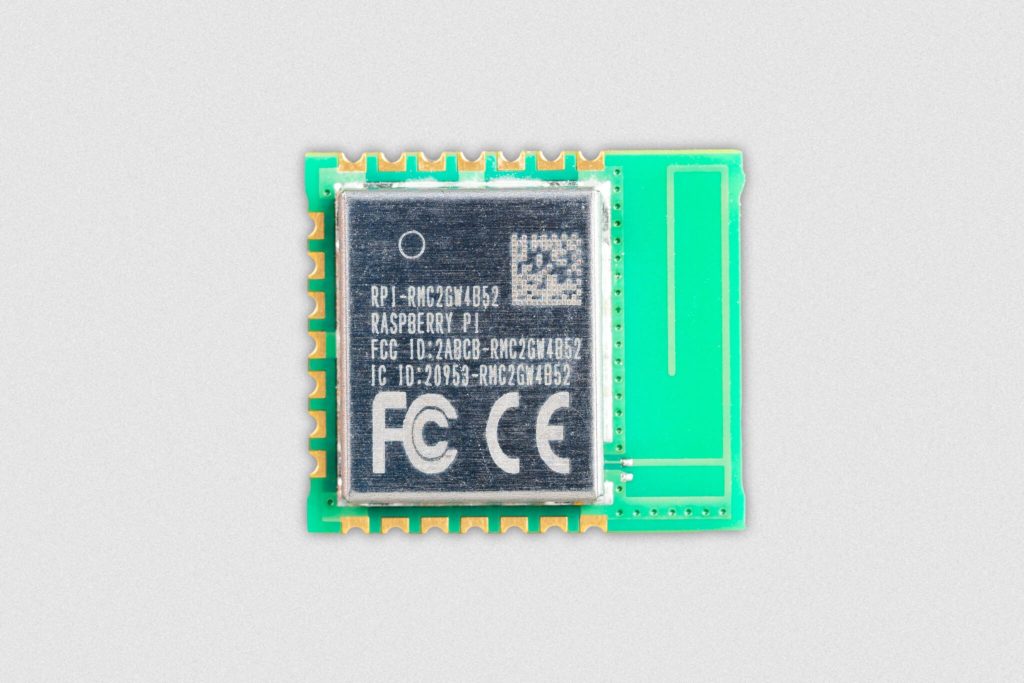
Single-board computer manufacturer Raspberry Pi has recently unveiled a $4 wireless module (Radio Module 2) aimed at providing support for Wi-Fi 4/802.11n and Bluetooth 5.2 protocols. This compact module enables Raspberry Pi projects to effortlessly connect to Wi-Fi networks and pair with devices over Bluetooth.
While Raspberry Pi boards such as the Raspberry Pi 4B natively support both 2.4GHz and 5GHz Wi-Fi along with Bluetooth 5.2, the company also offers microcontroller chips that allow developers to build custom boards. These custom boards, however, often lack integrated wireless capabilities, necessitating the use of an external module like Radio Module 2 to enable Wi-Fi and Bluetooth connectivity.
Radio Module 2 is, in fact, identical to the Infineon CYW43439 module previously introduced for use with the Pico W and Pico 2 W. These modules come with full FCC wireless certification, allowing developers to bypass the expensive and time-consuming certification process—often costing tens of thousands of dollars—and use the module immediately upon purchase.
Notably, this wireless module is not designed for plug-and-play connections via simple cables; instead, it requires manual soldering onto the mainboard. It includes an onboard 2.4GHz Wi-Fi antenna, eliminating the need for external antennas in most scenarios.
For connectivity, the module employs an SPI host interface, chosen to efficiently utilize the CPU’s I/O. Measuring a compact 16.5mm x 14.5mm, it only requires connections to a Raspberry Pi chip—such as the RP2040 microcontroller—and a power supply, making additional power circuitry unnecessary.
Due to its small size and compact antenna, this module is tailored for simpler projects, and since it supports only the Wi-Fi 4 protocol, connection speeds are modest. Nevertheless, for the majority of Raspberry Pi applications, its capabilities should prove more than sufficient.
Finally, the module integrates a power amplifier, a low-noise amplifier, and a transmit/receive switch, allowing it to maintain solid performance even when sharing a single antenna for both Wi-Fi and Bluetooth transmissions.
Related Posts:
- Developer makes Windows 10 to run on Raspberry Pi 3
- All Raspberry Pi Devices were not affected by the Meltdown and Spectre Vulnerabilities
- Raspberry Pi 3 Model B+ released: faster CPU, supports 5GHz Wi-Fi and Bluetooth 4.2
- Raspberry Pi Foundation Launches More Affordable 2GB Pi 5
- Cisco Confirms Critical RADIUS Protocol Vulnerability in Multi Products: Patch Now!
Support Our Threat Intelligence
Find our tech and OS security coverage helpful? Support our work today and unlock a 100% ad-free reading experience!
 Buy Me a Coffee
