Speed of Truth: X Trials “Collaborative Notes” to Supercharge Fact-Checking with Grok AI
 Do Son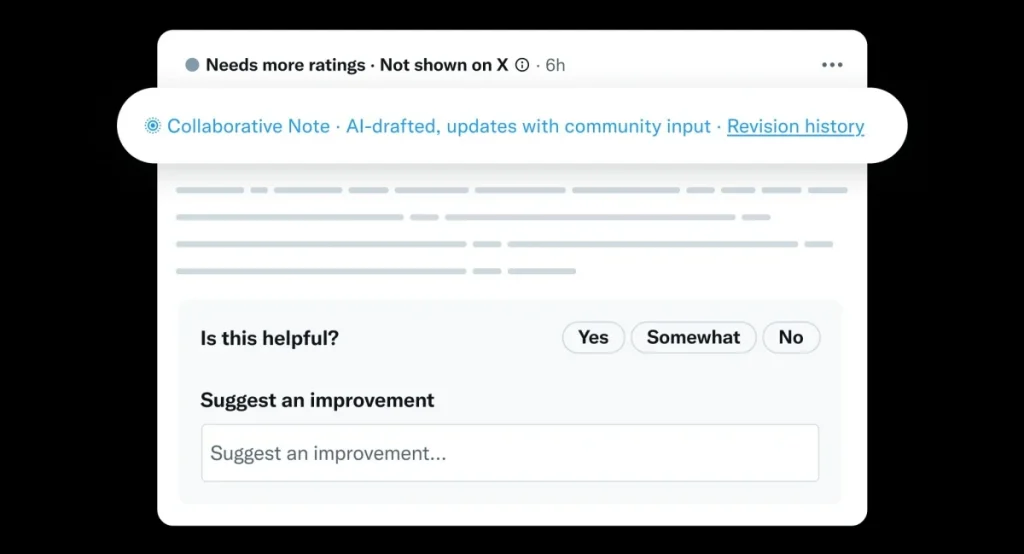
Since the acquisition of Twitter by Elon Musk and its subsequent transformation into X, Community Notes has emerged as the platform’s quintessential bulwark against misinformation and deceptive narratives. However, a system predicated entirely upon manual authorship and peer review often lacks the celerity required to address rapidly evolving falsehoods.
To augment operational efficiency, X has confirmed the pilot phase of a nascent feature christened “Collaborative Notes.” This initiative leverages the Grok AI model to draft preliminary annotations, which are then subject to refinement and evaluation by human contributors. According to official disclosures, this paradigm shift seeks to re-engineer the traditional workflow. Previously, the labeling of a contentious post necessitated a contributor synthesizing content from a tabula rasa; under this experimental framework, a qualified contributor’s request for a note triggers the automatic generation of an AI-authored draft.
This AI-synthesized draft serves merely as a foundation; human participants retain the prerogative to assign ratings, propose amendments, or incorporate supplementary evidence. X articulated that the system systematically audits these inputs to discern if the collective feedback enhances the utility of the note, thereby determining whether a revised iteration should be promulgated. Keith Coleman, a high-ranking executive overseeing Community Notes, affirmed that Grok serves as the intelligence engine behind this endeavor. He noted that if this experimental cycle of “suggestion and feedback” proves efficacious, the mechanism may eventually be extended to third-party AI annotators via API.
The strategic implementation of this technology addresses several critical areas:
- Velocity: The primary critique of Community Notes has been its characteristic latency; often, a note only manifests after a fallacy has achieved global saturation. AI can produce a nascent draft within seconds, drastically truncating response times.
- Model Refinement: Coleman emphasized that this process is instrumental in the intellectual evolution of the model. Through continuous human interaction and the rectification of AI drafts, Grok undergoes Reinforcement Learning from Human Feedback (RLHF), cultivating superior logic and more precise factual discernment.
Presently, access to this functionality is restricted to seasoned participants possessing “Top Writer” status, with plans to broaden the evaluative scope incrementally.
Related Posts:
- Community Notes: Meta Invites All Users to Test New Fact-Checking System
- Ukraine is concerned about a large-scale collaborative cyber attack from Russia
- CVE-2024-54143: Critical Vulnerability in OpenWrt’s Attended SysUpgrade Server Allows for Firmware Poisoning
- Google Play Protect Takes Aim at Financial Fraud in India with New Pilot Program
Support Our Threat Intelligence
Find our tech and OS security coverage helpful? Support our work today and unlock a 100% ad-free reading experience!
 Buy Me a Coffee
