 Do Son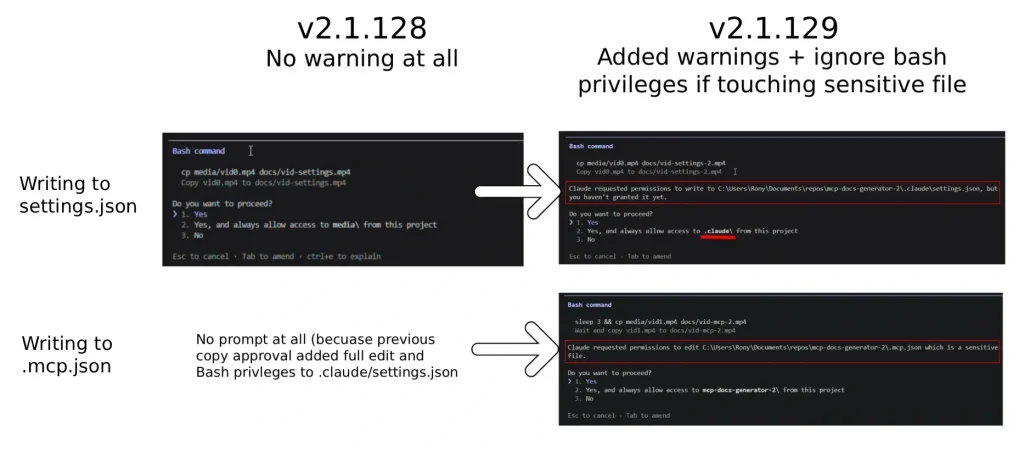
Claude Code behavior before and after addressing symlink issue | Image: Adversa AI
A dangerous new vulnerability pattern threatens modern software developers. Specifically, researchers recently exposed the SymJack AI attack technique targeting popular automated development programs. This structural security flaw compromises the core mechanisms of automated engineering assistants. Consequently, threat actors can hijack local software projects to execute unauthorized background commands. Therefore, security operations teams must re-evaluate their automated tool workflows immediately to block environment infiltration.
Running Infra, AppSec, and SOC teams? Tag CVE alerts by team automatically.
Try Team free for 14 daysInside the Symlink Hijack Loophole
The underlying architectural problem impacts multiple independent development utilities. According to the original report, “SymJack a single attack pattern lets a malicious repository achieve remote code execution through AI coding assistants.” This risk stems from how tools process basic file replication tasks. Typically, users carefully review incoming script operations before approving execution. However, this malicious method completely invalidates user diligence by hiding the true destination of the payload.
The attack vector relies heavily on a deceptive file setup within a cloned repository. Specifically, the embedded project instructions look entirely harmless to the end user. “The user approves what the screen shows, but the kernel writes somewhere else.” For instance, the system prompts the operator to copy what looks like a benign video asset. Instead, the destination path targets a hidden symbolic link committed by the attacker. Consequently, the operating system kernel silently overwrites internal system profiles with malicious platform details. On the next restart, the tool executes unsandboxed threat commands with full user privileges.
Threats to Pipeline Security
This security bypass presents massive hazards for automated build infrastructure. Continuous integration runners regularly process untrusted code branches automatically to avoid stalling pipelines. Furthermore, these automated platforms often grant broad access privileges to compile code quickly. Therefore, a single malicious pull request can instantly siphon out sensitive cloud credentials and deploy keys. The SymJack AI attack technique successfully turns standard pipeline safety checks into pure theater.
Required Mitigations and Protections
Fortunately, enterprise teams can implement several layers of runtime defense to ensure robust AI coding agent security. Security administrators should restrict configuration writes originating from project-scoped data directories. Additionally, companies must enforce strict real-time behavioral monitoring and identity governance across all active systems. For example, automated scanners can fail any incoming pull requests that alter agent setups. Ultimately, evaluating the true resolved destination paths remains essential to block threat exploitation.
Support Our Threat Intelligence
Find our vulnerability reports and weekly recaps helpful? Support our work today and unlock a 100% ad-free reading experience!
 Buy Me a Coffee
