
 Do Son
An Apache ActiveMQ vulnerability enables authorization bypass, while an AMQP flaw allows denial-of-service. Update to 5.19.9, 6.2.8, or 6.3.0 now.
Apache ActiveMQ

Critical RCE and XSS vulnerabilities hit Apache ActiveMQ (CVE-2026-41044, 40466). Authenticated attackers can hijack the JVM. Update to 5.19.6 or 6.2.5 now.
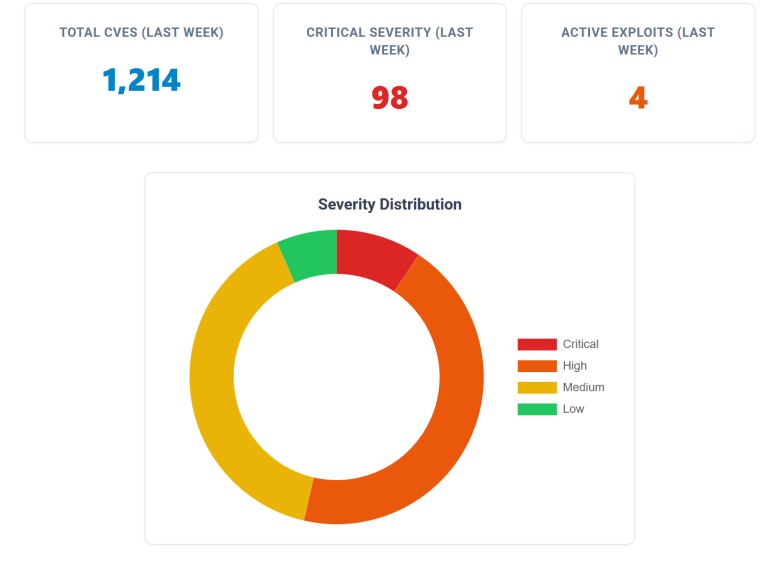
This week's digest: 1,214 new bugs, including active exploits on 2009 Excel fossils and critical 10.0 flaws in new AI/MCP infrastructure. Priority: Patch now.


Apache ActiveMQ patches critical TLSv1.3 memory exhaustion (CVE-2026-39304) and an MQTT regression. Upgrade to 6.2.4 or 5.19.5 to secure your broker!
An integer overflow flaw (CVE-2025-66168) in Apache ActiveMQ's MQTT module allows authenticated attackers to crash brokers. Update your systems immediately.

The DFIR Report reveals how a persistent attacker exploited CVE-2023-46604 twice in 18 days to deploy LockBit ransomware. Patch your ActiveMQ servers now!

Apache issued a critical fix for ActiveMQ NMS AMQP Client (CVE-2025-54539). The deserialization flaw allows untrusted AMQP servers to execute remote code on client systems.
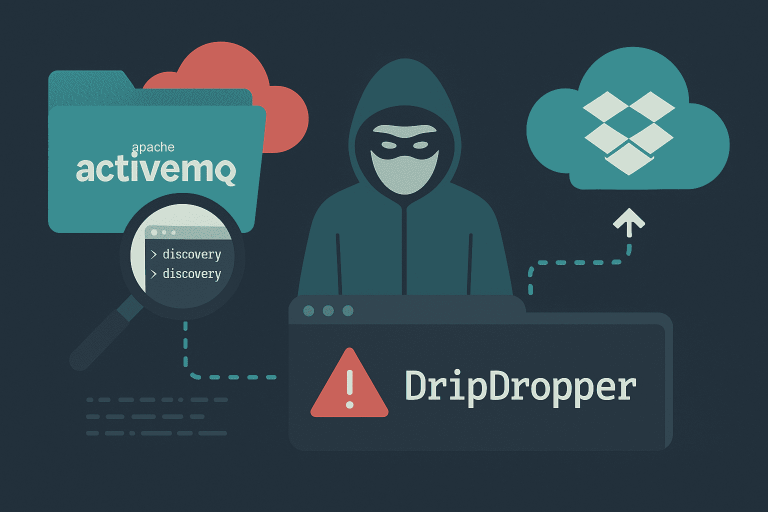
A Red Canary report reveals attackers are exploiting an Apache ActiveMQ flaw to breach Linux systems, then patching the vulnerability to hide their presence.

Stay informed about the latest cyber threat: Mauri ransomware exploiting a critical vulnerability (CVE-2023-46604) in Apache ActiveMQ.

CVE-2024-32114 has been rated with a severity score of 8.5 on the CVSS scale, indicating a high level of risk.

Further investigation revealed that this JSP code was from an open-source web shell known as the Godzilla Webshell.

CVE-2023-46604 is being used to infiltrate Linux systems with the Kinsing malware, culminating in a nefarious cryptocurrency mining operation

Security researchers at Rapid7 have observed hackers exploiting the vulnerability to deploy the HelloKitty ransomware on target systems

To gauge the potential impact of CVE-2023-46604, Qi Anxin CERT replicated the Apache ActiveMQ remote code execution vulnerability