 Do Son
A South Korea app store fine penalizes Apple and Google $48 million for enforcing coercive in-app payment rules and imposing excessive commission fees.
south korea
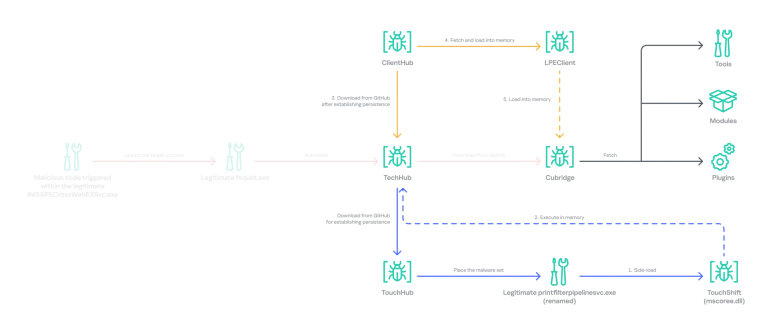
In Operation FlashHole, the Lazarus Group used AI-made lure sites, CrossWeb EX, and GitHub C2 to spy on South Korean firms. Here is how.
CrowdStrike links the ARTEX AI tool to breaches at South Korean banks, run by a suspected Chinese-speaking, profit-driven attacker.
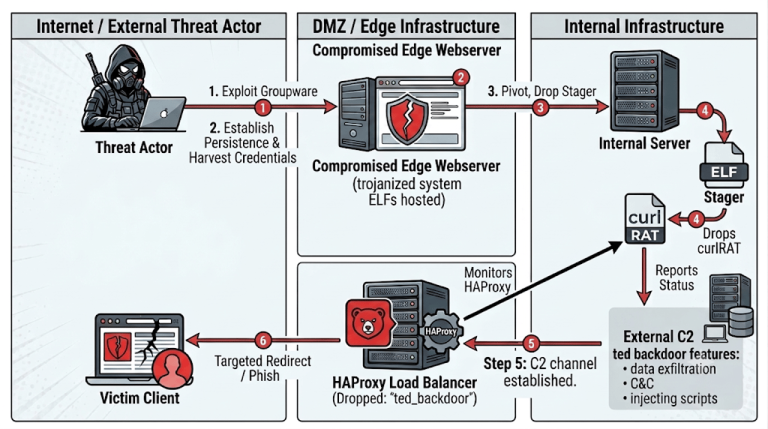
The ted backdoor is DPRK Linux malware hidden inside HAProxy. It pairs with curlRAT to spy on South Korean media and automotive firms, Rapid7 reports.
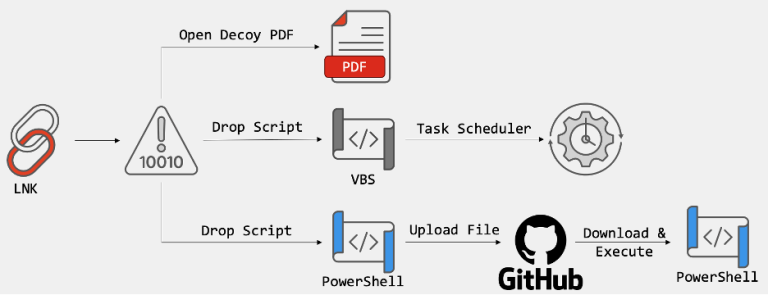
FortiGuard Labs unmasks a South Korean espionage wave abusing the GitHub API for C2 and using LNK files to stay invisible. Protect your network from LotL.

DPRK spies weaponize Visual Studio Code tunnels to bypass security. Darktrace reveals a campaign targeting South Korea with government decoys.

E-commerce giant Coupang confirmed a breach exposing 33.7 million users (names, emails, addresses)—nearly its entire base. Financial data was not compromised, but social engineering risk is high.

Qilin & North Korean hackers launch "Korean Leaks," a massive supply chain attack on South Korea's financial sector via a compromised MSP.

North Korea's KONNI APT is exploiting stolen Google accounts and the Find Hub service to remotely wipe South Korean Android devices for data destruction and surveillance, then spreading malware via KakaoTalk.

XLab exposed RPX_Client, a new PolarEdge malware that turns IoT/router devices into a global ORB proxy network. The ELF binary uses XOR to encrypt config and spreads across 40 countries.

A new report reveals that the North Korean Kimsuky APT is using social engineering on Facebook and Telegram to deliver AppleSeed malware to targets in South Korea.

A new report reveals North Korea's APT-37 is using malicious LNK files in a campaign, "Operation HanKook Phantom," to spy on South Korean government and research.

SK Telecom was fined a record-breaking $96.5 million after a massive data breach exposed the personal data of 27 million users.

Starbucks Korea bans desktop computers and printers in its cafes to curb the "cagongjok" trend of turning shared spaces into personal offices.

A new report reveals Kimsuky, a North Korea-linked APT, is using sophisticated LNK files and reflective payloads to infiltrate systems and conduct cyberespionage against South Korean targets.

APT37, a North Korea-linked group, is using a new RoKRAT backdoor to target South Korea. The malware uses stealthy LNK files and steganography to evade detection.

Elon Musk confirms a $16.5B, nine-year deal with Samsung for AI6 chip production at its Texas foundry, a crucial win for Samsung's struggling chip business and Tesla's AI future.

ASEC uncovers sophisticated attacks targeting South Korean Windows IIS and Linux systems, deploying WogRAT, MeshAgent, and SuperShell for cyber-espionage and lateral movement.

A sophisticated campaign deployed malicious IIS modules on South Korean web servers, enabling traffic control and backdoor access. Suspected Chinese actor.

Kaspersky uncovers "Operation SyncHole," a sophisticated cyber-espionage campaign by the Lazarus Group targeting critical South Korean sectors using advanced malware.

ViperSoftX malware is being used by Arabic-speaking attackers to target South Korea, according to ASEC. This malware uses PowerShell and spreads through torrents, delivering PureCrypter and Quasar RAT

According to newatlas, just as the United Nations continues to formulate clear international treaties related to deadly...