 Do Son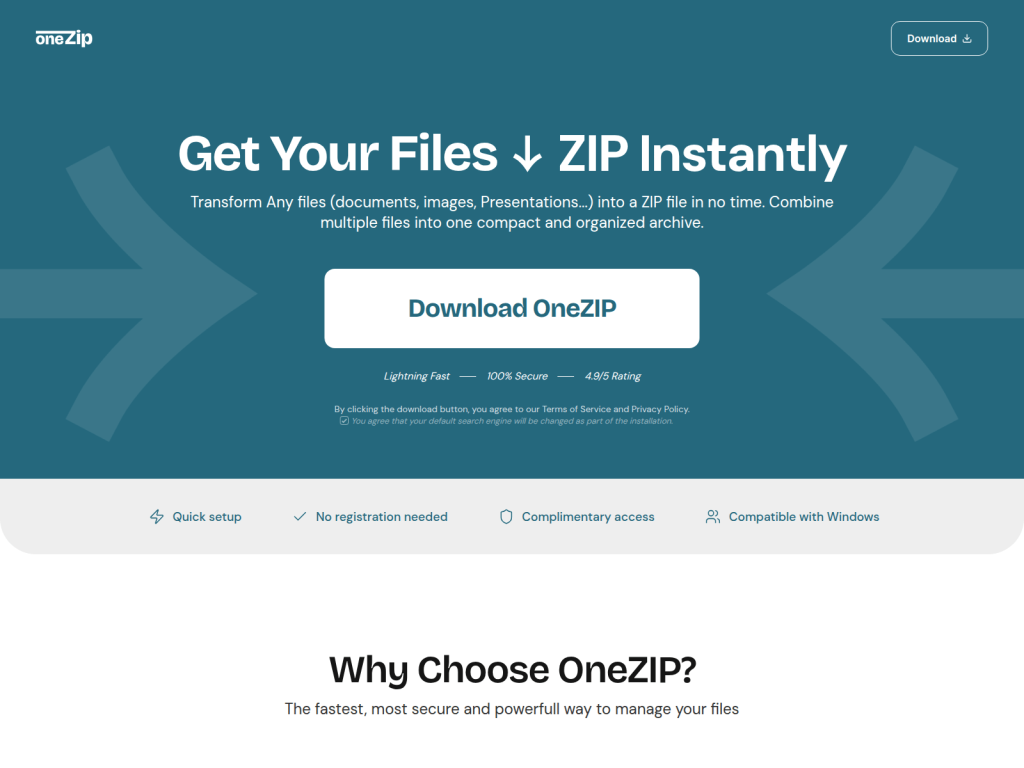
OneZip landing page
Cybersecurity researchers have uncovered a massive global operation that distributes trojanized software to unsuspecting corporate networks. Specifically, this widespread threat cluster infects various computer systems across more than half of the monitored corporate customer base. This dangerous cluster behaves similarly to a notorious public threat profile. Consequently, investigators are closely tracking the rapid proliferation of the Tampered Chef malware families. These deceptive applications blend seamlessly into routine business environments. Therefore, standard security infrastructure frequently struggles to detect their presence.
Disguised as Essential Business Tools
To begin with, the operators behind these campaigns cleverly target daily administrative workflows. They inject malicious code into functional software like calendars, file compressors, and image creators. According to the Unit 42 threat report, “TamperedChef-style malware is trojanized productivity software, such as PDF editors or calendars, that deliver malicious payloads.”
For instance, popular variants include fake platforms like AppSuite PDF, Calendaromatic, and CrystalPDF. Furthermore, these applications avoid the typical red flags that users normally associate with untrusted software downloads. They feature elegant, highly professional websites with complete legal terms, user documentation, and clear contact pages. As a result, typical corporate users download the utilities with zero initial suspicion.
Deep Dive into the Active Clusters
The CL-CRI-1089 Infrastructure
Analysts have successfully categorized this sweeping activity into three distinct infrastructure groups. The first group, labeled CL-CRI-1089, has been highly active since early 2023. This group primarily leverages corporate structures connected to Ukrainian entities to sign its code base.
The CL-UNK-1090 Infrastructure
On the other hand, the second major group is CL-UNK-1090. This cluster demonstrates unique evidence of vertical integration between malicious code creators and real advertising companies. For example, the operators of CL-UNK-1090 own both the front-end ad agencies and the back-end code-signing corporate shell structures. Consequently, this calculated choice gives them immense power over the entire software distribution pipeline.
The Financial Cost of Code-Signing
In addition, the threat actors use legitimate code-signing certificates to make their files appear valid to operating systems. However, this complex strategy requires significant financial resources and continuous corporate registration. For example, one campaign spent over $10,000 on certificate validation expenses alone to remain hidden from network security warnings.
Recently, researchers observed a sharp pivot away from this expensive signing practice. The report notes that “The damage done by identifying an entire campaign through tracking code signers may now outweigh the benefits gained through signing binaries.” Instead, the group relies heavily on automated generative AI tools. They use large language models to rapidly build thousands of distinct landing page variants to evade simple hash matching.
Malvertising Operations at Scale
Furthermore, the scale of the distribution network is truly unprecedented. The actors hijack popular search engine marketing results to push their payloads directly to corporate users. Victims usually encounter these deceptive ads when searching for standard workflow phrases like “document formatting”.
Specifically, the group behind CL-UNK-1090 deployed more than 20,000 unique ads over several years. An Israeli-registered firm called CANDY TECH LTD acts as a central distributor for these campaigns. This firm runs targeted ads in multiple formats and languages. Thus, the attackers show an expert understanding of modern digital marketing structures.
Severe Hidden Post-Dormancy Risks
Defenders often miscategorize these files as harmless adware because they provide the promised application utility initially. However, the software remains completely dormant for weeks or months to bypass automated sandboxes. When it finally triggers, it connects to an upstream API to download highly destructive modules like info-stealers or remote access Trojans.
The analysis strongly emphasizes that “These applications can execute arbitrary code on victims’ machines, either directly or indirectly through module loads, these threats are more significant than mere background annoyances or adware.” Ultimately, this malicious capability makes the Tampered Chef malware a severe threat to data integrity worldwide. Organizations must continuously monitor their endpoints for unauthorized scheduled tasks and registry run keys to stop these infections early.
Support Our Threat Intelligence
Find our threat intelligence and malware analysis helpful? Support our work today and unlock a 100% ad-free reading experience!
 Buy Me a Coffee
