Tech Force: US Government Recruits 1,000 Elite AI Engineers with Apple, Microsoft, and NVIDIA Partnership
 Do Son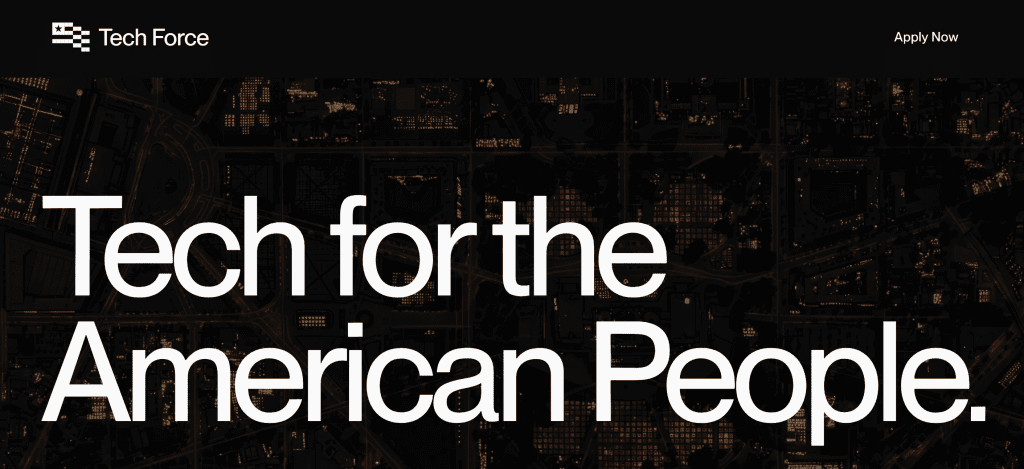
To prevent the U.S. federal government from falling behind in the AI era, the Trump administration has unveiled a new initiative. Under a program dubbed “Tech Force,” it announced plans to partner with technology leaders such as Apple, Microsoft, OpenAI, and NVIDIA to recruit approximately 1,000 elite engineers and technical experts into government service, with the aim of upgrading national-level AI infrastructure.
According to information published on the program’s official website, this “technology special forces unit” is not tasked with fixing jammed office printers, but with executing high-impact technical projects. Its core responsibilities include:
- AI implementation: integrating artificial intelligence into federal agency operations.
- Application development: enhancing and modernizing government digital services.
- Data modernization: overhauling the government’s vast, fragmented, and aging data architectures.
These specialists will report directly to the heads of federal agencies, operating with significant authority and seniority. What makes the initiative particularly striking is its roster of high-profile partners. Beyond Apple, Microsoft, and OpenAI, participants include AWS (Amazon), Google, NVIDIA, Oracle, and the enigmatic big-data unicorn Palantir.
To attract talent accustomed to Silicon Valley–level compensation, Tech Force has been designed with a distinctive two-way mobility mechanism:
- Two-year term: participants commit to serving the government for a fixed period of two years.
- Priority hiring: upon completion of their term, participating tech giants pledge to give preferential consideration to these experts, now seasoned with government experience.
- Corporate secondments: private companies may nominate internal staff to take part in rotational assignments within government.
In terms of compensation, the program offers annual salaries ranging from USD 150,000 to 200,000 (approximately TWD 4.88–6.5 million), along with benefits. While this may fall short of the pay packages commanded by top engineers at NVIDIA or OpenAI, the promise of a “revolving door” career pathway and the prestige of public service still confer meaningful appeal.
Scott Kupor, Director of the U.S. Office of Personnel Management (OPM), stated that the initiative is intended to reshape the government workforce and ensure it possesses the right talent to address modernization challenges. Tech Force forms part of a broader series of AI policies rolled out by the Trump administration. Just four days earlier, Trump signed an executive order establishing a unified national AI policy framework and emphasized the need to remove barriers for AI companies operating in the United States.
Conceptually, Tech Force bears some resemblance to the U.S. Digital Service (USDS) established during the Obama administration, but on a larger scale and with a far more explicit focus on AI and infrastructure.
For technology giants, the program represents a valuable opportunity to deepen ties with government—particularly for firms like Palantir and Microsoft, which already maintain close public-sector relationships. For engineers, although compensation may represent a modest “step down,” the chance to work with national-scale data and projects, burnish one’s résumé, and then return to the private sector after two years constitutes a compelling long-term career investment.
More broadly, the initiative underscores the urgency with which the U.S. government—amid intensifying U.S.–China technological rivalry—is seeking to transfuse the private sector’s formidable AI capabilities into the public system, lest government effectiveness be left far behind by the accelerating technological tide.
Related Posts:
- UNC5812: Unmasking the Russian Operation to Sabotage Ukraine’s Military Recruitment
- Snapdragon 8 Elite Gen 5 Unveiled: The Fastest Mobile Chip Powers Next-Gen Agentic AI
- Qualcomm Unveils the Snapdragon 8 Elite Gen 5, Launching First with Xiaomi
Support Our Threat Intelligence
Find our tech and OS security coverage helpful? Support our work today and unlock a 100% ad-free reading experience!
 Buy Me a Coffee
