Bot Revolution: How Telegram’s New “Manager Mode” Lets AI Agents Spawn Their Own Sub-Bots
 Do Son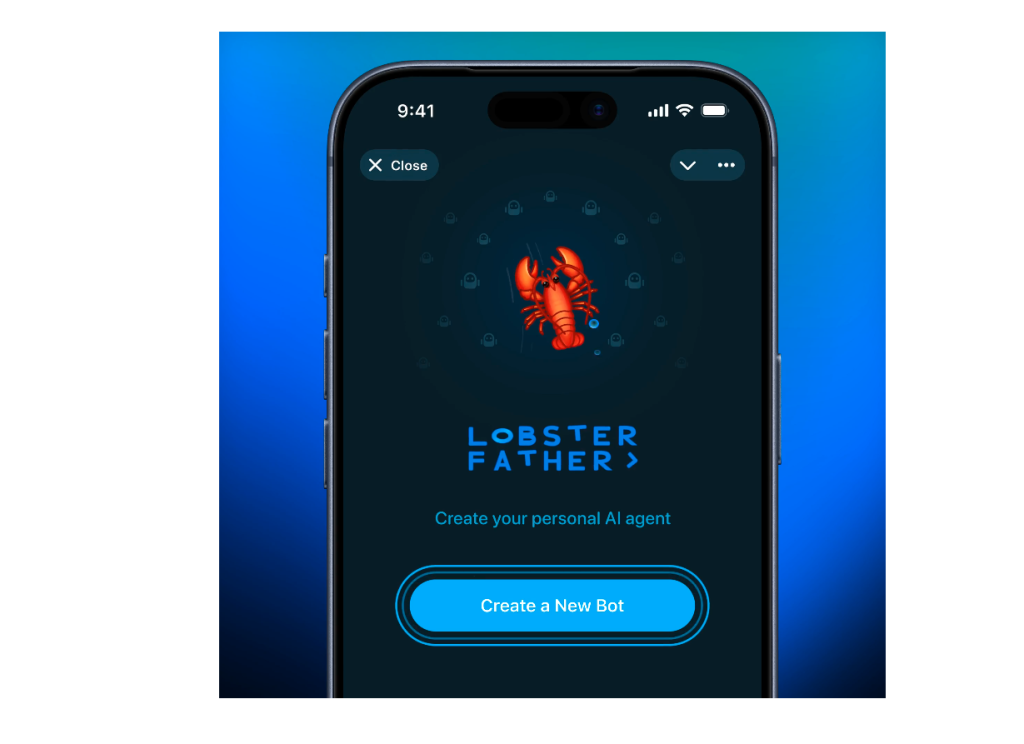
The instant messaging titan Telegram has recently intensified its cadence of updates regarding bot functionality. Following the introduction of inter-bot communication—abolishing the previous restriction that precluded bots from interacting with one another—Telegram has now inaugurated the ability for bots to spawn further bots.
This sophisticated new feature empowers a user-created “manager bot” to act as an emissary, performing administrative tasks on the user’s behalf, including the creation and oversight of “sub-bots.” At its core, this architecture is designed to bolster the capabilities of AI agents, providing them with a multifaceted framework for robotic orchestration.
To implement this, an administrator of an AI service first establishes a primary “Master Bot” and activates Manager Mode within @BotFather. Once enabled, the administrator can distribute invitation links; recipients may then follow these links to generate their own subordinate bots.
Any user possessing the link can initiate the creation of a sub-bot. Both the primary administrator and the Master Bot retain the authority to supervise these user-generated entities. By integrating backend AI agents, these sub-bots can deliver complex services without requiring the end-user to engage in manual configuration. This serves as a profound advantage for developers, who can now employ a multi-tenant model to offer ready-made AI agent services to users who lack the technical proficiency or desire to build their own systems, potentially facilitating a subscription-based revenue model.
While optimized for AI agents, this hierarchy remains versatile, allowing developers to deploy various services through subordinate bots.
The link structure is delineated as follows:
For instance, if the Master Bot is designated as @ManagerBot, with {new_username} acting as the placeholder for the sub-bot’s handle and {new_name} as the desired display name, the generated URL would appear as:
Upon accessing this link, the system automatically instantiates the CoolAIAgentBot. Simultaneously, the Master Bot receives a notification containing the specifics of the new sub-bot and the identity of its creator. Through the Bot API, administrators can retrieve the sub-bot’s access token, granting them complete control to intercept and dispatch messages, refine profiles, and adjust operational settings.
Support Our Threat Intelligence
Find our tech and OS security coverage helpful? Support our work today and unlock a 100% ad-free reading experience!
 Buy Me a Coffee
