 Do Son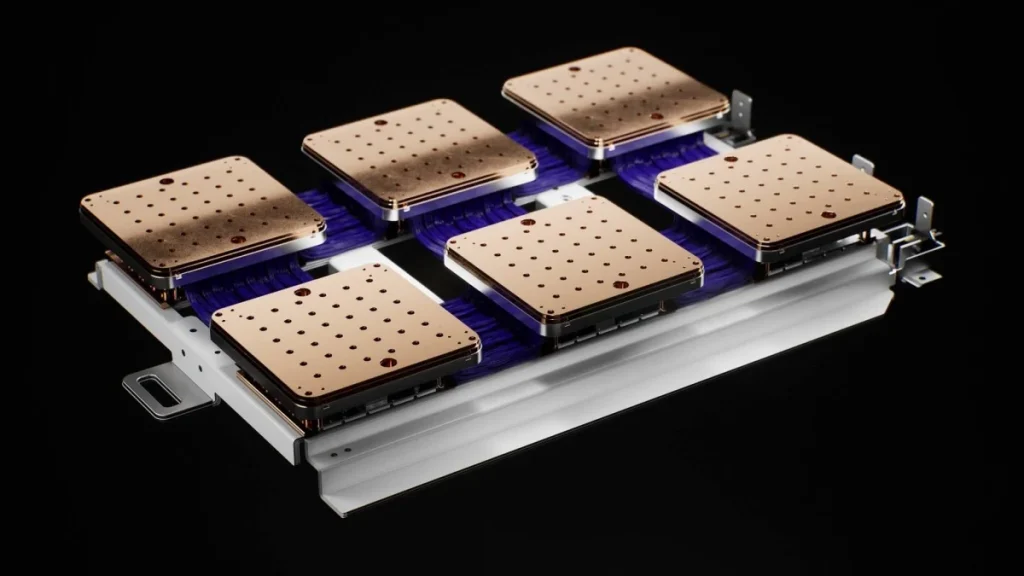
According to sources cited by Bloomberg, Tesla will dissolve the internal team responsible for developing the Dojo supercomputer, reassigning its members to other data center and computing projects. This decision not only signals the end of Tesla’s in-house AI chip investment but also underscores a significant shift in the company’s AI strategy.
The report notes that Peter Bannon, a central figure in the Dojo program and its department head, is set to depart. First proposed by Musk in 2019, the project unveiled its custom-built D1 chip at Tesla’s 2021 AI Day and was once regarded as a cornerstone for achieving Full Self-Driving (FSD) capability.
In recent years, Tesla has faced considerable internal turnover, with roughly 20 team members leaving. Former project lead Ganesh Venkataramanan went on to found the startup DensityAI, continuing Dojo’s technological trajectory and focusing on AI data center chips and integrated hardware-software solutions for robotics, AI agents, and the automotive industry.
Since August 2024, public discussion of Dojo has sharply declined, with Musk redirecting attention to Cortex—a massive AI training cluster at Tesla’s Austin headquarters—aimed at solving real-world AI challenges. This shift has fueled speculation about Dojo’s impending retirement.
With reports now indicating Dojo’s termination, Tesla’s AI hardware strategy appears to be pivoting toward partnerships with major technology companies. Plans include deepening ties with NVIDIA, expanding computing collaborations with AMD, and strengthening semiconductor manufacturing cooperation with Samsung.
In July, Tesla signed a $16.5 billion contract with Samsung to produce its next-generation AI6 chip. Designed for high scalability, the chip will power FSD, the Optimus humanoid robot, and AI training in Tesla’s data centers.
During the Q2 earnings call, Musk expressed a desire to find common ground between the Dojo 3 and AI6 chips, aiming to create a versatile, general-purpose chip capable of both inference and training. Consolidating R&D resources in this way, he suggested, could be most effectively achieved through strategic external partnerships.
Elon Musk later responded on X, stating that he saw no value in dispersing Tesla’s resources across multiple chip design efforts. He emphasized that the company’s primary focus will now center on the AI5 and AI6 chips, intended for use in the Optimus humanoid robot and the Cybercab autonomous taxi—not solely for AI training—hence his view that it was time for Dojo to step aside.
Related Posts:
- Agent Tesla Loader Evolves: New Evasive Techniques Pose Rising Threat
- New Agent Tesla Spyware Variant was spread via Microsoft Word documents
- New Agent Tesla Campaign Targets Spanish-Speaking Users
- Booking.com Impersonation Campaign: Agent Tesla Malware Analysis
Support Our Threat Intelligence
Find our tech and OS security coverage helpful? Support our work today and unlock a 100% ad-free reading experience!
 Buy Me a Coffee
