The Arm64 Vanguard: Valve Shatters x86 Hegemony with Steam Frame and “SteamOS on Arm”
 Do Son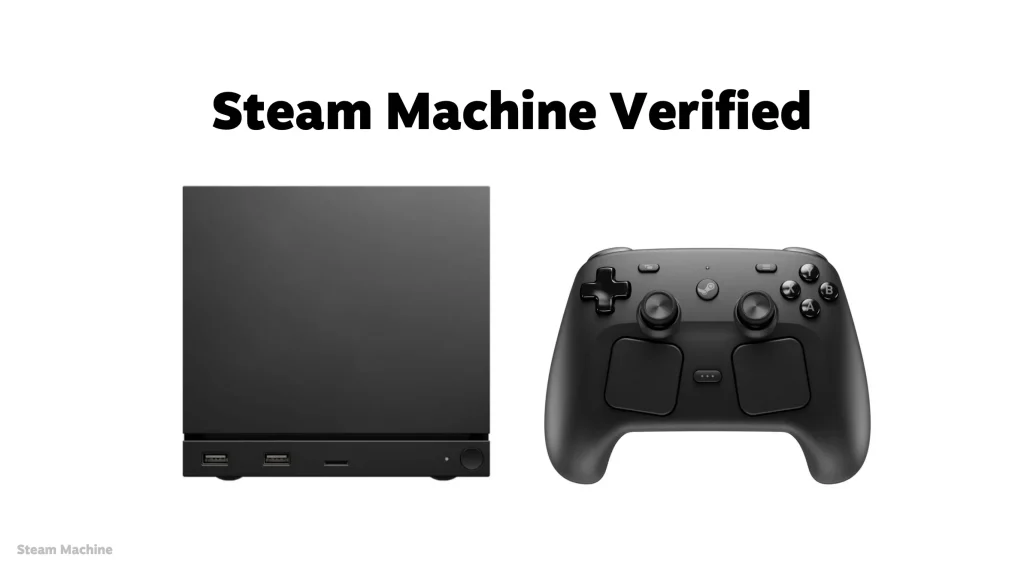
Following the Steam Deck’s triumphant subversion of the PC handheld market, and armed with blueprints to unveil the nascent Steam Machine and Steam Frame devices within the current year, Valve has formally unveiled the game certification criteria for both architectures at the 2026 Game Developers Conference (GDC). The paramount revelation is not merely the establishment of a 1080p/30FPS native rendering baseline for the Steam Machine, but Valve’s definitive consummation of the “SteamOS on Arm” architectural expansion to accommodate the Qualcomm processor housed within the Steam Frame. This audacious maneuver profoundly intimates that the future of the Steam ludic ecosystem is poised to shatter the longstanding hegemony of the x86 architecture.
To bestow upon players a frictionless, plug-and-play experience before their sprawling living room displays—rivaling the seamless nature of orthodox consoles such as the PlayStation 5 and Xbox—Valve has capitalized upon its handheld triumphs to inaugurate the “Steam Machine Verified” certification initiative. The cardinal divergence from its handheld progenitor lies in the Steam Machine’s computational fortitude, which official estimates project to be approximately sextuple that of the Steam Deck. Consequently, the absolute threshold for certification has been elevated: titles must execute at a native 1080p resolution, maintain a steadfast 30FPS, and flawlessly support native Steam Controller orchestration. Should a game necessitate the invocation of a virtual cursor within its menus, it shall be relegated merely to the “Playable” echelon.
Auspiciously, owing to the shared lineage of their x86 architectural design, the entirety of titles presently bearing the “Steam Deck Verified” seal shall autonomously and frictionlessly ascend to “Steam Machine Verified” status. Furthermore, devoid of the agonizing “diminutive typography” tribulations endemic to handheld screens, certain opuses that languished with a mere “Playable” certification on the Steam Deck may directly achieve the zenith of full verification upon the Steam Machine.
Regarding the previously heralded “4K 60FPS” living room odyssey, Valve conceded that this zenith will primarily be achieved via the artifice of AMD’s FidelityFX Super Resolution (FSR) and Frame Generation technologies; the foundational, native rendering resolution of the games may persistently hover at 1080p or 1440p.
If the Steam Machine embodies Valve’s impenetrable heavy armor defending its PC gaming bastion, then the inaugural, autonomous virtual reality headset—christened the “Steam Frame”—manifests as the vanguard’s sharpest spear, piercing directly into the future. Diverging sharply from the preponderance of autonomous VR apparatuses entrenched within the Android ecosystem (akin to the Meta Quest lineage), the Steam Frame, propelled by the Qualcomm Snapdragon 8 Gen 3 processor, natively executes Valve’s proprietary Linux architecture. This monumental feat signifies the definitive crystallization of the “SteamOS on Arm” platform.
To empower Steam titles—hitherto fluent solely in the lexicon of the x86 architecture—to execute flawlessly upon Arm-based processors, Valve has orchestrated an epic expansion of its cardinal Proton compatibility layer, unveiling Proton for Arm64 (synergized with FEX emulation technology). In terms of certification metrics, the Steam Frame dictates that native VR 3D content must achieve a fluid 90FPS, whilst native 2D content experienced via the virtual theater paradigm must sustain 720p at 30FPS. Given the profound divergence in their foundational architectures, titles that have already conquered the Steam Deck certification crucible must inevitably undergo rigorous re-evaluations for compatibility before ascending to the Steam Frame.
Superficially, this spectacle appears as a pedestrian hardware exposition for twin nascent consoles. Yet, a forensic dissection of Valve’s technical orations at GDC 2026 illuminates a far more grandiose stratagem: they are inexorably propelling the entire PC gaming ecosystem toward a cross-architectural destiny.
For a protracted epoch, the overwhelming majority of PC titles have been inextricably shackled to the x86 architecture (the computational dominion of Intel and AMD). However, the explosive surge in mobile silicon efficacy, coupled with Microsoft and Qualcomm’s aggressive championing of Windows on Arm, has rendered the superlative power-to-efficiency ratio of the Arm architecture profoundly tantalizing to the gaming vanguard. Valve’s tangible realization of “SteamOS on Arm” and the Proton for Arm64 translation layer via the Steam Frame bears immense significance. It not only vanquishes the thermal and power consumption tribulations inherent to VR hardware but serves as a clarion call to hardware fabricators globally: the Steam consoles of tomorrow need not be tethered to AMD or Intel silicon.
Envision a paradigm wherein Asus or Lenovo architects a featherweight “SteamOS Handheld,” boasting a staggering ten-hour battery life, propelled by MediaTek or Qualcomm silicon. Valve’s foundational technology is now immaculately primed for such an eventuality. This not only exponentially magnifies the hardware licensing potential of SteamOS but inexorably coerces game developers to confront the inescapable market trajectory of ensuring Arm64 compatibility.
Furthermore, as the Steam Machine introduces SteamOS into the living room theater, a colossal contingent of console denizens—fervently yearning to engage in sprawling multiplayer odysseys such as Call of Duty or Apex Legends—will coalesce into an overwhelming tide of public demand. This formidable pressure will inevitably coerce those recalcitrant developers, who have hitherto obstinately refused to support Linux-based anti-cheat architectures, into capitulation. Valve is ruthlessly wielding its hardware proliferation and ecosystem to compel a metamorphosis within orthodox, closed-minded game development paradigms.
Although presently besieged by the global artificial intelligence industry’s voracious monopolization of memory production capacity—a predicament that may inflate the Steam Machine’s retail valuation to rival or eclipse that of the PlayStation 5 (projected beyond $499)—and while its launch chronology remains shrouded in ambiguity, the cross-architectural software supremacy Valve has exhibited on this stage has undeniably sent a profound chill down the spines of Microsoft, Sony, and even Apple.
Support Our Threat Intelligence
Find our tech and OS security coverage helpful? Support our work today and unlock a 100% ad-free reading experience!
 Buy Me a Coffee
