The Command Line Coup: Why Google is Pivoting Project Mariner to Chase the Rise of AI Agents
 Do Son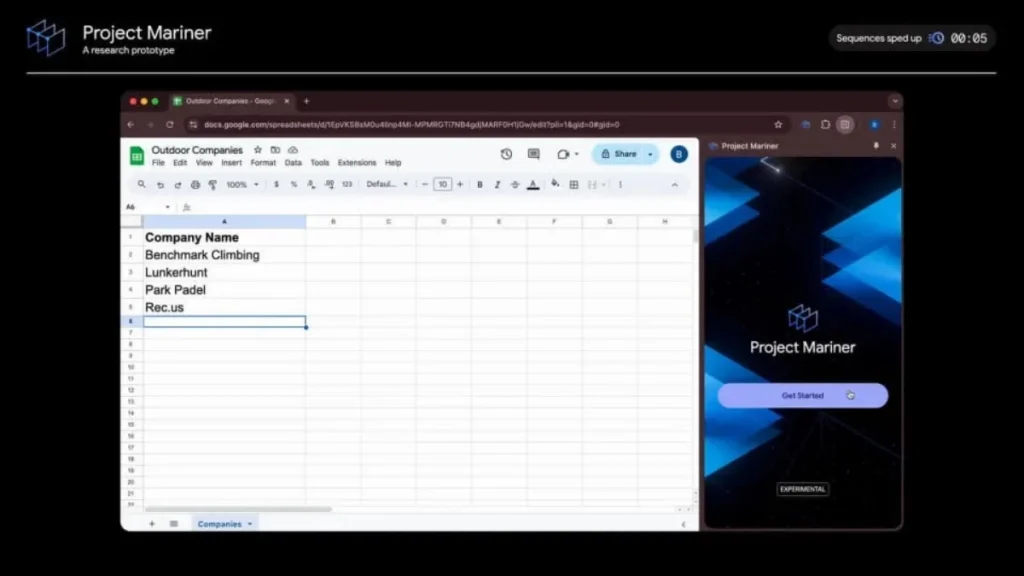
Spurred by the formidable ascent of programming agents like OpenClaw, the global AI agent landscape is undergoing a profound paradigm shift. As reported by WIRED, Google is presently recalibrating its Chrome browser agent initiative, Project Mariner, reallocating key personnel to higher-priority development endeavors. This strategic pivot not only signals a realignment of Google’s focus within the AI agent sphere but also underscores a striking reality: AI tools that execute actions directly through the command line are currently demonstrating astonishing efficiency and commercial viability, vastly eclipsing their web browser counterparts.
Project Mariner once stood as a crown jewel at last year’s Google I/O developer conference. Conceived as a Chrome-based AI agent, its primary mission was to alleviate the burden of tedious web navigation by automating tasks such as form submissions, cross-site price comparisons, and data curation.
The market’s reception, however, has proven decidedly cold. Empirical data reveals that the performance of these “browser agents” has universally fallen short of expectations. This reality extends beyond Google; competing offerings from Perplexity and OpenAI share a similarly tepid adoption, with their weekly active user metrics lagging significantly behind today’s ubiquitous conversational AI models. Users appear overwhelmingly to prefer receiving instantaneous answers within a chat interface, rather than observing an AI sluggishly mimic human mouse clicks across a screen.
Another pivotal catalyst driving Google’s swift strategic realignment is the recent explosion of programming agents like OpenClaw, a phenomenon that has sent shockwaves throughout the developer community. Distinct from browser agents, programming agents commandeer the computer directly via the command line or foundational system APIs. This means the AI bypasses the need to wait for page loads or interpret user interface elements; instead, it processes files, authors code, and summons system resources with blistering computational efficiency. The sheer velocity of this underlying control has captivated enterprises and developers alike, prompting AI research laboratories across the board to pivot their resources toward this promising frontier.
Despite the decelerated pace of Project Mariner’s independent development, Google asserts this does not constitute an abandonment of the underlying technology. Official sources confirm that Mariner’s core web automation capabilities will eventually be seamlessly woven into flagship offerings, such as the Gemini Agent.
Industry analysts observe that while programming agents hold an undeniable supremacy in efficiency, browser agents retain an indispensable utility in niche scenarios. They remain crucial for navigating antiquated enterprise software devoid of API interfaces or executing web interactions that rely heavily on visual layout. Ultimately, these two methodologies are poised to converge into a complementary, dual-track system—marrying underlying command execution with surface-level visual navigation. Nevertheless, bridging the technical divide to bring these potent tools into the daily workflows of everyday consumers will demand a considerable period of market validation.
Support Our Threat Intelligence
Find our tech and OS security coverage helpful? Support our work today and unlock a 100% ad-free reading experience!
 Buy Me a Coffee
