 Do Son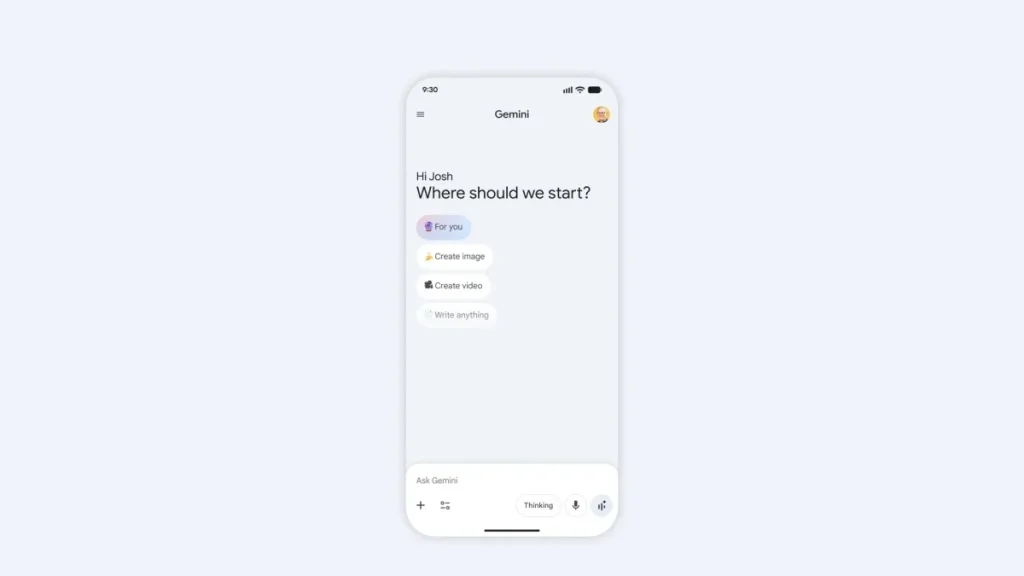
Google has announced the inauguration of a sophisticated “Personal Intelligence” suite for its Gemini ecosystem. This feature empowers Gemini to securely interface with and analyze a user’s Gmail, Google Photos, and YouTube archives, utilizing cross-source reasoning to deliver highly nuanced and contextually relevant assistance tailored to individual lives.
Currently in its beta phase, this functionality is initially available to Google AI Pro and AI Ultra subscribers within the United States.
The quintessential advantage of “Personal Intelligence,” according to Google, lies in its capacity for “cross-source reasoning” and “granulated data extraction.” Once a user explicitly enables these integrations, Gemini can synthesize text, imagery, and video metadata to synthesize comprehensive answers. For instance, should a user seek to replace the tires on a 2019 Honda SUV, Gemini does not merely provide generic specifications; it can scrutinize vehicle imagery in Google Photos to suggest tire models suited to local terrain. It can even extract a license plate number from a photograph or verify specific vehicle trims via Gmail receipts, obviating the need for manual navigation between disparate applications. Similarly, for travel planning, Gemini can evaluate past records to discern family interests, recommending secluded attractions and activities that resonate with the family’s established preferences.
Addressing paramount privacy concerns, Google asserts that this feature is “opt-in” by default, granting users absolute sovereignty over which applications are linked. The corporation emphasizes that while Gemini accesses data to fulfill specific requests, it does not utilize the raw contents of a user’s inbox or photo library to train its underlying models. Instead, training is limited to filtered, anonymized prompts and responses designed to refine the system’s ability to “retrieve information” rather than “memorize personal data.”
Despite its formidable capabilities, Google concedes that the service remains experimental and may succumb to “over-personalization” errors. For example, a plethora of golf course photographs might lead Gemini to erroneously conclude a user is a golf enthusiast, when they were merely chaperoning a child. In such instances, users are encouraged to correct the model’s trajectory directly within the dialogue or provide negative feedback to refine its understanding of complex social dynamics and personal inclinations.
The “Personal Intelligence” suite is being progressively deployed over the coming week to eligible subscribers in the U.S. across web, Android, and iOS platforms. While Apple champions a “device-centric” privacy paradigm, Google’s competitive edge resides in its vast cloud-based ecosystem. For many, Gmail and Google Photos represent the totality of their digital legacy; by interconnecting these data points, Gemini attains an unparalleled understanding of a user’s life context.
Nevertheless, the enduring challenges remain “trust” and “precision.” Notwithstanding Google’s assurances regarding data usage, the specter of AI hallucinations or the “over-extrapolation” of personal details raises questions about whether users will entrust the AI with critical decisions involving health or finance. Furthermore, teaching an AI to decipher the intricacies of human relationships—distinguishing a cherished friend from a disregarded acquaintance in a photo gallery—remains a formidable technical threshold for the true realization of personalized intelligence.
Related Posts:
Support Our Threat Intelligence
Find our tech and OS security coverage helpful? Support our work today and unlock a 100% ad-free reading experience!
 Buy Me a Coffee
