 Do Son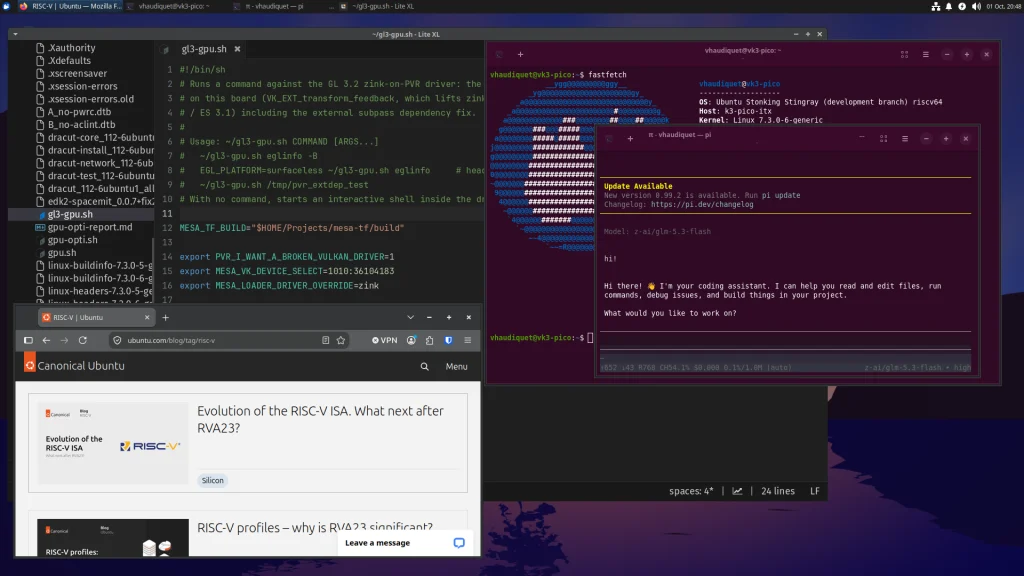
Canonical recently announced a groundbreaking milestone for the open-source community. The upcoming Ubuntu 26.10 release will finally introduce official RISC-V desktop images. Currently, developers are actively testing these specialized riscv64 architecture builds. Furthermore, users can anticipate the final launch alongside Ubuntu 26.10 on October 15. Consequently, this advancement elevates RISC-V hardware from rudimentary embedded systems to comprehensive Linux workstations.
Expanding the Open-Source Ecosystem
Historically, Canonical primarily delivered polished desktop environments for amd64 and arm64 architectures. Meanwhile, the RISC-V community relied heavily on bare-metal server editions or fragmented vendor modifications. However, modern RISC-V processors boast significantly enhanced computational performance. Additionally, contemporary development boards now feature robust graphical output capabilities. Therefore, the absence of an official graphical interface severely restricts continued ecosystem expansion.
To address this limitation, Canonical revealed plans to release two distinct experimental variants. Users can select between a standard Ubuntu Desktop and a streamlined Xubuntu Minimal edition. The standard version targets physical hardware deployments perfectly. Conversely, the Xubuntu variant operates flawlessly within QEMU virtual machines. Canonical notes that the GNOME interface requires extensive boot times during software emulation. Specifically, this heavy environment often demands over thirty minutes to initialize completely. In contrast, the XFCE framework consumes minimal system resources. Thus, developers can validate their software projects rapidly.
Comprehensive Architecture Adaptations
Engineers fundamentally overhauled the core image construction process for this major release. Specifically, Canonical modified the essential livecd-rootfs compilation utility. This crucial adjustment eliminates previous dependencies on rigid server device tree structures. Simultaneously, developers activated the sophisticated cdimage desktop generation workflow. Consequently, the modern Flutter-based installation wizard operates seamlessly on the modern architecture.
The engineering team also painstakingly integrated vital hardware compatibility patches. Most notably, they refined foundational support for advanced display output hardware. Furthermore, technicians optimized essential applications like Firefox and various desktop Snap packages. Enthusiasts lacking physical development boards can still explore these software innovations. They simply need to deploy the Xubuntu Minimal image through QEMU emulation tools. However, the sophisticated RVA23 virtualization standard requires updated software packages. Therefore, experts highly recommend running the host system on Ubuntu 25.10 or a subsequent release.
Support Our Threat Intelligence
Find our tech and OS security coverage helpful? Support our work today and unlock a 100% ad-free reading experience!
 Buy Me a Coffee
