VMCloudoor Backdoor Hides in Chinese Cloud VMs and Uses Alibaba Storage for C2
 Do Son
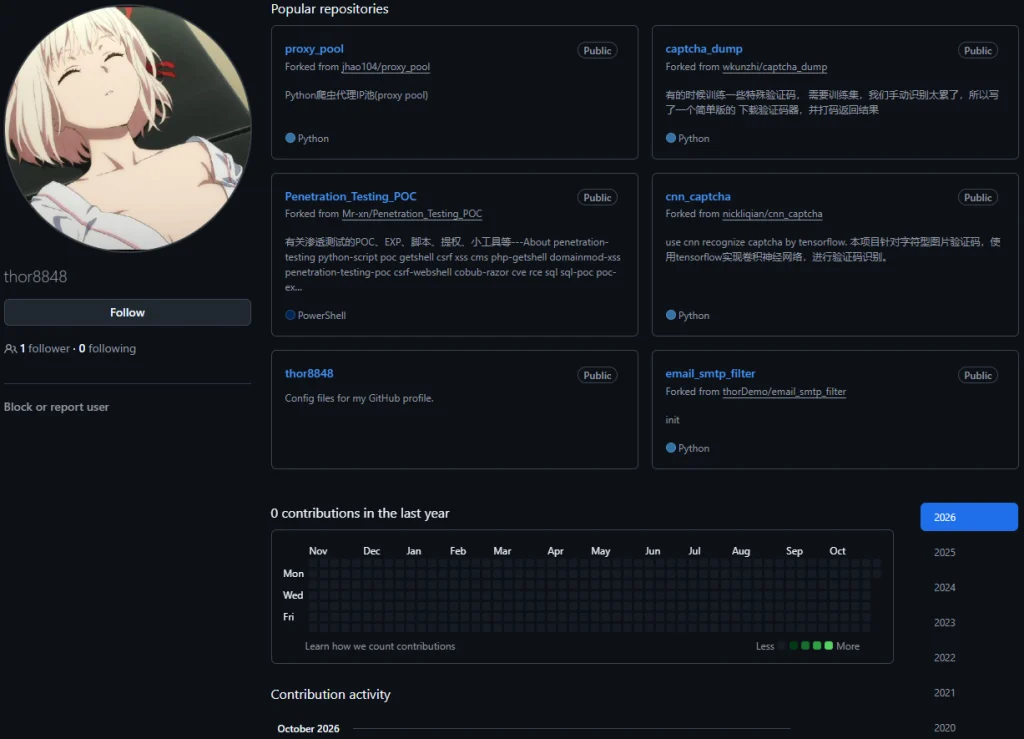
thor8848 Github profile
| At a glance | |
| Malware family | VMCloudoor, a Linux backdoor with a “helper” module and a “Core” command module |
| Threat actor | Unknown; Exatrack suspects a Chinese pentester, possibly on red team work (not confirmed) |
| Targets | Linux virtual machines on Alibaba Cloud (mainly), Tencent Cloud, and Huawei Cloud |
| Delivery vector | Not disclosed; Exatrack found the sample while hunting |
| Key capabilities | Process disguise, command execution, file upload and theft, host inventory, security product checks |
TL;DR
Exatrack has found a Linux implant built to infect virtual machines on Alibaba, Tencent, and Huawei clouds. The VMCloudoor backdoor poses as each provider’s own cloud agent. It also talks to its operator only through public Chinese cloud services, so its traffic blends in.
Delivery
Exatrack spotted the sample during a hunting session. It calls it “a particularly precise implant designed to hide itself and infect VMs hosted on the Chinese cloud.” Alibaba Cloud is the main target.
The report does not explain how the implant reaches a server. Exatrack also holds only part of the tool. It obtained the “helper” module, which handles setup and C2 traffic. A second module, called “Core,” runs commands from the operator. However, much of Core’s code also sits inside the helper binary.
Infection chain
Reading the room
First, the VMCloudoor backdoor works out which cloud it is on. It looks for folders and processes that belong to each provider’s agents. For example, it checks for Alibaba’s Aliyun Assist and Aegis tools. On Tencent, it looks for the TAT agent and YunJing. On Huawei, it checks for UniAgent, Telescope, and HostGuard.
Posing as a cloud agent
Next, it picks one of four disguise profiles. On Alibaba, it runs as “AliyunSysAssist.” On Tencent, it uses “YunJingSysAssist,” cut to 15 characters by Linux limits. On Huawei, it becomes “UniAgentSys.” Elsewhere, it hides in shared memory as a fake kernel worker thread.
The goal is simple. A fake agent name makes “an administrator less inclined to kill it,” Exatrack notes. The implant also uses a lock file so only one copy runs. It then reads a key from a config file or environment variables. Without that key, it exits.
Command-and-control and data exfiltration
Public services as a relay
If no local config exists, the implant pulls settings from a raw file on Gitee, China’s GitHub-like code platform. That file points to a storage bucket on Alibaba’s object storage service in Beijing. Notably, the malware never checks TLS certificates on any of its HTTPS calls.
Each host gets an agent ID built from its machine ID and network card address. The implant then requests an object whose name mixes that ID, the secret key, and a five-minute time slot. To avoid clock problems, it syncs time with an Alibaba web server and resets the system clock if needed.
By default, the request returns a “not found” error. When the operator wants to act, they drop a task file at that exact path. Exatrack believes the attacker watches bucket logs to spot new victims. If the bucket disappears, the malware returns to Gitee for a new one.
Five task types
- Run a command through the Core component.
- Download a file to the host.
- Upload a file under 100 MB to the attacker.
- Go idle and check in every five minutes.
- Send a host inventory.
Results go back through signed storage links. The traffic even uses an “AliyunSysAssist” user agent.
Sizing up defenses
The inventory reports whether the host looks “clean,” runs antivirus, or runs EDR. The list includes Western tools like CrowdStrike, SentinelOne, and Carbon Black. It also covers Chinese products such as Huorong, 360, Qi An Xin, and Tencent YunJing. Based on the result, it suggests a slower polling rate for better-defended hosts.
Meanwhile, the Core code blocks risky commands, including shells, scanners, and recursive searches. It also kills any command after 30 seconds. These limits seem designed to keep the host stable and quiet.
Attribution: suspected, not confirmed
No group has been tied to the VMCloudoor backdoor. Instead, Exatrack found developer mistakes in the Gitee commit history. Two commits came from identities that differ from the throwaway account owner. One used an internal company or project domain. Another linked to a GitHub account, created in 2020, of a Chinese user who appears to work in pentesting.
Exatrack sees this as “an OPSEC fail rather than a deliberate attempt to plant false information.” A note about “Architecture Decision Records” also hints at a structured project. Exatrack also found a second variant that shares 88% of its code. Still, the firm stays cautious. It writes: “we assume the author is a Chinese pentester, potentially running dedicated red team engagements… or at least we hope so.”
Exatrack does not report any victim counts.
Defense and detection guidance
Teams running Linux workloads on Chinese cloud platforms should consider these steps:
- Verify that processes named after cloud agents run from the vendor’s real install paths.
- Flag hidden working folders in shared memory and processes posing as kernel threads.
- Watch for unexpected system clock resets on cloud VMs.
- Review outbound requests to object storage and Gitee from servers that have no business need.
- Alert on HTTPS clients that skip certificate checks.
- Hunt for repeated “not found” polling to storage buckets every few minutes.
In short, this VMCloudoor backdoor shows how trusted Chinese cloud services can double as a quiet C2 channel. Since the traffic looks like normal cloud use, process and file checks on the host matter most.
Support Our Threat Intelligence
Find our threat intelligence and malware analysis helpful? Support our work today and unlock a 100% ad-free reading experience!
 Buy Me a Coffee
