 Do Son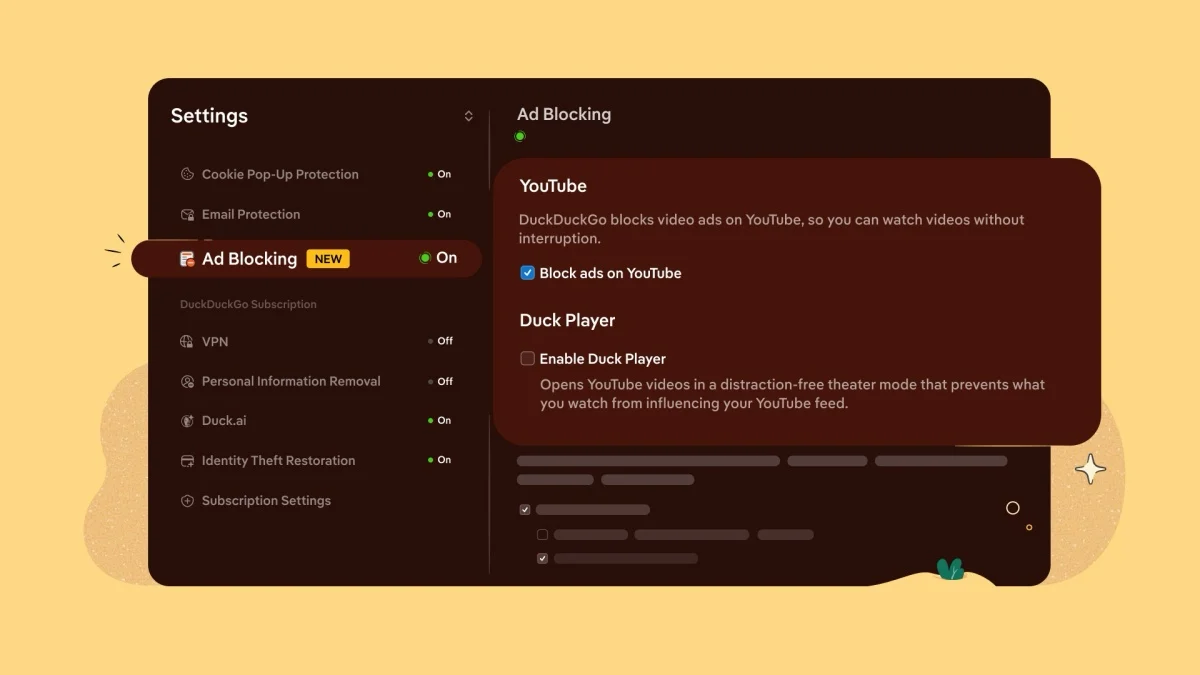
DuckDuckGo, the privacy-focused browser brand, has announced a major upgrade. Its browser can now block YouTube video ads and most other video platform ads by default. The move is a pointed challenge to Google’s Chrome. You can read more details in DuckDuckGo’s official announcement on the new ad blocking feature.
Why the Timing Matters
The timing is deliberate. Google enforced its Manifest V3 extension architecture on Chrome in late 2024. That change effectively disabled full-featured ad blockers like uBlock Origin inside Chrome. DuckDuckGo has seized on that frustration to attract users who want an uninterrupted viewing experience.
How the Blocking Works
According to DuckDuckGo’s official blog, the new mechanism relies on open-source uBlock Origin community filter lists. The team also added its own custom tuning rules. These rules improve cross-platform compatibility and reduce broken page elements or playback errors.
The company does include a caveat. Ad blocking requires real-time parsing of streaming requests. As a result, users may notice slightly longer buffering times before a video starts. Additionally, YouTube regularly changes its ad delivery algorithms. Occasional brief gaps in protection are therefore possible.
Rollout Details by Platform
The rollout details are straightforward. On the latest iPhone, Windows, and Mac versions, the feature is already on by default. For Android, DuckDuckGo plans to roll it out automatically in a future update. Until then, Android users can enable it manually under Settings, then Ad Blocking. All platforms allow users to toggle the feature freely from the settings menu.
However, the filter only works when watching YouTube through DuckDuckGo’s browser. Switching to the standalone YouTube app bypasses it entirely.
How This Differs from Duck Player
This feature sits alongside DuckDuckGo’s existing Duck Player. However, the two tools serve different purposes. Duck Player is a theater-mode embedded player. It enforces YouTube’s strictest embed privacy settings. That means it blocks tracking cookies and personalized ad targeting completely. Content watched in Duck Player is never logged and does not affect YouTube’s recommendation algorithm.
By contrast, the new video ad blocker works directly on the standard YouTube web page. Users can watch without interruption while keeping full account access. That includes watch history, comments, and personal playlists. DuckDuckGo confirms both features can run at the same time.
The Bigger Picture: Chrome’s MV3 Opens a Door
The announcement arrives during significant turbulence in the browser market. Google’s Manifest V3 rollout drew sustained criticism. Google framed it as a security and performance improvement. However, its side effect forced uBlock Origin into a stripped-down Chrome version called uBlock Origin Lite. That left many users who rely on heavy content filtering deeply frustrated.
That frustration has opened a door for independent browsers outside the Chromium ecosystem. Firefox, Brave, and DuckDuckGo all stand to benefit. DuckDuckGo’s approach is strategically astute. Rather than asking users to install extensions, it bakes the essential filter lists directly into the browser core. The feature is on by default on major operating systems. That frictionless setup is compelling for users tired of long, unskippable YouTube ads. As Google continues to restrict ad blocking, privacy-first browsers are well positioned to gain ground.
Support Our Threat Intelligence
If you find our CVE report and cybersecurity news helpful, consider supporting our work.
 Buy Me a Coffee
PayPal
Buy Me a Coffee
PayPal

