 Do Son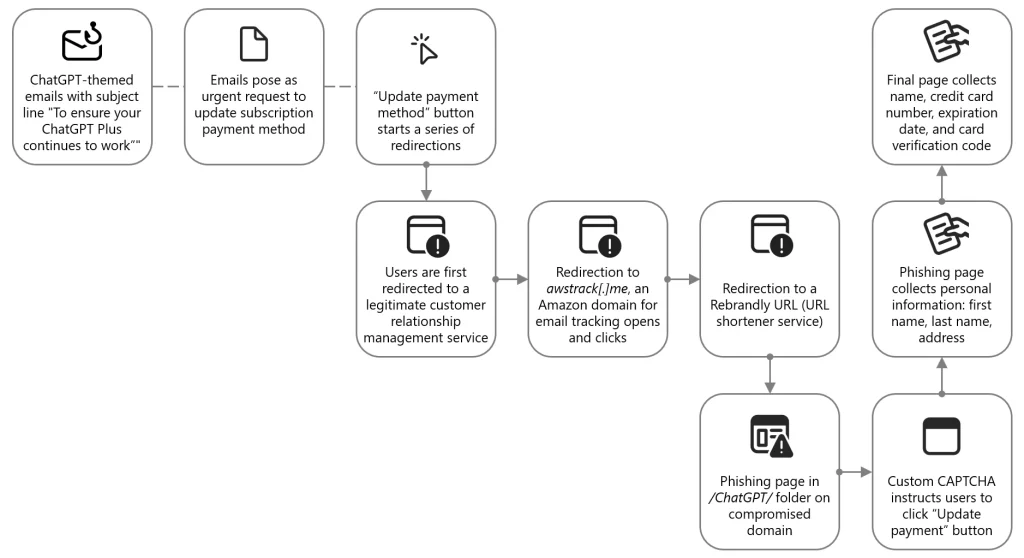
Attack chain of ChatGPT-themed lure leading to phishing kit | Image: Microsoft
As artificial intelligence continues to dominate tech headlines, cybercriminals are quickly cashing in on the hype. Recent research reveals a massive surge in AI social engineering lures. In these attacks, threat actors impersonate popular platforms like ChatGPT, Claude, and DeepSeek. These highly effective campaigns exploit global curiosity to trick users. Ultimately, they force victims into downloading malware or surrendering their sensitive corporate credentials.
A comprehensive report from Microsoft Threat Intelligence outlines the severity of this trend. According to researchers, these sophisticated attacks “span phishing, malvertising, and search engine optimization (SEO)-driven attacks that ultimately lead to credential theft, financial fraud, or malware infection.” By leveraging trusted branding, hackers dramatically improve their success rates. If you want to dive deeper into the technical mechanics, check out Microsoft’s full breakdown on how threat actors are using the AI hype in social engineering.
Phishing Campaigns Target ChatGPT and Claude Users
One of the most prominent tactics involves fake subscription warnings. In early May 2026, a massive email campaign targeted users with fake ChatGPT Plus payment notifications. Attackers sent up to 100,000 emails in a single day. They warned victims that their accounts would be downgraded if they failed to update their billing information. Victims were funneled through legitimate redirectors to a fake landing page explicitly designed to steal credit card details.
Similarly, attackers targeted enterprise users by impersonating Anthropic’s Claude platform. These phishing emails claimed the user violated the “Account Usage Policy.” They provided a PDF attachment to appeal the supposed decision. The PDF contained malicious links routing victims through CAPTCHA-gated screens to spoofed Microsoft sign-in pages. This tactic allowed hackers to harvest authentication tokens effortlessly.
Malvertising Spreads Infostealers
The use of AI social engineering lures extends well beyond traditional email phishing. Threat actors like Storm-3075 actively deploy malvertising campaigns promoting fake software. One campaign advertised a fictitious “Awesome AI Windows Plugin” on free movie streaming sites. These malicious ads redirect victims to signed malware executables.
The report explicitly notes that “Signed malware also tends to exhibit lower detection rates early in the infection lifecycle, extending the window of effective distribution.” To bypass sandbox analysis, the malware requires users to click a “Continue” button before executing. Once activated, this malware frequently drops the notorious Vidar stealer to scrape sensitive data from the host machine.
Fake GitHub Repositories Target Developers
Furthermore, attackers quickly capitalize on new AI model releases to trap eager developers. Within hours of the DeepSeek V4 announcement, a fraudulent GitHub repository appeared online. The threat actors decorated the repository with stolen branding, authentic benchmark charts, and SEO-optimized tags. They even included specific files to trick AI-assisted search engines.
When users searched for a DeepSeek V4 installer, they found this malicious page highly ranked on major search engines. The fake software archives contained a heavyweight executable that ultimately dropped infostealing malware onto their host systems. The threat actors constantly rotated the payload hashes to evade basic signature-based detection mechanisms.
Defending Against Evolving Threats
These evolving tactics highlight a significant shift in digital threats today. While traditional invoice scams remain prevalent, AI social engineering lures represent a powerful long-term strategy. Threat actors constantly recycle trending AI tools into fresh malware distribution networks. To defend against these sophisticated attacks, organizations must enforce phishing-resistant multi-factor authentication. Moreover, security teams must continuously educate employees about the profound dangers of downloading unverified AI tools from unknown sources.
Support Our Threat Intelligence
Find our threat intelligence and malware analysis helpful? Support our work today and unlock a 100% ad-free reading experience!
 Buy Me a Coffee
