 Do Son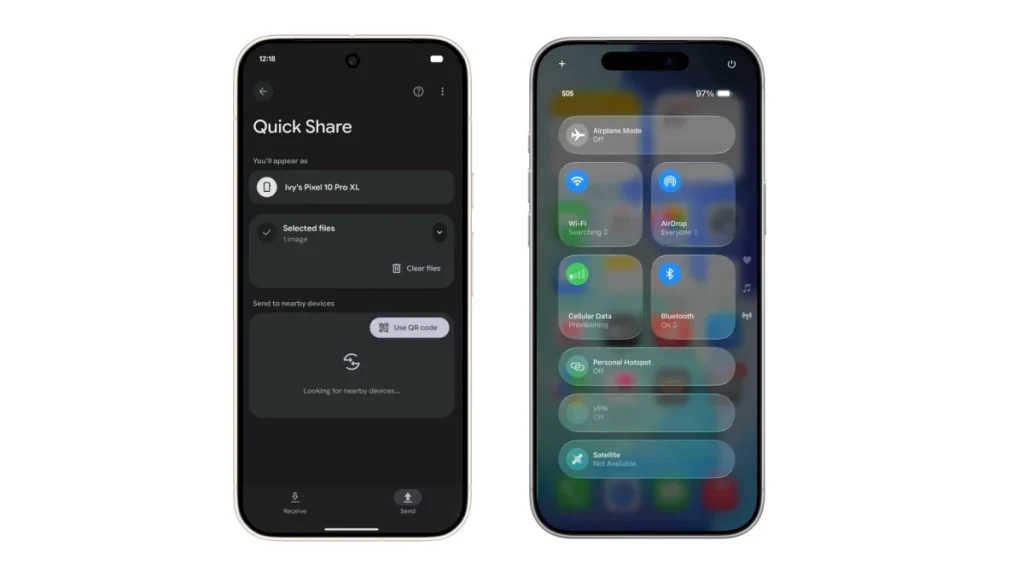
Google announced that its cross-platform file-sharing service, Android Quick Share, will officially support interoperability with Apple’s AirDrop, breaking the long-standing barrier that has separated file transfers between Android and iOS devices. The feature will debut on the latest Pixel 10 series and is expected to expand to additional Android devices in the future.
For years, file transfers between Android and iOS have been a persistent frustration for users. While some manufacturers—such as OPPO and vivo—have implemented cross-brand transfer solutions through third-party alliances like O-Share, and Samsung offers its own Wi-Fi–based Quick Share system, native, system-level interoperability with AirDrop has never existed—until now.
Google notes that this compatibility is achieved through its own implementation, meaning it is not the result of official collaboration with Apple, but rather a unilateral effort by Google to reverse-engineer and interoperate with the AirDrop protocol.
In practice, Quick Share will integrate with AirDrop’s “Everyone for 10 minutes” discovery mode:
- Pixel → iPhone: The receiving Apple device (iPhone, iPad, or Mac) must set AirDrop to Everyone for 10 minutes. The Pixel user will then see the Apple device in the Quick Share interface and can send files seamlessly.
- iPhone → Pixel: Conversely, the Android device must set Quick Share to Everyone for 10 minutes or enter receiving mode to accept AirDrop transfers.
Google highlights that the connection is strictly peer-to-peer, with data transmitted directly between devices—never passing through a server, nor being logged or stored. However, AirDrop’s Contacts Only mode remains unsupported for now, though Google says it is open to future cooperation with Apple to enable this.
To address concerns surrounding this “unofficial interoperability,” Google places particular emphasis on security. The communication layer is written using the memory-safe Rust programming language, which helps prevent vulnerabilities such as buffer overflows and protects against malicious data packets.
Additionally, Google hired independent security firm NetSPI to perform a penetration test, which found the implementation not only secure but more robust than comparable industry solutions, with no leakage of sensitive information. Stanford cybersecurity expert Dan Boneh has also praised Google’s decision to base the interoperability layer on Rust.
This move is, in many ways, an unexpected strike at Apple’s closed ecosystem. While the development offers immense convenience to users, Apple’s response remains uncertain. The company may treat this as a security loophole and attempt to block it via future iOS updates—potentially igniting a new battle over openness versus security.
Regardless, with the Pixel 10 taking the lead and other Android manufacturers pursuing similar cross-platform ambitions, consumer demand for dismantling ecosystem barriers has never been stronger. By building its interoperability layer atop Rust, Google seeks to demonstrate that openness can coexist with security. Whether this gambit succeeds may ultimately depend on how Apple chooses to respond.
Related Posts:
- Apple vs. EU: AirDrop, AirPlay & Seamless Pairing at Risk in Europe!
- China Cracks Apple’s AirDrop Feature
- AirDrop PIN Pairing Arrives: New iOS Beta Allows 30-Day File Sharing Without Contacts
- NKAbuse: Go-Powered Malware Floods & Hacks, Targets Linux & Beyond
- CoinTelegraph Hacked: Fake CTG Airdrop Scam Steals Crypto Via Malicious Pop-Ups
Support Our Threat Intelligence
Find our tech and OS security coverage helpful? Support our work today and unlock a 100% ad-free reading experience!
 Buy Me a Coffee
