
 Do Son
Experts have exposed a new ransomware threat named ShrinkLocker, which cleverly exploits Microsoft's built-in BitLocker encryption tool
Do Son
Do Son is the Founder and Editor of Daily CyberSecurity. Working in cybersecurity since 2013, he reports on vulnerabilities, malware, and emerging threats, providing timely analysis to help organizations and individuals stay ahead of evolving risks.

Security researcher Guillaume André with Synacktiv has detailed a high-severity vulnerability, CVE-2024-26238 (CVSS 7.8)

NetbyteSEC Detecx (NBS) team exposed a sophisticated malware campaign orchestrated by the notorious SharpPanda APT group

Google Cloud has publicly addressed an incident in which a misconfiguration during the setup of a GCVE private cloud

In addition to CVE-2024-27842, Wang Tielei has also released a PoC exploit for CVE-2023-40404, a privilege escalation flaw in macOS Sonoma

Mandiant has revealed a concerning trend among China-linked cyber espionage groups: the use of ORB networks to enhance their espionage capabilities

CVE-2024-25737 and CVE-2024-25738, are both rated with a high CVSS score of 9.1, indicating the potential for significant damage if exploited

CatDDoS-related gangs have leveraged a wide array of vulnerabilities across multiple vendor devices like Apache, Cisco, D-Link, Huawei, ...

The researchers likened the analysis of Unfading Sea Haze's malware arsenal to a "museum exposition of cyberespionage relics,"

One of the most notable aspects of CLOUD#REVERSER is its use of Google Drive and Dropbox for C2 communication and data exfiltration
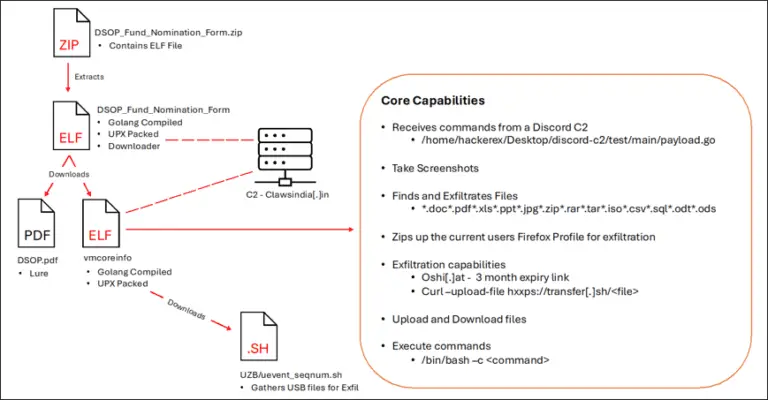
Researchers revealed a sustained campaign by Pakistani-based cyber espionage group APT36 targeting critical Indian government

Data governance and cybersecurity are closely connected. As a vital part of cybersecurity mechanisms, solutions, and actions,...

Security researcher Matthias Gerstner has discovered a critical vulnerability (CVE-2024-5148) in GNOME Remote Desktop

This RCE vulnerability was facilitated through the use of Cog, Replicate’s proprietary format for containerizing AI models.

attackers are leveraging an obscure WordPress plugin to install server-side malware, harvesting credit card details from WooCommerce online stores

Researchers have unveiled a potent new method for launching distributed denial-of-service (DDoS) attacks, dubbed DNSBomb (CVE-2024-33655)

Qlik, a prominent player in the data analytics space, has issued a security advisory warning users of a high-risk flaw (CVE-2024-36077)

The persistent cyber threat known as Kinsing malware has taken a new and sophisticated approach to its cryptojacking campaign

The vulnerability, designated CVE-2024-34710, poses a serious risk due to its potential for stored cross-site scripting (XSS) attacks

CVE-2024-28063 & CVE-2024-28064 could allow attackers to access sensitive information, delete files, and potentially launch DoS attacks

A recent attack by the Ransomhub ransomware gang has amplified concerns about the vulnerability of these critical systems

Google issued an emergency security update for its Chrome browser Thursday, urgently addressing a zero-day vulnerability (CVE-2024-5274)