CVE-2025-6507 (CVSS 9.8): Critical H2O-3 Vulnerability Puts Machine Learning at Risk
 Do Son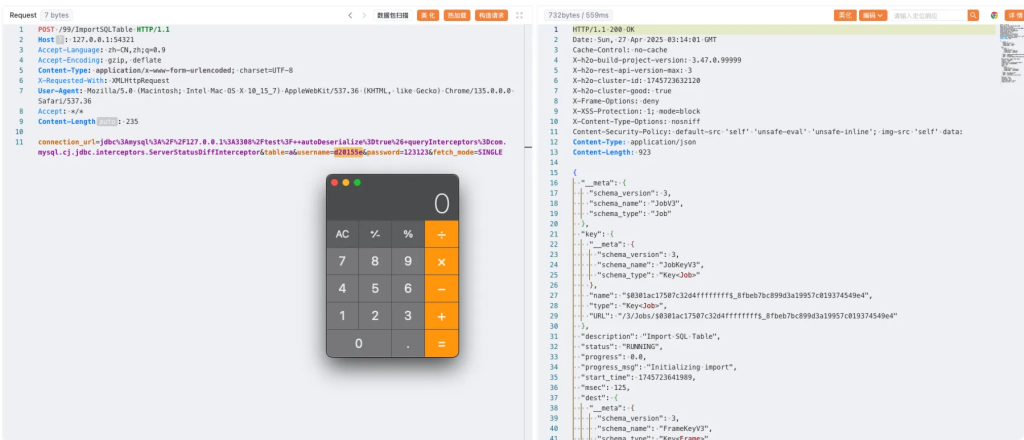
H2O-3, a widely used open-source platform for distributed and scalable machine learning, has been found vulnerable to a critical flaw that could allow attackers to achieve remote code execution (RCE) and unauthorized file access. The vulnerability, tracked as CVE-2025-6507 and rated CVSS 9.8 (Critical), impacts version 3.47.0.99999 and has since been patched in 3.46.0.8.
See a CVE's exploit risk spike before it becomes a headline.
Get EPSS spike alertsThe flaw stems from unsafe deserialization of untrusted data in the JDBC connection handling logic. Although H2O attempted to filter out malicious parameters using regular expressions, researchers discovered that attackers can bypass these filters by simply inserting spaces between parameters.
As the CVE description explains: “Attackers can manipulate spaces between parameters to evade detection, allowing for unauthorized file access and code execution.”
This oversight enables adversaries to exploit the water.jdbc.SQLManager#getConnectionSafe method during SQL table imports.
Researchers demonstrated two concrete exploit scenarios:
-
Arbitrary File Read
By exploiting parameter bypass, attackers can read sensitive system files using a crafted JDBC URL:This bypasses regex checks and abuses MySQL driver functionality to load local files.
-
Arbitrary Deserialization & Remote Code Execution
Attackers can enable dangerous JDBC features such asautoDeserialize=trueand chain them with known gadgets (e.g., Commons-Collections) to achieve RCE:To confirm exploitability, the researchers used a DNSlog verification chain to capture outbound connections triggered during deserialization.
This vulnerability poses severe risks to all H2O-3 users, especially in enterprise environments where the platform is integrated with Hadoop, Spark, and large-scale ML workflows. A successful exploit could allow attackers to:
- Read sensitive system files
- Execute arbitrary OS commands with application-level privileges
- Compromise the confidentiality and integrity of machine learning pipelines
H2O.ai has released version 3.46.0.8 to patch the vulnerability. Users running affected builds should immediately upgrade.
Related Posts:
- Google launches free AI and machine learning online resources for everyone
- EU wants to filter all code uploaded to the Internet
Support Our Threat Intelligence
Find our vulnerability reports and weekly recaps helpful? Support our work today and unlock a 100% ad-free reading experience!
 Buy Me a Coffee
