 Do Son
Cybercriminals are actively launching football fan scams across various social media platforms. The upcoming FIFA World Cup 2026 currently fuels this massive wave of digital deception. Furthermore, attackers aggressively exploit club loyalty and streaming demands to trick eager supporters. Consequently, fans must stay highly alert while browsing online sports content. Bitdefender Labs recently revealed shocking details about these highly coordinated attacks.
Uncovering the Malvertising Campaigns
Security researchers identified a significant spike in targeted digital fraud. Specifically, they “uncovered more than 55 football-related malvertising campaigns”. These malicious advertisements primarily target active users on Meta-owned platforms like Facebook. Therefore, scammers easily reach passionate supporters in the UK, the United States, and Brazil. Additionally, criminals heavily promote fake merchandise, illegal streaming services, and fraudulent mobile apps.
The Fake Merchandise Trap
Fraudulent online stores represent a major part of this global problem. For instance, scammers create highly realistic advertisements for national team kits. They often use high-pressure sales tactics like countdown timers to force quick purchases. One deceptive advertisement boldly claimed, “I bet you’ve never seen a World Cup top that looks this good”. However, these convincing links actually redirect victims to dangerous phishing pages. As a result, buyers lose their hard-earned money and compromise their sensitive personal data.
Counterfeit Collectibles and Kids Kits
The criminals also target niche interests like football memorabilia and children’s apparel. First, they push fake Panini sticker albums for the 2026 tournament using AI-generated imagery. Moreover, researchers found a specific malicious operation targeting parents shopping for children’s gear. The site “PrimeFinds UK” advertised kids kits while falsely promising 24-hour dispatch. Ultimately, these items likely ship from overseas, leaving parents with long delays or terrible quality.
Email Giveaways and World Cup 2026 Fraud
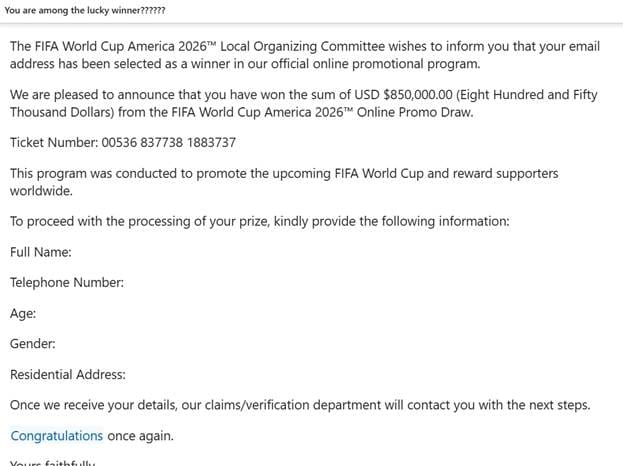
Beyond social media ads, attackers utilize classic email tactics to execute World Cup 2026 fraud. Specifically, they send out fake lottery winning notifications to unsuspecting users. One common scam email falsely states that the recipient has “won the sum of USD $850,000.00”. Subsequently, the scammers demand personal details or passport information from the targeted victim. This strategic manipulation leads directly to severe financial loss and dangerous identity theft.
Tracking the Threat Actors
Security experts recently traced several of these digital operations back to organized overseas groups. Interestingly, investigators found Simplified Chinese UTM parameters hidden inside the advertising tracking infrastructure. As a result, this discovery strongly links the fake merchandise sites to structured Chinese operations. Moreover, these sophisticated operators manage multiple identical storefronts simultaneously. This setup ensures their football fan scams continue running smoothly even if authorities block one site.
Illegal Streaming and Piracy
Finally, the investigation uncovered dangerous piracy operations disguised as legitimate entertainment services. For example, researchers linked multiple IPTV brands in Portugal to a single coordinated operator. This clever setup allows cybercriminals to maintain active operations even if one specific service goes offline. Meanwhile, fake football apps utilize Cyrillic character spoofing to easily bypass automated security checks.
Staying Safe Online
Fans must remain incredibly vigilant against these rapidly evolving digital threats. Therefore, always verify the official domains of sports retailers before purchasing gear. Additionally, install reputable security software to block known phishing links and malvertising campaigns. Ultimately, taking basic online precautions will keep your sensitive data and wallet perfectly safe.
Support Our Threat Intelligence
Find our threat intelligence and malware analysis helpful? Support our work today and unlock a 100% ad-free reading experience!
 Buy Me a Coffee
