 Do Son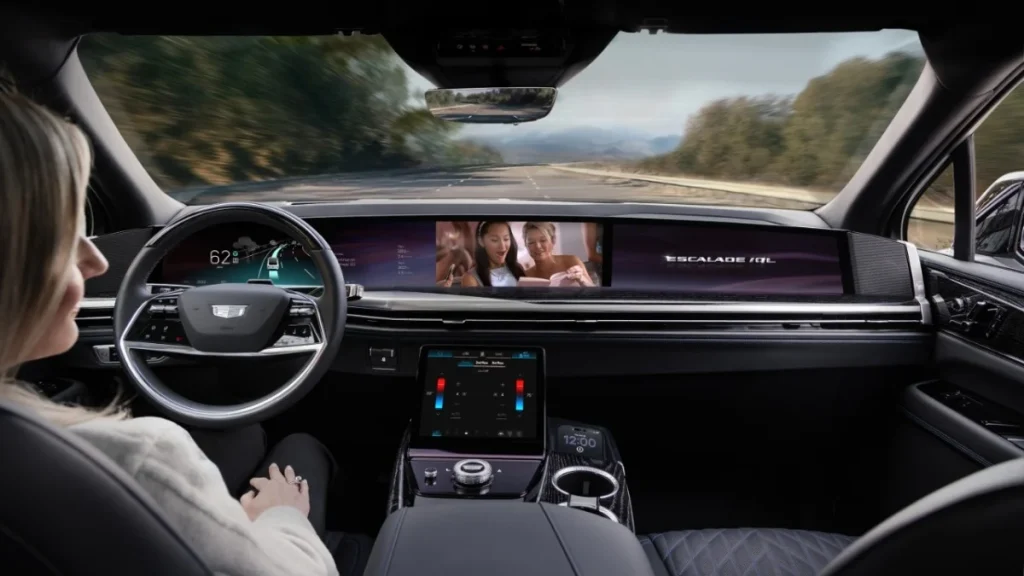
At its recent “GM Forward” media event, General Motors (GM) announced a major strategic shift in its software direction, revealing plans to deeply integrate Google’s Gemini platform into its lineup of cars, trucks, and SUVs beginning in 2026. This next-generation conversational AI assistant will replace the current “Google built-in” operating system found in many of GM’s vehicles.
In an interview, Dave Richardson, GM’s Vice President, candidly acknowledged that existing voice assistants often frustrate users due to their heavy reliance on specific keywords and their poor comprehension of accents or imprecise commands, leading to frequent misinterpretations.
The new Gemini-powered assistant will retain access to existing services such as Google Maps and Google Assistant, but promises a dramatically improved level of natural interaction and contextual understanding. For example, drivers will be able to activate the air conditioning or heater through voice commands even before entering the vehicle.
According to GM, a key advantage of integrating Gemini is its ability to access real-time vehicle data. The AI assistant will proactively analyze the car’s condition, issue maintenance alerts, and assist drivers in route planning or interpreting complex vehicle functions.
Gemini will also introduce an innovative “web integration” feature. GM illustrated this capability with a simple example: a driver could ask the AI about the history of a bridge they are crossing, receiving contextually rich and informative responses in real time.
Deployment of the Gemini assistant will occur via Over-the-Air (OTA) updates distributed through the Google Play Store for vehicles equipped with OnStar systems. Notably, support will extend to models released as early as 2015, not just newly manufactured vehicles.
However, the move comes amid heightened scrutiny of GM’s data practices. The company recently faced a five-year ban from selling driver data issued by the U.S. Federal Trade Commission (FTC), following allegations that its OnStar Smart Driver program shared user information with insurance firms without consent.
Addressing these concerns, Richardson assured that the Gemini integration would be “privacy-first,” granting drivers full control over what information the AI can access and utilize.
GM further stated that this initiative serves as a stepping stone toward its broader long-term goals, including the launch of its in-house computing platform and a dedicated autonomous driving platform slated for 2028. Yet, the company also confirmed the trade-off: as Gemini and GM’s proprietary systems roll out, support for Apple CarPlay and Google Android Auto will be gradually phased out in the coming years.
Related Posts:
- iOS 26 Unveils Enhanced Apps with “Liquid Glass” & Apple Intelligence
- AirBorne Exploits: Zero-Click Wormable RCE Hits Apple & IoT Devices
- New Auto Blocker in Samsung OneUI 6.1.1: Blocking APK Sideloading for Enhanced Security
Support Our Threat Intelligence
Find our tech and OS security coverage helpful? Support our work today and unlock a 100% ad-free reading experience!
 Buy Me a Coffee
