Beyond the Wrapper: Google and Accel Select 5 Indian Startups to Native-Code the Future of AI
 Do Son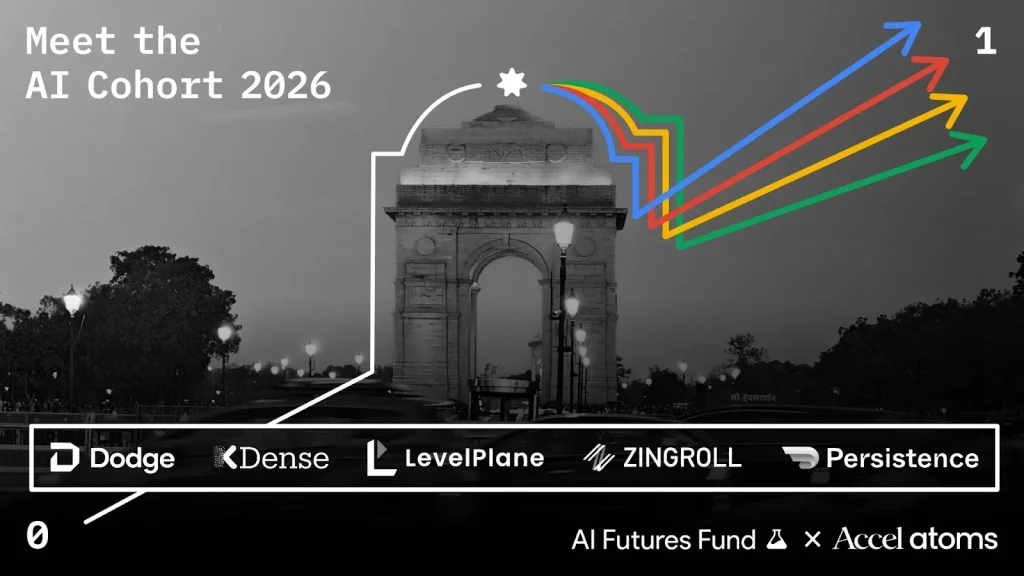
Google, in concert with the venture capital firm Accel, has spearheaded the “Atoms” AI accelerator initiative, an endeavor to catalyze the Indian startup ecosystem. Recently, they plucked five nascent enterprises of profound potential from a staggering deluge of over 4,000 applications. Conspicuously, this curated pantheon is utterly devoid of mere “AI wrappers”; rather, these pioneering entities are irrevocably committed to penetrating specific industrial domains, wielding artificial intelligence to fundamentally architect and transfigure labyrinthine operational workflows.
Promulgated in November of yesteryear, the Atoms crusade is principally buttressed by Accel and Google’s AI Futures Fund, meticulously designed to nurture embryonic AI ventures tethered to the Indian subcontinent. The triumphant cohorts shall be endowed with a formidable capital injection peaking at $2 million, alongside a treasure trove of Google Cloud and AI computational credits valued at a staggering $350,000.
Nevertheless, this financial benevolence is not lightly bestowed. Prayank Swaroop, a vanguard partner at Accel, elucidated that amidst the torrential influx of over 4,000 petitions, a colossal 70% of the vanquished proposals were unequivocally classified as “AI wrappers”—entities that merely superimposed conversational automatons or superficial AI interfaces atop extant software architectures, tragically failing to “leverage artificial intelligence to natively reimagine novel operational workflows.”
Furthermore, a multitude of the fallen petitions congregated within profoundly congested dominions, epitomized by “marketing automation” and “AI-driven recruitment instruments.” The investor vanguard perceived a barren lack of ingenuity within these spheres, noting that nascent enterprises invariably struggle to excavate formidable defensive moats and consequently fail to ascend above the clamor of the masses.
The contemporary iteration of the Atoms accelerator was inundated by an application volume nearly quadruple that of its predecessors, harboring a multitude of inaugural founders. Empirical telemetry illuminates that the Indian AI startup ecosystem presently remains profoundly fixated upon B2B enterprise-grade applications; a formidable 62% of proposals were dedicated to productivity armaments, whilst 13% concentrated upon software engineering and programmatic architecture.
In its totality, approximately three-quarters of the petitions belonged to the realm of enterprise software, distinctly eschewing consumer-facing commodities. Prayank Swaroop candidly confessed a lingering yearning to have beheld a richer tapestry of concepts woven around the vital domains of healthcare and education.
The quintet of nascent enterprises that ultimately achieved triumphant ascendance flawlessly intersect with the precise arenas wherein Google prophesies artificial intelligence will secure profound, real-world assimilation:
- K-Dense: Architecting an AI “co-scientist,” destined to hyper-accelerate research within the profound realms of life sciences and chemistry.
- Dodge.ai: Forging autonomous agents meticulously engineered for enterprise ERP architectures.
- Persistence Labs: Exclusively devoted to the mastery of vocal AI technologies governing call center operations.
- Zingroll: Erecting a sovereign platform exquisitely tailored for cinema and episodic narratives synthesized entirely by artificial intelligence.
- Level Plane: Intravenously injecting artificial intelligence into the theater of industrial automation, specifically targeting the crucibles of automotive and aerospace manufacturing.
An auxiliary, captivating beacon of this narrative is the extraordinary architectural openness Google has exhibited within this accelerator crusade. Jonathan Silber, the co-founder and vanguard director of the Google AI Futures Fund, articulated that the program harbors “no mandate” coercing these nascent enterprises into the exclusive utilization of Google’s AI models. He possesses a profound comprehension that myriad syndicates will inevitably orchestrate a symphony of disparate models to navigate diverse operational workflows.
Google’s paramount, authentic objective is to harvest empirical feedback regarding the kinetic performance of Google models within authentic, real-world crucibles from these nascent enterprises. These profound insights shall be channeled directly back to the Google DeepMind vanguard, serving as the architectural blueprint to refine forthcoming models, thereby forging a kinetic “flywheel effect” betwixt entrepreneurial experimentation and AI maturation. Jonathan Silber piercingly noted: “Should an enterprise elect to wield an alternative model, it unequivocally signifies that Google harbors a margin for elevation; we are inextricably bound by the mandate to forge the absolute superlative model within the marketplace.”
Support Our Threat Intelligence
Find our tech and OS security coverage helpful? Support our work today and unlock a 100% ad-free reading experience!
 Buy Me a Coffee
