Human-Like AI: Google Translate Gets Gemini Upgrade for Slang & Tone Preservation
 Do Son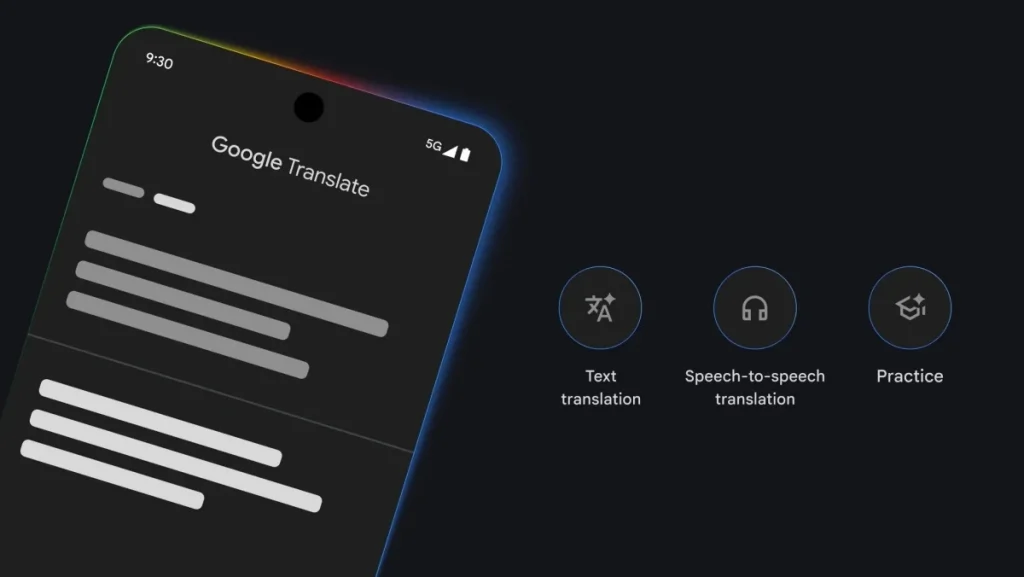
Google has announced a major update to its Search and Google Translate apps powered by the Gemini AI model, aiming to make translations feel more distinctly human. The upgrade enables more accurate interpretation of nuanced slang and idiomatic expressions, and introduces a real-time translation feature for headphone users that preserves the speaker’s tone of voice.
According to Google, the integration of Gemini allows its text translation to handle far more nuanced meanings than before. In the past, colloquial slang and idioms often produced awkwardly literal—and sometimes unintentionally amusing—translations. With this update, such informal expressions are contextualized, resulting in translations that sound more natural and culturally attuned.
The initial rollout will begin in the United States and India, supporting English and approximately 20 other languages—including Chinese, German, Spanish, and Arabic—across iOS, Android, and web platforms. Beyond text, voice translation has also been enhanced. Google has upgraded its speech-to-speech translation so users can hear real-time translations directly through their headphones.
Currently available as a beta on the Android version of Google Translate in the U.S. (with an iOS release planned for next year), the standout feature is its ability to preserve tone, emphasis, and cadence through AI. This allows users to discern whether a speaker is angry, joking, or speaking earnestly—even without looking at the screen—making conversations far easier to follow.
The feature works with any headphones, not just Pixel Buds, and supports more than 70 languages. This move appears to position Google in direct competition with similar capabilities rumored for Apple’s AirPods Pro 3. At the same time, Google seems intent on capturing a larger share of the language-learning market. Following the introduction of AI-assisted learning tools in the Translate app earlier this August, the latest update adds a Duolingo-like “streak” feature that tracks consecutive days of language practice to encourage consistency—though whether it will adopt Duolingo’s famously relentless motivational tactics remains to be seen.
Pronunciation feedback has also been refined, offering more practical and actionable guidance. These educational tools are set to expand to 20 additional regions, including Germany, India, and Sweden.
From my perspective, Google’s recent focus on translation has intensified noticeably. While AI has long underpinned its translation efforts, advances in generative AI have elevated Google Translate beyond conventional machine translation, lending it a more human quality while improving accuracy—though cultural nuances still pose challenges.
The enhanced handling of slang and vocal tone underscores Google’s effort to leverage Gemini’s strengths to address machine translation’s longstanding blind spots: context and emotion. As AI begins to grasp not just words, but subtext and intonation, the final barrier to truly seamless cross-language communication may finally be starting to fall.
Related Posts:
- AI Notepad: Rewrite Your Text, Windows 11 Gets Smarter
- Beyond Translation: Google Translate Adds a Gemini-Powered Language Tutor
Support Our Threat Intelligence
Find our tech and OS security coverage helpful? Support our work today and unlock a 100% ad-free reading experience!
 Buy Me a Coffee
