 Do Son
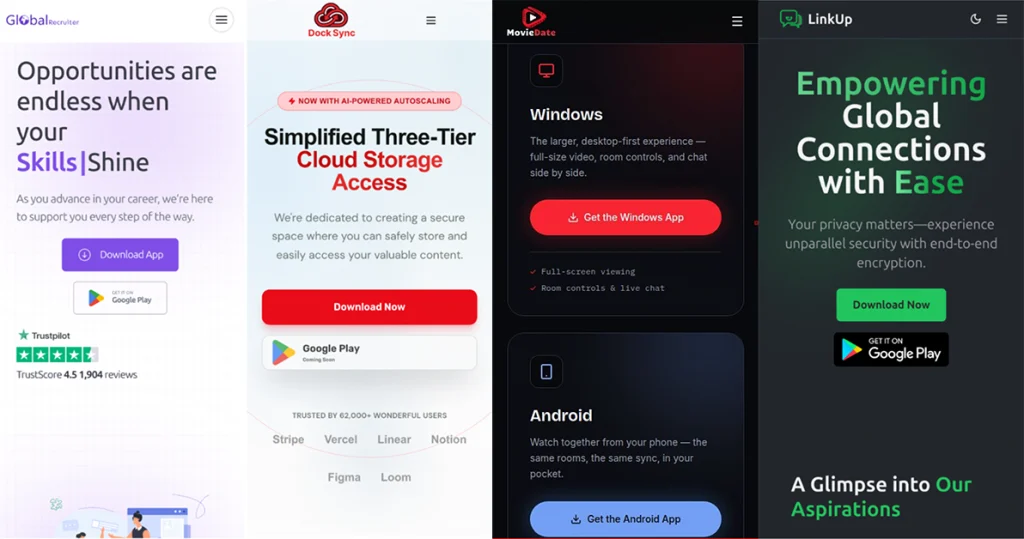
Image: Lookout
TL;DR
Security researchers at Lookout uncovered an active GravityRAT spyware campaign targeting defense and military personnel in India. Attackers operate fake job recruitment portals and cloud storage utility websites to trick victims into sideloading malicious Android applications. Once installed, the implant steals text messages, call logs, location data, and encrypted chat backups.
Delivery
Parth Bhatt, Senior Manager of Security Intelligence Research and Giampaolo Dedola, threat researcher at Lookout, documented several live websites distributing GravityRAT spyware. These single-page portals impersonate international recruitment agencies and consumer software utilities to lure targets. For example, one fake recruiter website displays logos from major aerospace and defense contractors, including Airbus, BAE Systems, Lockheed Martin, and Thales.
When visitors click the Google Play download button, a deceptive pop-up blocks the store redirect. The message reads, “The Google Play version is currently under review. Please download the APK for now.” Consequently, victims bypass official app store protections and sideload the malicious Android package manually. Researchers also spotted a parallel Windows utility lure delivering an Electron-based loader named DropDeckX, which industry analysts previously tracked as HeavyLift.
Infection chain
Security researchers attribute GravityRAT to Pakistan-aligned threat actors known as SpaceCobra and Cosmic Leopard. Earlier threat intelligence from Cisco Talos also connected these operators to multi-platform espionage operations against Indian government and defense entities. While researchers confirmed 14 infected devices in India over the past year, generic site wording suggests broader targeting remains possible. As Lookout noted, “Explicitly targeting this sector aligns directly with GravityRAT’s historical focus on government and defense personnel.”
After a user installs the sideloaded resume builder or utility app, the malware requests intrusive device permissions. Meanwhile, the Windows variant evades virtual machine detection and establishes persistence through Windows Task Scheduler before fetching secondary payloads.
Command-and-control and data-exfiltration behaviour
The Android GravityRAT spyware operates autonomously and contacts command-and-control servers every 1 to 30 minutes. Instead of using obvious malicious domains, the operators route traffic through Cloudflare-protected subdomains disguised as legitimate Android development frameworks. Through backend PHP scripts, the implant uploads complete contact lists, call histories, SMS messages, and real-time GPS coordinates. Furthermore, it harvests local documents, audio files, device identifiers, and encrypted WhatsApp backup databases.
Defense and detection guidance
Defense personnel and enterprise users should never sideload Android APKs or desktop installers from unverified websites. Always verify job recruiters through official corporate domains before downloading career tools. Additionally, mobile administrators should restrict unknown app installations and monitor network traffic for unusual connections to unfamiliar Android-themed subdomains.
Support Our Threat Intelligence
Find our threat intelligence and malware analysis helpful? Support our work today and unlock a 100% ad-free reading experience!
 Buy Me a Coffee
