 Do Son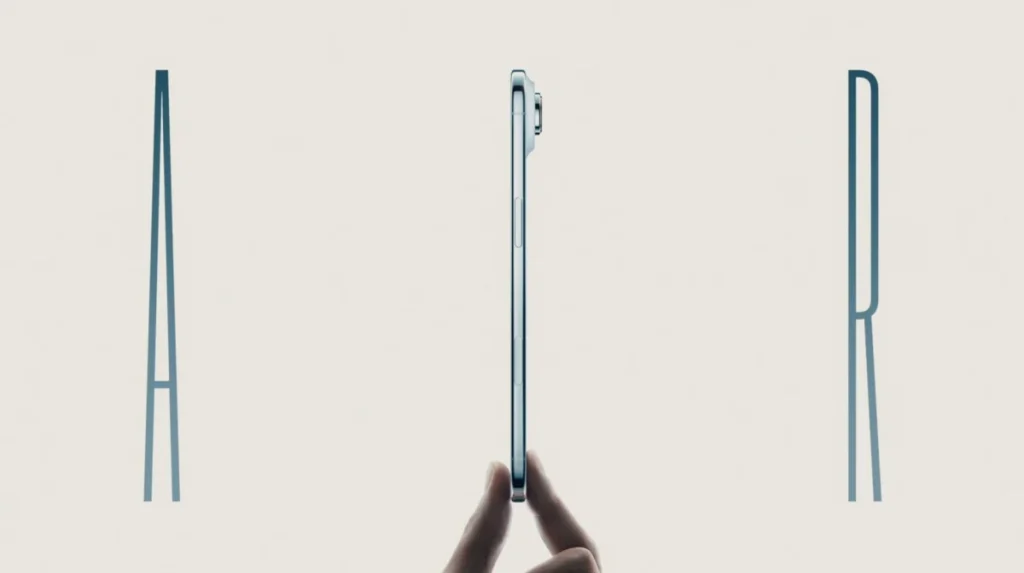
Renowned analyst Ming-Chi Kuo recently released a supply chain report revealing that sales of Apple’s newly launched ultra-thin iPhone Air have completely collapsed. According to his analysis, Apple’s suppliers are expected to reduce production of the model by over 80% between now and Q1 2026, with certain long-lead components scheduled to be discontinued by late 2025.
Multiple reports have confirmed that the iPhone Air has failed to win consumer favor. Last week, Mizuho Securities Japan reported that Apple would cut production by one million units due to weak sales. Earlier this week, Nikkei Asia similarly noted that demand for the model was “virtually nonexistent,” prompting Apple to drastically scale back manufacturing.
Notably, Apple is not alone in facing difficulties with ultra-thin devices. Samsung’s Galaxy S25 Edge, a competing slim-line model, has also suffered disappointing sales. Reports indicate that Samsung has abandoned development of future Edge variants, effectively ending its experiment with ultra-thin smartphones.
Kuo explained that the iPhone 17, iPhone 17 Pro, and iPhone 17 Pro Max already meet the expectations of most premium consumers, leaving minimal market space for niche products like the iPhone Air. Its eventual discontinuation, he suggested, was inevitable given the lack of demand.
Historically, Apple’s standard iPhone and Pro series have consistently performed well, while its fourth-tier models have struggled to gain traction. The company previously introduced the compact 5.4-inch iPhone Mini, which was later discontinued due to poor sales. Its successor, the iPhone Plus, intended as a more affordable alternative to the Pro Max, met a similar fate.
In a renewed attempt to fill this product gap, Apple released the iPhone Air, measuring just 5.6 millimeters thick. Despite its elegant form and high-performance chipset, the device’s limited battery capacity, a direct consequence of its ultra-slim design, resulted in noticeably shorter battery life—likely one of the key reasons consumers have been reluctant to embrace it.
Related Posts:
- iPhone 17 Air: A Beautifully Thin Phone, but with Major Compromises
- Ransomware Gang Qilin Rises Amid Collapse of Major Gangs Like RansomHub and LockBit
- Apple Planning Cheaper 13-inch MacBook with A18 Pro Chip, Mass Production Late 2025
- iPhone Fold Hinge Costs Drop to $70-$80, Boosting Viability for Mass Production in 2026
- New iPhone Air Camera Flaw: What You Need to Know
Support Our Threat Intelligence
Find our tech and OS security coverage helpful? Support our work today and unlock a 100% ad-free reading experience!
 Buy Me a Coffee
