LIMINAL PANDA and SilentAir Exploit Mobile Networks Using GTPDoor v3 and SS7 Attacks
 Do Son
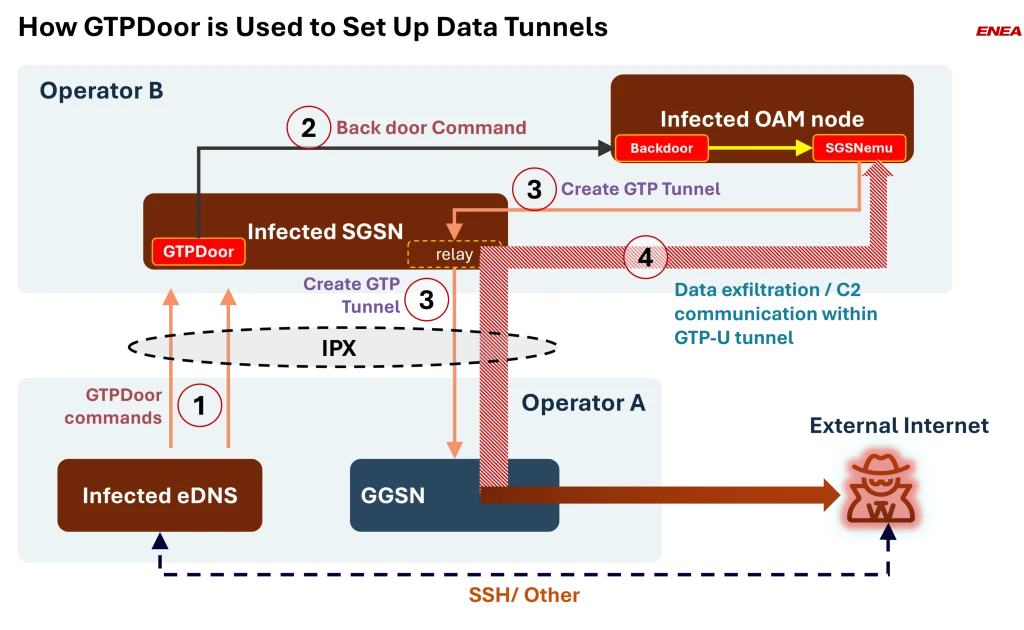
GTPDoor-initiated GTP-U tunnel setup | Image: ENEA
TL;DR
Telecommunications security researchers uncovered active campaigns by two suspected China-nexus threat actors, LIMINAL PANDA SilentAir, operating inside global mobile roaming networks. While LIMINAL PANDA deployed a new variant in this LIMINAL PANDA SilentAir GTPDoor campaign that hides inside high-volume 5G-ready data tunnels, SilentAir used compromised Asian telecom nodes to intercept calls, text messages, and two-factor authentication codes in Taiwan. Together, these operations show how breaching a single carrier gives state-level attackers a launchpad into interconnected networks worldwide.
What Happened Inside the Roaming Interconnect
Starting in the first quarter of 2026, Enea blocked hundreds of covert command-and-control (C2) sessions across multiple mobile network operators. According to Enea’s investigation into tracking LIMINAL PANDA and SilentAir through mobile networks, the activity followed a July 2026 disclosure by POST Luxembourg, which reported the first live detection of GTPDoor malware over the GPRS Tunnelling Protocol control plane (GTP-C).
Attackers use GTPDoor on compromised network nodes to send commands over the IP Packet Exchange (IPX) roaming interface. Specifically, the operators ran modified tools like SGSNemu and EchoBackdoor to set up GTP-U data tunnels between infected carriers, exfiltrate stolen data, and clean up forensic traces. Half of these data tunnels lasted less than 21 minutes.
GTPDoor v3 Shifts to GTP-U Data Tunnels
During the investigation, researchers discovered a new Linux variant dubbed GTPDoor v3 (or GTP-U-Door) on VirusTotal. Unlike versions 1 and 2, which use GTP-C on UDP port 2123, GTPDoor v3 embeds its XOR-encrypted payload inside GTP-U user-plane traffic on UDP port 2152. Furthermore, the binary adopts libpcap for packet capture so the listener stays hidden from netstat and lsof checks.
“Overall, we regard this as a significant development in LIMINAL PANDA’s telecom capability, as it’s an evolution towards an area of IPX traffic that has escaped larger scrutiny to date. It’s also a form of future proofing as GTP-C is used from 2G to 4G only, but it will be replaced in 5G, unlike GTP-U, which is reused in 5G,” Enea researchers wrote.
SilentAir SS7 Interception and Silent SMS
Alongside the GTP intrusions, Enea identified a new state-level actor dubbed SilentAir generating malicious SS7 and Diameter signaling traffic from compromised nodes inside at least six Asian countries since before 2025. Unlike commercial surveillance vendors that focus heavily on location tracking (30.90% of typical traffic), SilentAir dedicated only 0.22% of its activity to location queries and 18.30% to call and SMS interception via malicious UpdateLocation commands.
The remaining 74.27% of SilentAir traffic consisted of “silent SMS” messages routed through interim Southeast Asian and Taiwanese Short Message Service Centers (SMSCs). Daytime silent SMS bursts tested whether previous UpdateLocation hijacks were still active, while midnight bursts hit Taiwanese subscribers in bulk. Because some SMSCs strip silent headers and display the message on the victim’s screen, SilentAir filled the texts with generic English wellness phrases — such as “Wishing you endless energy and wellness!” — so targets would dismiss them as harmless spam.
Who Is Behind the Activity
Previous reports by CrowdStrike, Palo Alto Networks (which tracks the group as CL-STA-0969), and Brandefence linked LIMINAL PANDA with low-to-moderate confidence to China-nexus operations and a regional bureau of China’s Ministry of State Security (MSS). Enea assesses with high confidence that SilentAir is also a state-level actor and with low confidence that it aligns with China-nexus operations. Non-silent signaling attacks aligned with UTC+8 (China Standard Time) working hours, paused on weekends and Chinese holidays, and avoided Chinese carriers entirely.
While the two LIMINAL PANDA SilentAir clusters operated inside several of the same infected carriers at the same time, Enea has not confirmed a direct link. Singaporean government and CrowdStrike reports previously tied LIMINAL PANDA to a kernel-level SS7/Diameter injector named SCTPE. However, SCTPE ignores uninitiated incoming transactions after a five-second window, whereas SilentAir nodes actively acknowledge incoming intercepted texts.
Impact and Global Telecom Scale
Enea confirmed LIMINAL PANDA infections at five to 10 mobile operators and estimates several dozen carriers are compromised across Asia, Africa, and Latin America. Meanwhile, SilentAir used its compromised Asian nodes to target political and government VIPs across a dozen countries and territories, with Taiwan as its primary target.
“The SilentAir attacks threaten calls, messages, privacy and account security. Enea observed intercepted two-factor authentication codes immediately after interception for some targets, suggesting attempts to access other accounts,” the report stated.
How Mobile Operators Can Stay Protected
Because breaching one of the world’s 800+ mobile operators grants access to all others over the roaming interconnect, carriers must treat the entire IPX interface as untrusted. To stop LIMINAL PANDA SilentAir GTPDoor attacks, telecom providers must deploy GTP-C and GTP-U firewalls that share threat intelligence directly with SS7 and Diameter security systems. Finally, operators should monitor internal control-plane protocols for lateral movement tools like SIGTRANslator and Cordscan and integrate core signaling alerts into their main IT security operations centers.
Support Our Threat Intelligence
Find our threat intelligence and malware analysis helpful? Support our work today and unlock a 100% ad-free reading experience!
 Buy Me a Coffee
