 Do Son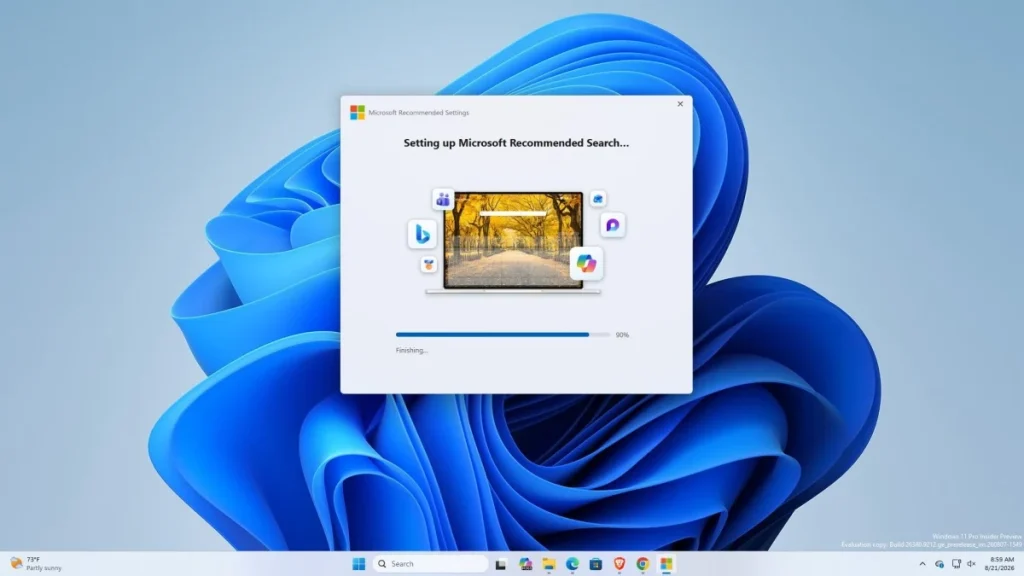
Microsoft currently exhibits an increasingly aggressive and perplexing strategy to capture search engine market share. Recently, the tech giant introduced a novel, standalone application on its official download servers. This program, ironically named “Microsoft Recommended Search Settings,” possesses a singular, controversial function. It aggressively forces Bing to become the default search engine across all browsers installed on a user’s computer.
Browser Hijacking and the Ongoing War
This installation package, labeled “MicrosoftSettings.exe,” occupies approximately 22.2 megabytes of storage space. Developers constructed it utilizing the WinUI interface alongside the WebView2 framework. According to testing conducted by Windows Latest, executing this program triggers a deceptive welcome screen. This interface pre-selects an affirmative response, prompting users to establish Bing as their default search engine.
Consequently, this action impacts numerous popular browsers, including Microsoft Edge, Mozilla Firefox, and Google Chrome. When a user clicks “Accept and Continue,” the software forcibly injects a specific extension into these pre-installed browsers. This extension, titled “Microsoft Bing Homepage & Search,” immediately alters fundamental browser configurations. Following installation, the application automatically redirects the user to the Microsoft Rewards page. It dangles reward points as a superficial incentive for compliance.
Triggering Security Warnings in Chrome
However, this almost malware-like injection methodology instantaneously triggers deep-seated security alarms within browsers like Chrome and Brave. Chrome immediately displays a stark warning regarding the extension’s invasive permissions. It alerts the user that the extension can read and modify all website data, display notifications, and alter the homepage. Subsequently, Chrome explicitly asks the user if they wish to “Switch back to Google search.”
In a truly absurd display, Microsoft crudely inserts its own custom prompt directly beneath Chrome’s security warning. This intrusive pop-up desperately pleads, “Wait, don’t switch back!” Microsoft attempts to retain the user by warning them about losing exclusive Bing wallpapers and features. This ridiculous spectacle highlights a fierce, direct confrontation between two technology behemoths directly upon the user’s screen.
Neglecting Core Application Performance
Microsoft deliberately expended valuable development resources utilizing WinUI to craft this purely advertising-driven standalone application. Unsurprisingly, this decision generated intense resentment and confusion among numerous users. In reality, Windows currently harbors many built-in applications relying on the WebView2 framework that suffer from severe performance issues. These underlying problems desperately require immediate attention and resolution.
The Bloated Weather Application
For example, the native Windows Weather application consumes a staggering 1.2 gigabytes of memory while running. This memory footprint is inexplicably five times larger than comparable applications running on macOS. Furthermore, the application’s interface remains heavily cluttered with intrusive advertisements. Microsoft consistently chooses to develop aggressive promotional software rather than investing engineering resources into optimizing these bloated core components. This software ecosystem development strategy appears highly questionable.
Eroding Brand Trust Through Dark Patterns
Historically, Windows 11 updates frequently displayed full-screen notifications suggesting users set Edge as their default browser. Now, Microsoft directly packages an independent executable file to forcibly modify third-party browser settings. This relentless pursuit of Edge and Bing market share reveals a troubling escalation. Their tactics have gradually crossed the line from aggressive promotion into the murky, gray area of scareware.
Undeniably, Bing, fortified by Copilot integration, possesses formidable technical competitiveness amidst the generative AI boom. Nevertheless, Microsoft attempts to force compliance through system-level permissions, deceptive dark patterns, and persistent, unyielding interception windows. This highly aggressive strategy fundamentally fails to cultivate long-term product loyalty. Instead, it severely overdraws the foundational trust users place in the Windows operating system. Ultimately, when a premier technology corporation relies upon disrupting normal user operations to generate traffic, it broadcasts a profoundly dangerous product warning.
Support Our Threat Intelligence
Find our tech and OS security coverage helpful? Support our work today and unlock a 100% ad-free reading experience!
 Buy Me a Coffee
