 Do Son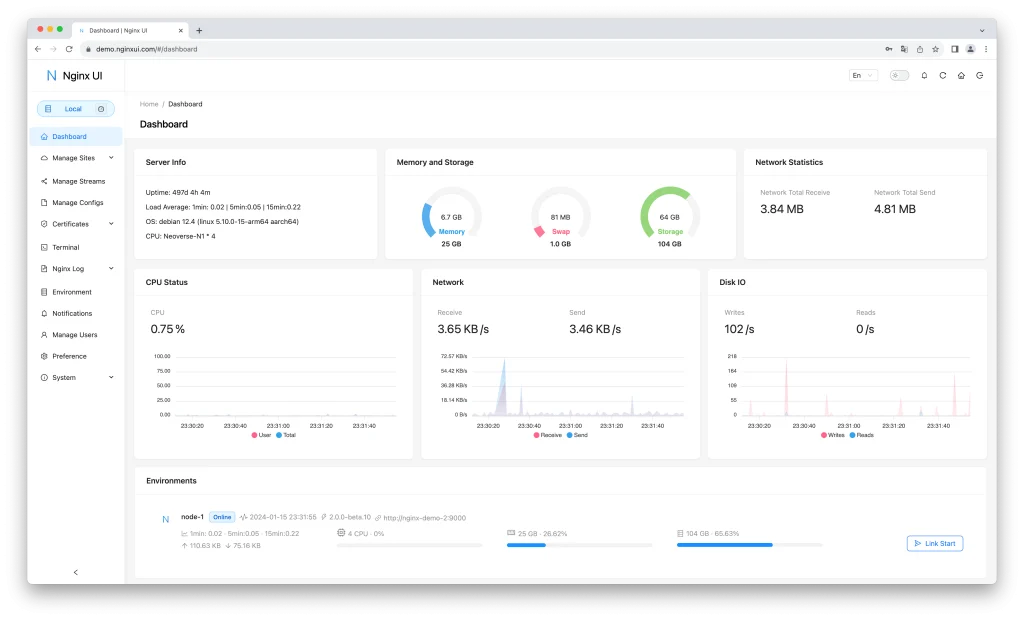
A critical Nginx UI RCE vulnerability allows authenticated attackers to execute arbitrary code on affected servers. Security researchers recently disclosed the full details of this flaw, alongside a working proof-of-concept exploit. Administrators must update their deployments immediately to secure their infrastructure.
- CVE: CVE-2026-107806
- CVSS: 9.4 (Critical · CVSSv4)
- Product: 0xJacky nginx-ui
- Affected: >= 2.3.8, < 2.5.0
- Impact: Nginx UI: Authenticated Remote Code Execution via Backup Restore App Config Overwrite
- Status: No confirmed exploitation yet
- Action: See vendor advisory
Too many alerts in your inbox? Switch to one weekly digest, sorted by severity.
Try Team free for 14 daysWhy It Matters
The Nginx UI project boasts over 11,600 stars on GitHub, indicating a massive global user base. A successful attack grants full administrative control over the underlying server architecture. Because this software manages web traffic, a compromised instance can expose highly sensitive operational data. Consequently, attackers can read cryptographic secrets, alter database records, and disrupt core business operations completely. The public disclosure of the vulnerability details and proof-of-concept exploit code drastically increases the risk of real-world attacks. Threat actors often monitor public disclosures to weaponize exploits quickly. However, no in-the-wild exploitation has been confirmed yet.
How the Attack Works
This Nginx UI RCE vulnerability triggers through a trust-boundary failure during the system backup restoration process. First, an authenticated administrator initiates a secure session. Next, the attacker uploads a forged configuration backup containing a malicious application manifest. The application derives a backup signing key from the attacker-supplied data and decrypts the payload. The system then blindly accepts this file and overwrites the protected application settings without proper validation. By inserting malicious OS commands into specific configuration parameters, the attacker forces the application to execute arbitrary commands. These commands run in the runtime context of the application, which often possesses elevated system privileges.
Affected Versions
This post-authentication flaw impacts Nginx UI versions from 2.3.8 up to versions before 2.5.0. It bypasses a previous security fix designed to prevent unauthenticated access during the initial installation window.
Mitigation Steps
The software maintainers fixed this critical issue in Nginx UI version 2.5.0. This update introduces strict validation for restored configuration files and authenticates backups using a secure server-held secret. Administrators must deploy this patch immediately to prevent exploitation. For more details, review the official advisory.
Support Our Threat Intelligence
Find our vulnerability reports and weekly recaps helpful? Support our work today and unlock a 100% ad-free reading experience!
 Buy Me a Coffee
