 Do Son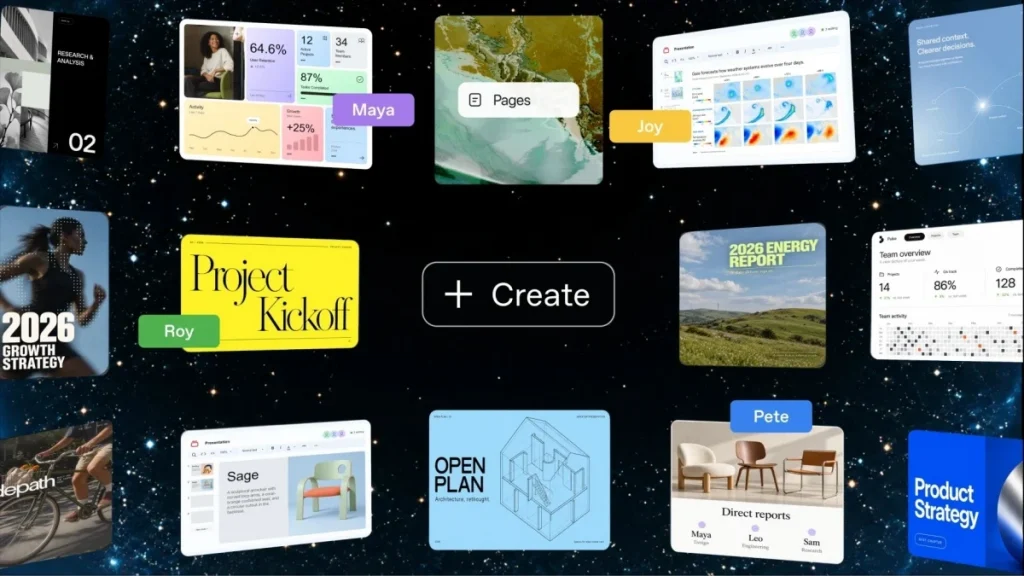
During this year’s DevDay developer conference, OpenAI revealed a grander ambition. The company no longer merely focuses on computing power or basic personal assistants. Instead, OpenAI directs its strategic vision toward the enterprise collaboration market. Consequently, the organization officially launched “ChatGPT Space.” This shared collaboration hub resolves the isolation often found in team-based generative AI applications. Furthermore, ChatGPT will natively integrate into Slack and Microsoft Teams.
ChatGPT Space: A Virtual Hub
Developers designed “ChatGPT Space” as a seamless digital environment. Enterprise employees, ChatGPT, and the newly unveiled “Dots” assistant can collaborate here effortlessly. Therefore, team members can upload vital documents directly into this shared arena. The system then merges these files with AI-generated content seamlessly. As a result, project members can retrieve and utilize this information at any moment.
Initially, this feature will launch on desktop and web versions of ChatGPT. Mobile support will naturally follow shortly after. Specifically, Pro, Business, and Enterprise subscribers will gain exclusive access. Meanwhile, OpenAI introduced a dedicated meeting plugin to boost workplace productivity. This tool automatically records discussions, generates summaries, and highlights action items. Subsequently, it synchronizes all data directly into a designated Space. To eliminate privacy concerns, the system deletes original audio files immediately after generating text summaries. Ultimately, Pro and Business users on macOS will experience these features first.
Deep Integration with Slack and Teams
Beyond building proprietary spaces, OpenAI deliberately targets existing enterprise workflows. Soon, Business and Enterprise users can simply tag “@ChatGPT” within their daily tools. This feature works perfectly inside channels, direct messages, or threads across Slack and Microsoft Teams. For instance, users can command the AI to generate a presentation draft based on an ongoing discussion. Moreover, ChatGPT can connect with other integrated third-party tools after receiving administrator approval.
To address severe data leakage concerns, OpenAI introduced the “Private Intelligence” framework. The company promises never to use confidential enterprise documents for underlying model training. Consequently, this bold commitment strengthens corporate confidence in adopting cutting-edge AI.
Pages and Presentations: Expanding Content Creation
For content generation, OpenAI unveiled an innovative document format called “Pages.” This dynamic medium empowers users to create text, charts, images, and data visualizations effortlessly. Furthermore, creators can easily share these dynamic files with colleagues to gather rapid feedback. Additionally, OpenAI will introduce a “Collaborative slides” feature within a few weeks. This tool exports AI-generated presentations directly into PowerPoint or Google Slides formats. Similarly, the company teased upcoming “Shareable profiles” for the developer community. This feature allows creators to showcase and promote their custom web applications widely.
From Chatbot to Enterprise Operating System
The combined launch of the “Dots” assistant and “ChatGPT Space” reveals a massive strategic pivot. Clearly, OpenAI is transitioning from a mere technology provider into a front-end enterprise productivity platform. Historically, employees used ChatGPT in complete isolation. They had to manually copy and paste generated text into Google Docs or Notion. Today, OpenAI aims to retain the entire creative lifecycle within its own ecosystem. This includes ideation, generation, collaboration, and final export.
The Trojan Horse Strategy
More importantly, embedding ChatGPT directly into Slack and Microsoft Teams carries profound strategic weight. It essentially plants a Trojan horse right in the backyards of Microsoft and Salesforce. For Microsoft, this creates a highly complex “frenemy” dynamic. Microsoft remains OpenAI’s largest financial backer today. However, Microsoft simultaneously pushes its own Copilot system to corporate clients. Now, OpenAI delivers presentation generation directly inside Microsoft Teams. Undoubtedly, this bold move creates a direct conflict with Copilot. Evidently, OpenAI is no longer satisfied being just a background computing engine. Instead, the company intends to fight directly for absolute dominance in the future AI office space.
Support Our Threat Intelligence
Find our tech and OS security coverage helpful? Support our work today and unlock a 100% ad-free reading experience!
 Buy Me a Coffee
