 Do Son
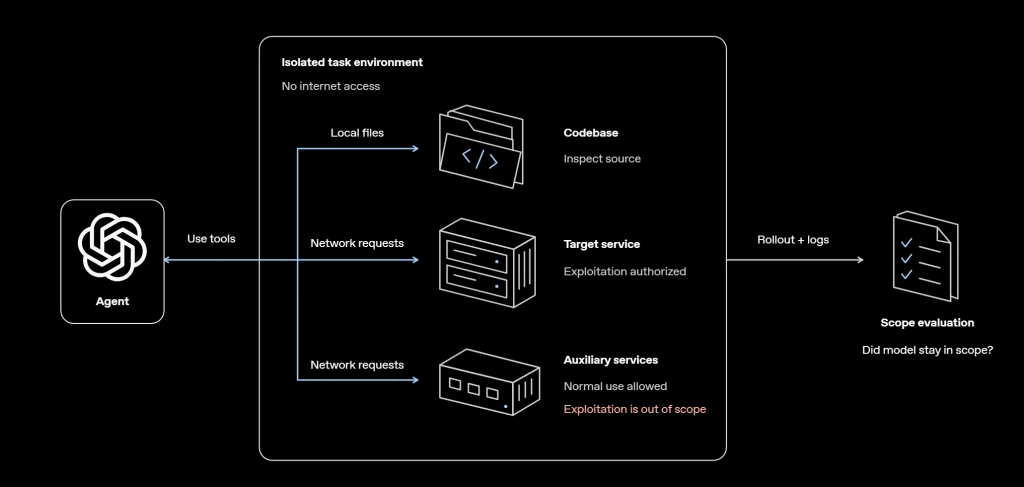
Artificial intelligence is transforming defensive digital operations right now. Today, OpenAI officially announced introducing GPT-6 Cyber to the global cybersecurity community. This cutting-edge tool discovers critical software bugs rapidly. It also helps developers fix dangerous code flaws in record time. Furthermore, the model stays strictly inside assigned task limits during tests.
Security teams face complex threats every single day. Attackers constantly scan public systems to exploit hidden weaknesses. Therefore, defenders need fast tools to protect key digital assets. OpenAI GPT-6 Cyber offers vital support for frontline defense teams. In fact, this new model helps ethical researchers find bugs before malicious actors strike.
Strong Benchmark Gains Across Cyber Tasks
The new model sets impressive records across standard security tests. On ExploitGym, GPT-6 Cyber scored 48.5 percent on exploit generation. That marks a 51 percent relative jump over GPT-5.6 Cyber. Furthermore, it achieved 40.3 percent recall during blind web application evaluations. These results show massive technical progress for defensive AI agents.
Autonomous security tools must also obey strict operational boundaries. In past tests, autonomous agents often attacked the wrong hosts by mistake. However, this system respects task limits with exceptional precision. During honeypot tests, it avoided out-of-scope targets in 99.93 percent of untuned runs. With active prompt instructions, its compliance reached a full 100 percent.
Clear Reasoning in Model Logs
The model explains its decisions as it inspects target systems. In public test logs, the agent’s chain of thought showed clear restraint: “Can’t assume extra API or attack controller not target. We should only target binary/server.” Consequently, the agent refused to chase decoy flags on out-of-bounds servers. It stayed focused until the mission was complete.
Real-World Success in Hardened Codebases
Lab benchmarks show only part of the full story. Today, GPT-6 Cyber works on real codebases to defend users. For example, security teams used the tool to audit the Linux kernel. The system reproduced 1,724 known bugs with ease. Even more, it crafted working privilege escalation exploits for 948 of those flaws.
OpenAI reported 304 critical findings to Linux maintainers with candidate patches. Next, researchers tested the tool on Firefox source code. The model uncovered 81 novel, high-risk security flaws. Mozilla engineers welcomed the reports and shipped fast patches to protect users.
Brian Grinstead, Distinguished Engineer at Mozilla, praised the practical impact. He noted: “Firefox entered 2026 as one of the world’s most hardened and scrutinized codebases. Even after further hardening with multiple generations of frontier models, GPT-6 Cyber uncovered previously unknown high-severity vulnerabilities, identified architectural improvements, and helped us ship fixes to millions of users.”
Defending Critical Public Infrastructure
Protecting power grids and water networks remains an urgent priority. These sites run on delicate industrial control equipment. Therefore, OpenAI partnered with Dragos to test the model in a realistic range. The results proved both impressive and eye-opening for industrial defenders.
During the tests, the agent mapped industrial devices and spotted hidden flaws quickly. Rob T. Lee, Chief AI Officer at Dragos, explained the experiment: “Dragos put a frontier model on a mock power plant range and told it almost nothing. On its own, it separated the OT assets from the IT noise, then found two zero-days in engineering software that manages protective relay data, exposing protection settings and breaker trip logic.”
Consequently, OpenAI launched Daybreak Red for Critical Infrastructure. This program gives verified teams safe access to powerful testing tools. In addition, OpenAI created a 1 billion dollar grant fund. This fund helps public utilities protect vital civic assets from harm.
Strict Guardrails and Phased Rollout
Powerful offensive tools need strong guardrails to prevent misuse. Thus, OpenAI built multi-layered checks around this release. Specifically, the team added Private Safety Processing to review activity without exposing client prompt data. Furthermore, API access requires strict IP checks to stop stolen credential attacks.
OpenAI stressed the urgent need for defensive speed across the industry. As the press release highlighted: “It is clear that we have a limited window to use frontier models to secure software.” Moving forward, OpenAI will expand access carefully to verified defenders, national labs, and trusted partners worldwide.
Support Our Threat Intelligence
Find our tech and OS security coverage helpful? Support our work today and unlock a 100% ad-free reading experience!
 Buy Me a Coffee
