OpenAI Launches Project Daybreak and GPT-5.5-Cyber to Counter Anthropic’s Glasswing
 Do Son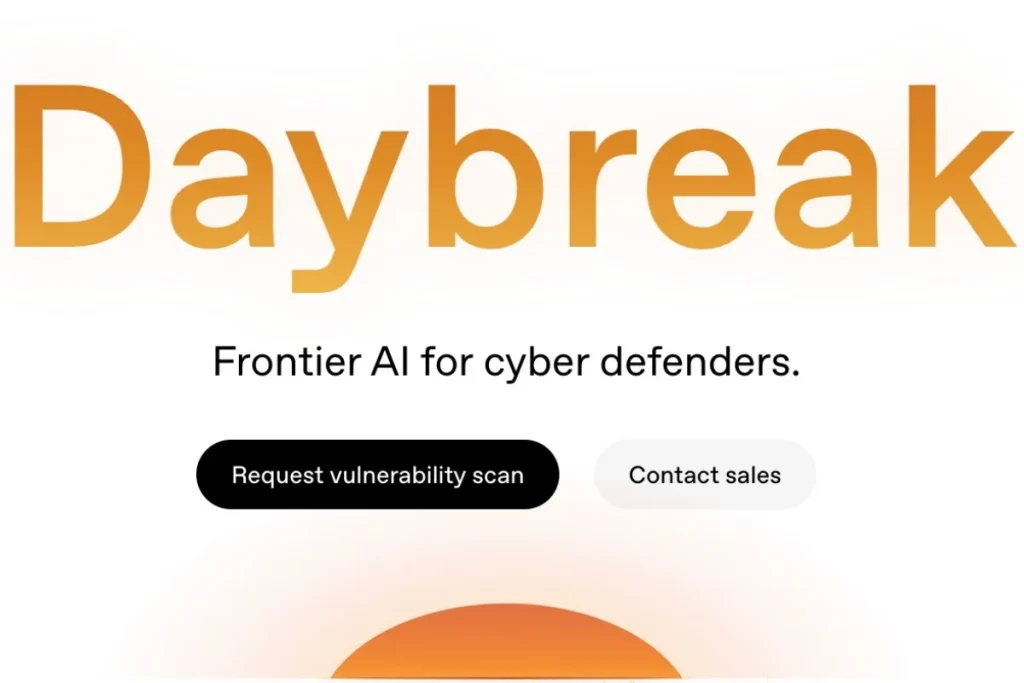
To counter the formidable challenge posed by its chief rival, Anthropic—which recently unveiled Project Glasswing leveraging the undisclosed Claude Mythos model—OpenAI has officially inaugurated a pioneering cybersecurity initiative christened “Daybreak.” This endeavor orchestrates the integration of the GPT-5.5 model lineage with a proprietary Codex architecture, while simultaneously forging strategic alliances with global security titans such as Cisco and Palo Alto Networks. This maneuver signals a tectonic shift in AI’s role within the cybersecurity domain, transitioning from “reactive remediation” to “proactive fortification.”
Anthropic previously garnered significant acclaim within the security community by utilizing Project Glasswing to assist Mozilla in identifying and rectifying $271$ vulnerabilities within the latest Firefox iteration. In response to this aggressive incursion, OpenAI’s Daybreak seeks to embed defensive philosophies more profoundly into the developmental lifecycle. OpenAI’s manifesto emphasizes the “Secure by Design” ethos, asserting that digital defenses must be inextricably woven into the software from its inception rather than merely addressing vulnerabilities post-factum.
Utilizing specialized security agents—notably Codex Security—Daybreak compresses the temporal requirements of threat analysis from several hours to a mere matter of minutes. These agents are capable of traversing vast codebases to scan for and validate high-priority vulnerabilities; furthermore, they can autonomously generate and verify patches directly within repositories. By delivering fully audited evidentiary results back to client systems, this technology assumes the arduous responsibilities traditionally held by frontline security engineers.
To address varied echelons of security requirements, OpenAI has segmented the GPT-5.5 series into three distinct strategic instruments:
- Foundational Utility: The standard GPT-5.5 manages general security applications and routine operational workflows.
- Defensive Core: The GPT-5.5 with Trusted Access for Cyber serves as the primary engine for defensive maneuvers, encompassing secure code audits, vulnerability triage, malware forensics, detection engineering, and patch validation.
- Offensive Simulation & Advanced Verification: For elite requirements, OpenAI introduced GPT-5.5-Cyber in preview. This specialized model is meticulously engineered for authorized Red Teaming, penetration testing, and controlled environmental validation, allowing enterprises to simulate sophisticated adversarial techniques to stress-test their own ramparts.
To ensure the seamless operationalization of these technologies, OpenAI announced profound collaborations with an ensemble of heavyweights, including Cloudflare, CrowdStrike, Oracle, and Akamai.
The genesis of Daybreak reflects the commercial exigencies and strategic pivots currently facing premier AI laboratories. As the computational costs of Large Language Models (LLMs) remain prohibitively high, consumer subscriptions alone are insufficient to sustain such immense research expenditures. Anthropic’s alliance with Mozilla and OpenAI’s counter-offensive with Daybreak demonstrate that “Enterprise Cybersecurity” has emerged as the most lucrative B2B frontier, defined by a high willingness to pay.
Historically, cyber defense was often hamstrung by “analyst fatigue” and “alert exhaustion.” Now, sophisticated models like GPT-5.5-Cyber provide enterprises with a tireless, elite Red/Blue team possessing the most current global threat intelligence. However, this rivalry also serves as a subtle harbinger for traditional security firms: they must expeditiously integrate these AI models into their proprietary product lines. Failure to do so may result in a future where corporate clients forgo traditional system integrators and consultancy services entirely, opting instead for a direct OpenAI API license to secure their digital estates.
Support Our Threat Intelligence
Find our tech and OS security coverage helpful? Support our work today and unlock a 100% ad-free reading experience!
 Buy Me a Coffee
