
 Do Son
HashiCorp has issued a security advisory for a newly disclosed vulnerability in Vault, its widely used secrets...
Latest news

Researchers at Seqrite Lab have uncovered a new spear-phishing operation attributed to APT-37 (ScarCruft / InkySquid /...

Okta Threat Intelligence is sounding the alarm over a large-scale phishing campaign that has been actively impersonating...

For over a year, Huntress researchers have been tracking the rise of ClickFix attacks, a form of...

Security researcher Ryingo has released a detailed analysis of a new malware strain dubbed the “AI Waifu...

The open-source DevOps ecosystem has been hit with another critical security issue—this time in Harness Open Source,...

Recently, researchers at Dream’s Threat Intelligence Team uncovered a sophisticated spear-phishing campaign that leveraged a compromised mailbox...

A new report from Intrinsec has revealed a sprawling web of Ukrainian and offshore networks fueling large-scale...
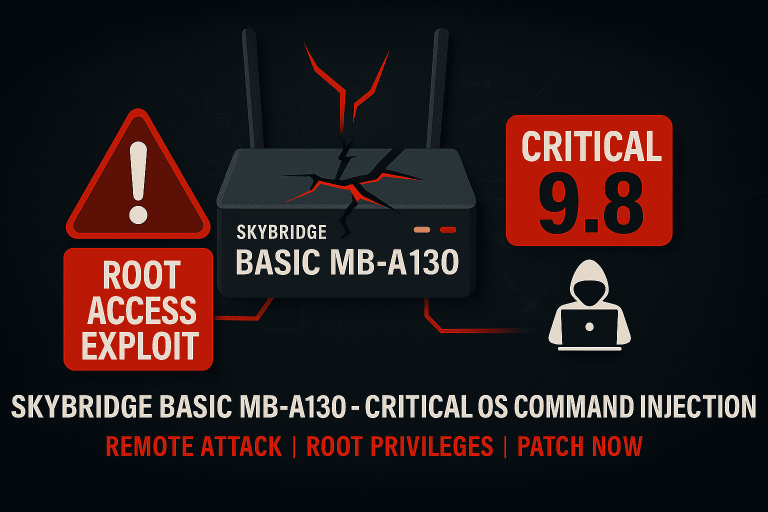
A critical security flaw has been discovered in SkyBridge BASIC MB-A130, a networking device developed by Seiko...

MediaTek has published its September 2025 Product Security Bulletin, disclosing several high- and medium-severity vulnerabilities affecting a...

A remote authenticated attacker could exploit the CVE-2022-42719 vulnerability to execute arbitrary code or cause the system to crash

In many instances, data are essential to giving different businesses a competitive advantage that sets them apart...

CVE-2022-40664 allow a remote attacker to bypass security restrictions, which occurred when forwarding or including via RequestDispatcher

Come up with an idea or receive it from a professor In a typical academic educational process,...

when clicked on, or activated by document events, CVE-2022-3140 could result in arbitrary script execution without warning

CVE-2022-24697 was caused by a command injection vulnerability when overwriting system parameters in the configuration overwrites menu
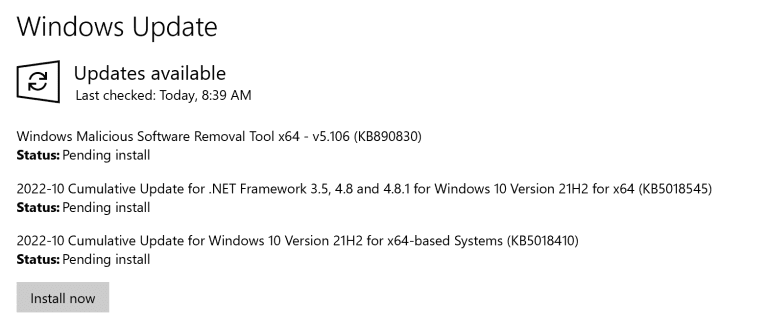
CVE-2022-41033, is described as an elevated privilege on the system, caused by a flaw in the COM+ Event System Service
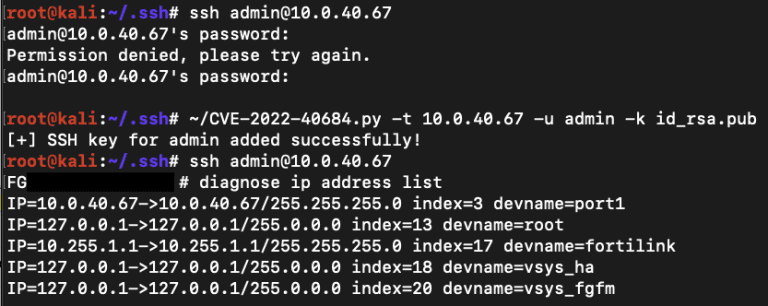
Security researchers from the Horizon3 Attack Team have developed a CVE-2022-40684 PoC exploit code and planned to release it later this week

You put your car into a parking lot, walk into your favorite store, and when you return,...

 Mikhail Baranov
Enhance your cybersecurity strategy with a Security Operations Center (SOC). Discover how to effectively deploy and optimize a proactive SOC framework.

An API, or application programming interface, is a set of programming instructions that allow two software programs...

The source code of Intel Alder Lake (including such as BIOS and related chipsets) was leaked, and the size of the compressed file reached 2.8GB

CVE-2022-39222 (CVSS score: 9.3) allows an unauthenticated adversary to steal the OAuth authorization code in the process

CVE-2022-31680 (CVSS score: 7.2) can be exploited to execute arbitrary code on the underlying operating system that hosts the vCenter Server

A network security threat refers to any potential breach of your data systems and network or any...

What is a 10GBASE-LR Optical Module? A 10GBASE-LR Optical Module is an optical module that transmits data...

CVE-2022-25748 (CVSS score 9.8) concerns an "Integer Overflow to Buffer Overflow while parsing GTK frames" issue in Qualcomm's WLAN component

An attacker could exploit CVE-2022-20853 to perform cross-site scripting attacks, Web cache poisoning, and other malicious activities.

Writing an academic paper in college can be stressful, especially if you aren’t sure how to go...

College can be overwhelming, and the idea of being responsible for writing your own papers might seem...

Writing an essay can seem like an overwhelming task, especially when you’re under the pressure of a...

By sending a report while copying a report->value is in progress, an attacker could exploit CVE-2022-41850 to execute arbitrary code