 Do Son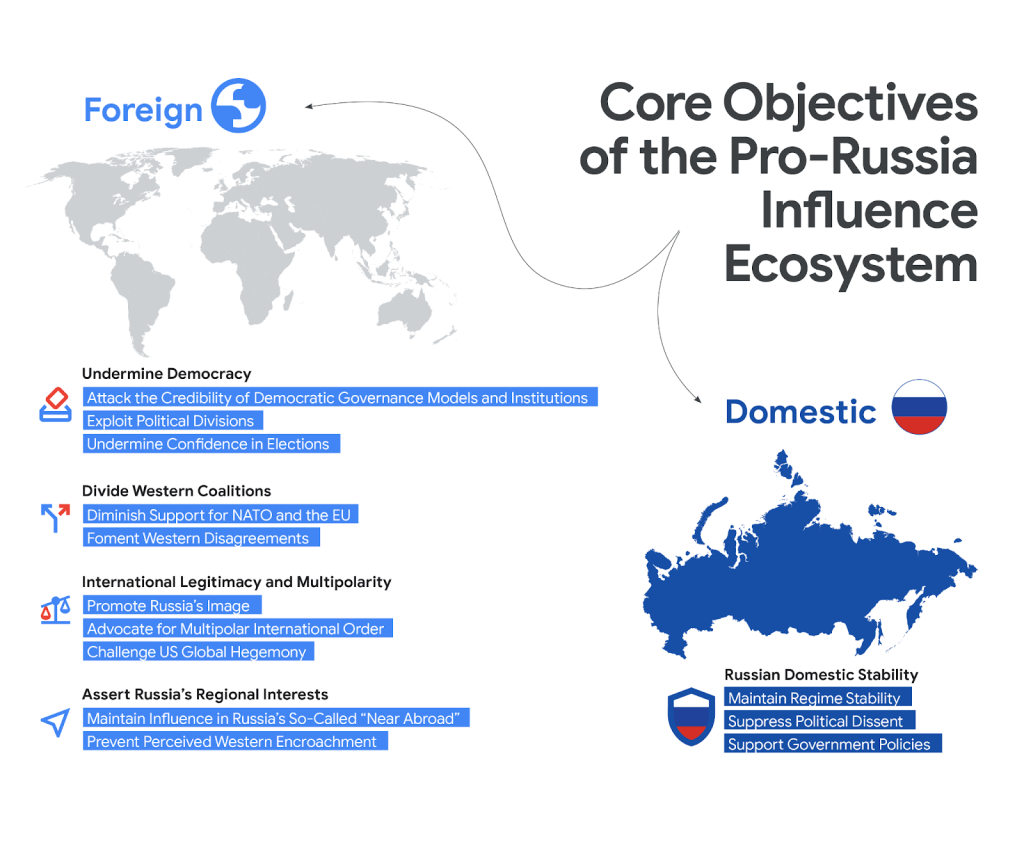
Core objectives of the pro-Russia influence ecosystem | Image: Google Threat Intelligence Group
At a glance
- Actor: Suspected Russian state-sponsored actors and proxies
- Activity type: Covert information operations and hacktivism
- Targets: US, EU, NATO, and domestic Russian audiences
- Scale: Global impact spanning six continents
- Status: Actively monitored by threat intelligence
- Source: Google Threat Intelligence Group
TL;DR
The pro-Russia influence ecosystem is shifting its focus globally. Suspected threat actors are using generative AI and hacktivism for information operations. These campaigns target Western democracies and global elections.
What Happened
Four years after the invasion of Ukraine, Russian tactics are evolving. The pro-Russia influence ecosystem now acts as a global strategic asset. Threat actors combine cyber espionage with psychological manipulation. For example, they employ generative AI to create deceptive content. Furthermore, they use media mimicry to trick unsuspecting readers.
The report notes, “Pro-Russia influence operations are pivoting from the near singular focus on Ukraine.” This means operations now target NATO and the European Union. They also rely on outsourcing to third-party contractors. This creates plausible deniability for the Russian government.
Who Is Behind It
Researchers attribute this activity to a mix of suspected state actors and proxies. Google Threat Intelligence Group assesses these connections with high confidence. Overt media outlets allegedly coordinate directly with covert intelligence groups. Hacktivist groups like NoName057(16) claim responsibility for disruptive cyberattacks.
Additionally, state-sponsored actors use stolen data in hack-and-leak campaigns. One group, UNC4057, allegedly leaked stolen data to inflame UK political debates. The Kremlin essentially acts as the core director of these campaigns.
Impact or Scale
These information operations reach audiences across six continents. They attempt to undermine democratic institutions and exploit political divisions. In recent months, threat actors targeted global events like the Olympics. They also focus heavily on national elections in Western countries.
“Ultimately, the war in Ukraine has provided a critical feedback loop for Russia to refine its influence activity,” the report states. Consequently, these groups now launch multi-platform attacks with high frequency. The scale involves millions of potential viewers and voters globally.
What Comes Next and How to Stay Protected
We expect these campaigns to intensify during upcoming global elections. Russian operators will likely increase their use of AI tools. Defenders must track the interconnected nature of this threat network.
Organizations should educate users about the dangers of media mimicry. Finally, social media platforms must monitor for coordinated inauthentic behavior.
Support Our Threat Intelligence
Find our threat intelligence and malware analysis helpful? Support our work today and unlock a 100% ad-free reading experience!
 Buy Me a Coffee
